The Ring Bridge Estate That Never Reached Its Destination
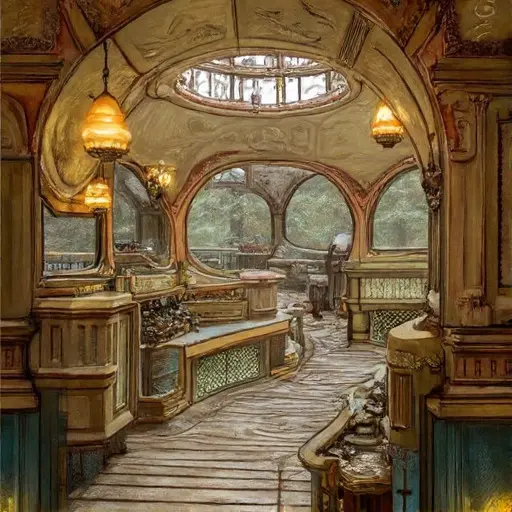
When first surveyed, the Ring Bridge Estate was classified as an infrastructure experiment disguised as domestic architecture. It was never meant to function as a conventional residence alone, but as a continuous inhabitable circuit—movement itself embedded into the logic of living. Early inhabitants described daily life as “circulating through the house,” where walking was indistinguishable from dwelling.
The meadow valley beneath the loop reinforced this sensation of endless motion, as if the structure had been drawn into the landscape rather than placed upon it.
Early Disruption in the Continuous Circuit
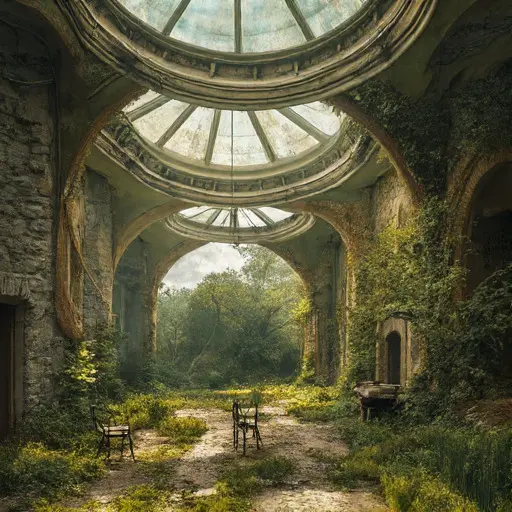
As years passed, maintaining the continuous loop proved increasingly complex. Any repair on one segment required tension recalibration across the entire structure, causing cascading distortions along the arc. Gradually, portions of the ring were closed off, then ignored, then left unmaintained altogether. Occupancy began to fragment rather than circulate, breaking the original premise of uninterrupted traversal.
Final Abandonment of the Looping Structure
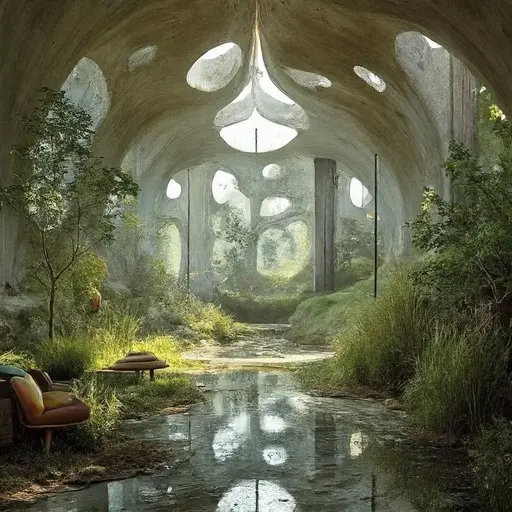
No formal abandonment was ever recorded; the structure simply stopped being traversed. Residents left in stages, breaking the circuit one segment at a time until movement no longer formed a loop but an exit. After the final departure, the Ring Bridge Estate remained suspended above the meadow valley, its geometry unchanged but its purpose dissolved.
Today, it persists as a broken cycle that never fully ended. The ring still spans the meadow, still invites passage, but leads nowhere except through itself and into wind. Grass continues to trace the underside arcs where people once walked, and the valley wind completes the circulation that human life abandoned long ago.