The Ribbon Manor Left Empty in the Meadow Valley
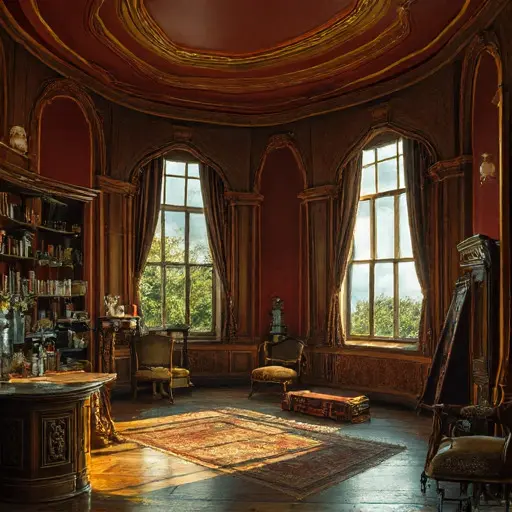
The Ribbon Manor was completed in 1907 by textile merchant Edwin Marrow and his wife Clara on a low meadow valley known for its strong seasonal winds. Marrow had accumulated moderate wealth through regional weaving contracts and envisioned a residence that reflected the movement of cloth itself. The result was an unusual Victorian mansion shaped as a continuous folded ribbon, its looping form creating interconnected rooms, verandas, and sheltered passages.
Although distinctive in appearance, the estate functioned as a practical family home. Edwin, Clara, and their three children occupied the manor year-round. Household ledgers show stable finances during the years before the First World War. Local workers maintained the grounds, repaired pathways, and tended small gardens established within the ribbon’s curved courtyards.
The surrounding valley provided favorable grazing land, and several tenant farmers rented nearby acreage from the family. Throughout the 1910s, the estate remained active and carefully maintained. Annual inventories documented furniture purchases, repairs, and improvements to drainage systems around the property.
The First Folds Begin to Fray
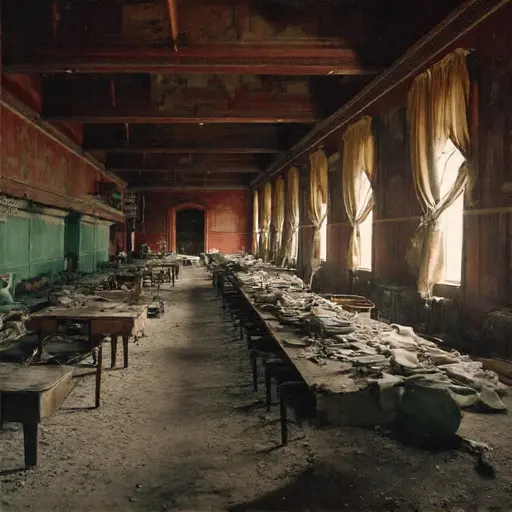
The first serious difficulties emerged after the war. Textile demand fluctuated dramatically throughout the 1920s, reducing profits from the family business. At the same time, competition from larger manufacturers weakened many regional weaving operations. Financial records from the period reveal shrinking income and increasing debt obligations.
By 1928, maintenance expenditures had been cut significantly. Garden staff were dismissed, and several exterior pathways fell into disrepair. The narrow routes winding through the ribbon loops became overgrown with clover and meadow grass.
When Edwin Marrow died unexpectedly in 1930, responsibility for the estate passed to Clara and her eldest son. Inheritance complications quickly followed. Ownership shares were disputed among family members, delaying financial decisions and preventing the sale of unused land parcels that might have stabilized the estate.
As revenues declined further, entire sections of the manor were closed to conserve fuel and reduce upkeep costs. Furniture was consolidated into a handful of regularly used rooms. Dust accumulated in once-active corridors. Letters from creditors began appearing among household documents, followed by overdue tax notices and maintenance bills.
Several family members left the valley permanently in search of employment elsewhere. Each departure reduced the likelihood of recovery.
The House Becomes a Memory
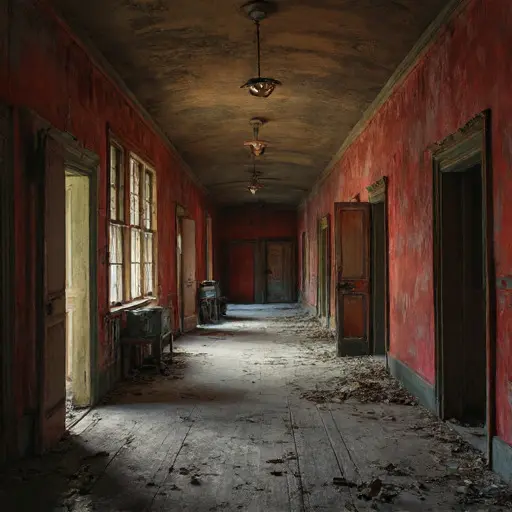
Following Clara Marrow’s death in 1944, the remaining heirs failed to resolve the property’s legal status. The estate entered a prolonged period of administrative uncertainty. Taxes went unpaid. Repairs ceased entirely. A final attempt to auction portions of the property attracted little interest due to its unusual layout and deteriorating condition.
By 1948, the last occupant had departed. The ribbon-shaped corridors, once filled with daily movement, stood empty. Meadow grass advanced across former garden borders and into the pathways threading beneath the architectural folds. Wind moved freely through open windows where curtains had long since disappeared.
No restoration followed. No family member returned to reclaim the estate. Ownership records remained unresolved, and the manor slowly passed from memory into obscurity.
Today, the Ribbon Manor still stands in the valley grass, structurally present but entirely abandoned. Its looping halls remain empty, its rooms untouched by renewal, and its future unresolved. The house endures only as a quiet relic of gradual decline, continuing to deteriorate beneath the passing seasons with no sign that anyone will return.