The Redgate Cross Villa Left Vacant After Estate Road Closure
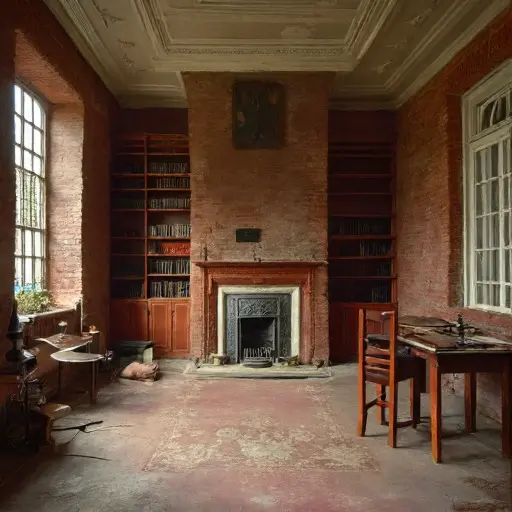
Redgate Cross Villa was constructed in 1896 at the center of a small inland estate network, where four carriage lanes once intersected beneath a modest iron gaslamp canopy. Built for the family of Thomas Aldridge, an estate manager overseeing agricultural land distribution and road maintenance, the villa was designed as a compact and symmetrical Victorian residence that prioritized clarity, durability, and efficient oversight of surrounding estate activity.
The building’s architecture reflected this administrative purpose.
Constructed from deep red engineering brick with pale limestone lintels, the façade was composed with strict bilateral symmetry. A central doorway aligned precisely with a small stone pediment, while evenly spaced tall sash windows reinforced the disciplined rhythm of the structure. A shallow rear bay suggested limited expansion for service functions, but no decorative excess was introduced at any stage of construction.
Inside, the Aldridge household maintained a steady routine closely tied to estate operations. Thomas Aldridge managed carriage lane upkeep schedules and tenant coordination, while his wife Edith oversaw correspondence, household accounting, and visitor accommodation for estate inspectors. The interior spaces were organized along a central axis, reinforcing the architectural symmetry present in the façade.
Early decline in estate infrastructure
By the early 1920s, changes in transportation and estate management practices reduced reliance on centralized carriage networks. Motorized transport and consolidated agricultural administration diminished the importance of localized road-crossing estates. As a result, the Redgate Cross intersection lost its functional relevance, and maintenance of the surrounding lanes began to lapse.
Gradual reduction of household activity
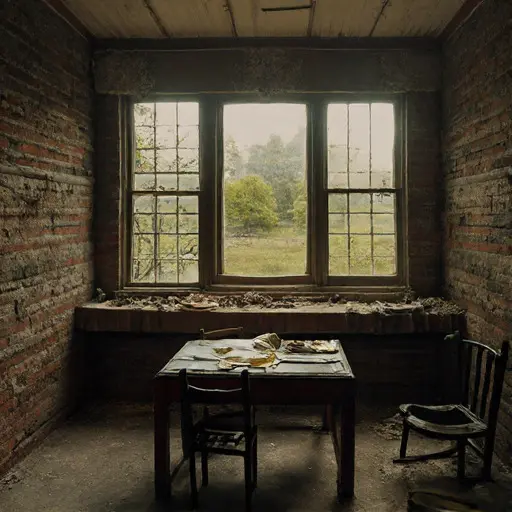
As estate operations declined, the villa’s role as an administrative center gradually diminished. Carriage lanes outside the property became overgrown, though their geometry remained visible as faint linear depressions converging at the house. Without regular traffic or maintenance, the crossroads lost its defining function, and the gaslamp canopy that once marked the intersection was eventually removed.
Within the house, occupancy decreased steadily. Rooms that once supported visiting estate officials and clerical staff were closed to reduce maintenance costs. Heating was concentrated in a smaller portion of the building during winter months, leaving peripheral rooms unused but structurally intact.
Final abandonment phase
By the late 1940s, Redgate Cross Villa was no longer inhabited. Estate management functions had been fully centralized elsewhere, and no institutional responsibility remained for the crossroads property. Utility services were discontinued, and no further repairs were carried out. Despite this, the structure remained stable, its brickwork and limestone detailing intact and weathered only by natural exposure.
The house left behind
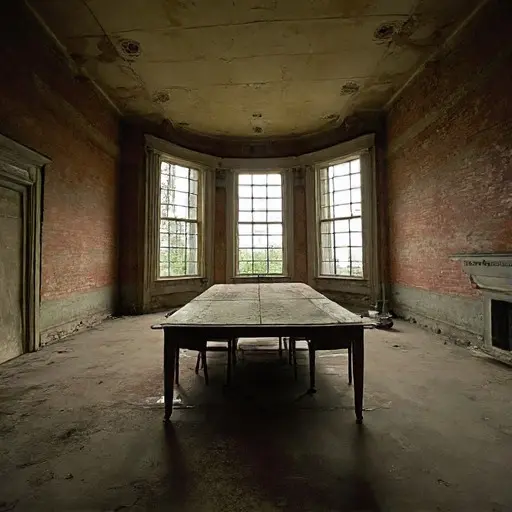
By the early 1950s, no ownership claims or restoration efforts had been made for Redgate Cross Villa. The surrounding crossroads had fully reverted to meadowland, and the estate network that once supported it no longer existed. The house remains standing at the center of the forgotten intersection, unchanged in structure but devoid of purpose, quietly enduring within a landscape that has ceased to recognize its former function.