The Ravensmere Gothic Abbey Mansion Left in Silent Recession
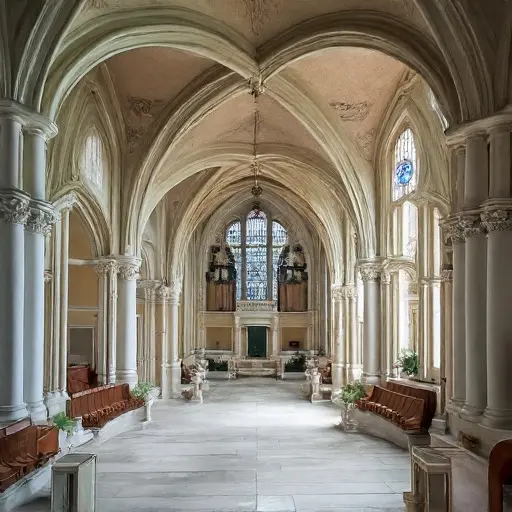
The Ravensmere Abbey-Mansion was constructed in the late nineteenth century as a hybrid estate combining residential function with monastic-inspired Gothic Revival design. Commissioned by a wealthy patron with strong ecclesiastical interests, the structure was intended to serve both as family residence and private retreat for scholarly and charitable work. The household consisted of the patron’s family, visiting clerics, and a small staff responsible for maintaining the complex cloister wings and landscaped courtyards.
Daily life followed strict routines shaped by study, correspondence, and seasonal gatherings held within the great hall and cloister arcade. The architecture emphasized verticality and spiritual symbolism, with clustered spires, flying buttresses, and ribbed vaulting reinforcing the sense of permanence and order within the dense forest setting.
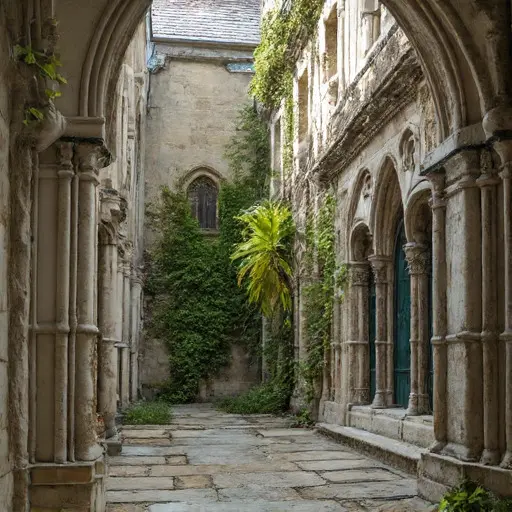
By the late 1920s, the Ravensmere household began to experience financial and institutional strain following reduced patronage for large private ecclesiastical estates. Maintenance of the abbey-mansion’s complex Gothic systems—vaulting, buttresses, stained glass, and cloister drainage—became increasingly difficult to sustain. Sections of the cloister wing were closed off to reduce heating and repair costs, while entire upper spire-adjacent rooms were left unused. Correspondence regarding funding and charitable support slowed significantly, and staffing levels were reduced to essential maintenance only. The formal courtyards, once carefully managed, began to lose structural order as vegetation spread across marble pathways and rose hedgerows became overgrown and irregular. Administrative records show increasing gaps in upkeep logs, signaling a gradual withdrawal from full occupancy and institutional function.
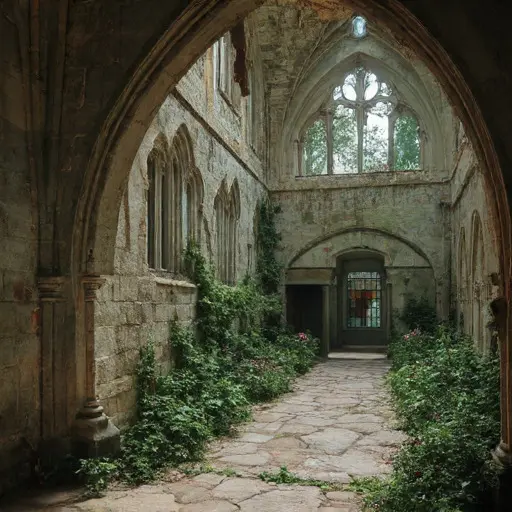
By the early 1940s, after prolonged financial collapse and the dispersal of its remaining occupants, the Ravensmere Abbey-Mansion was fully abandoned. No restoration or redevelopment efforts were undertaken, as the scale of deterioration and unclear ownership made intervention impractical. The estate remained standing deep within the forest, slowly weathering under seasonal conditions and accelerating vegetation growth. Interior spaces were left in their final state of occupation, gradually transforming as moisture, ivy, and structural fatigue reshaped the Gothic fabric. The abbey-mansion persists as an unresolved architectural ruin, neither preserved nor repurposed, with its cloistered geometry dissolving quietly into the surrounding woodland.