The Ravenshore Tide-Pool House Left Empty After Coastal Relocation
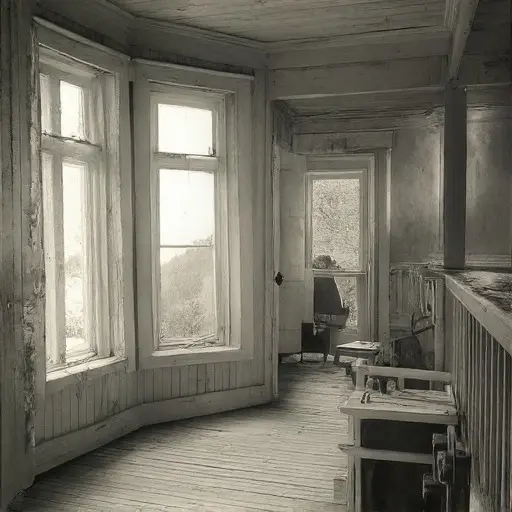
The Ravenshore House was constructed in 1885 on a narrow strip of rocky coastline where land met tidal pools in a constant cycle of shifting water and exposed stone The site was chosen for both its isolation and its access to natural marine resources, with the Bennett family establishing a modest domestic residence directly adjacent to the shoreline Unlike inland Victorian homes, this structure was designed from the beginning to coexist with tidal movement, wind exposure, and salt air
A defining feature of the property was the integrated tide-pool stone annex built into the natural coastal formations behind the main structure The annex consisted of carved gray limestone arches aligned with tidal levels, allowing seawater to flow in and out of shallow basins during high and low tide These pools were used for food storage, washing, and seasonal household needs, blending domestic life with the natural marine environment in a highly practical but unusual architectural arrangement
The main house itself remained compact and structurally simple, with a two-story layout adapted to uneven coastal terrain The façade was slightly asymmetrical due to a bay window placed closer to the sea-facing side, maximizing natural light and ocean visibility Over time, the roofline became subtly uneven as wind exposure and salt erosion affected different sections of the structure at different rates The lower foundation was reinforced with stonework embedded directly into the coastal rock, ensuring stability against storm surge and tidal pressure
Gradual Withdrawal from the Shoreline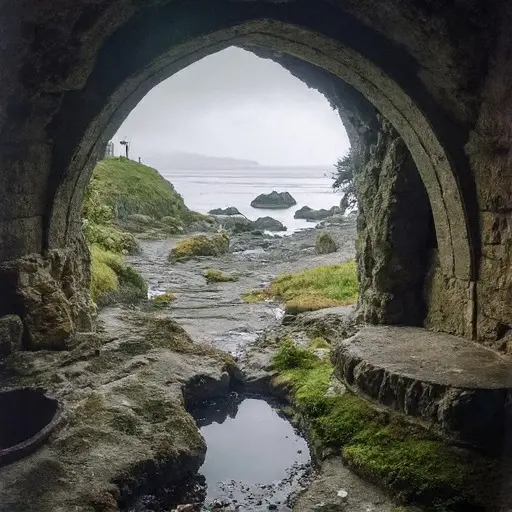
By the early 1930s, the Bennett family began to reduce their permanent residence at Ravenshore as coastal living became increasingly difficult to maintain Seasonal storms, salt corrosion, and economic changes in local fishing and trade reduced the viability of long-term habitation at the site The tide-pool annex, once central to daily routines, saw reduced use first, followed by gradual abandonment of lower coastal rooms
Maintenance of the property became increasingly irregular Wooden exterior panels exposed to constant wind began to warp slightly, while salt staining developed along the stone foundation and lower walls The annex remained structurally stable due to its direct integration into coastal rock, but minor erosion patterns became more visible along edges exposed to repeated tidal flow
Despite these changes, no structural failure occurred The house remained intact, supported by both masonry reinforcement and the natural stability of the rocky shoreline
Final Abandonment Above the Tide Pools
<img src=”https://beyondvisit.
com/wp-content/imagecontent/uploads/abandoned victorian house 87018839.webp” alt=”” />
By 1947 the Ravenshore House had been fully vacated following the relocation of the remaining Bennett descendants inland where work and infrastructure access were more stable No further occupation was recorded, and no restoration efforts were initiated despite the structural integrity of both house and tide-pool annex
In the following years the structure remained unchanged in form but slowly altered by environmental exposure Salt air continued to weather wooden siding, and mineral deposits accumulated along stone edges The tide pools remained active with natural cycles, but no longer served any domestic purpose
By 1950 the Ravenshore Seaside House remained standing above the shoreline, fully abandoned and quietly enduring No collapse occurred, no demolition was undertaken, and no return was recorded The house persisted between sea and stone, its tide-pool annex still aligned with the rhythm of the ocean, now empty and undisturbed