The Ravenshollow Victorian Gothic Villa Left to the Suburban Forest
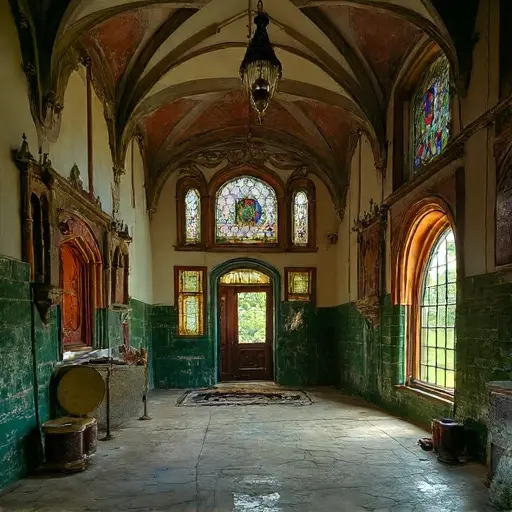
The Ravenshollow Villa was constructed in the late nineteenth century on the edge of a growing suburban district where planned streets gradually gave way to unmanaged forest land. Designed in a restrained Victorian Gothic style, the house combined decorative verticality with practical domestic scale, featuring clustered chimneys, steep rooflines, and a prominent gabled entry that emphasized formality without excess. The household consisted of a middle-class family supported by a long-term caretaker responsible for both interior upkeep and the surrounding ornamental garden.
Daily life centered on the entry hall and adjacent sitting rooms, where correspondence, financial arrangements, and seasonal household planning were conducted in a structured rhythm. For several decades, the villa remained a stable residence, its richly colored materials carefully maintained despite the encroaching woodland environment.
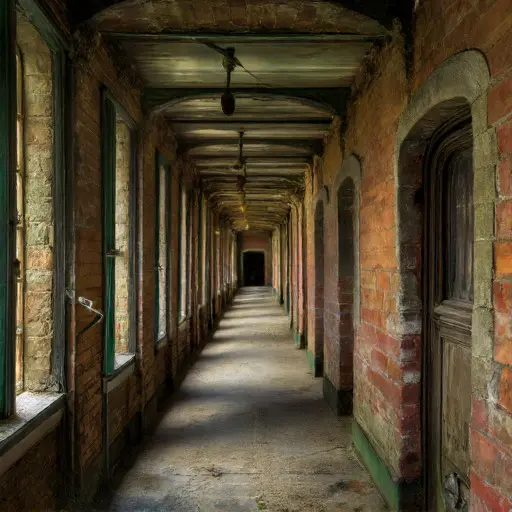
By the late 1920s, the Ravenshollow Villa began to experience financial strain as suburban development stalled and household income became less reliable. The upkeep of stained glass, copper roofing elements, terracotta bands, and carved stonework required consistent skilled maintenance, which gradually became unaffordable. Portions of the upper rooms were used less frequently, leading to a slow consolidation of daily activity within the ground-floor entry hall and sitting rooms. Repairs to roofing and drainage were delayed, allowing moisture to penetrate masonry joints and accelerate weathering of interior surfaces. Correspondence regarding taxes, repairs, and property concerns accumulated without resolution. Over time, the villa transitioned from a well-maintained Gothic residence into a partially cared-for structure marked by quiet neglect and slow deterioration.
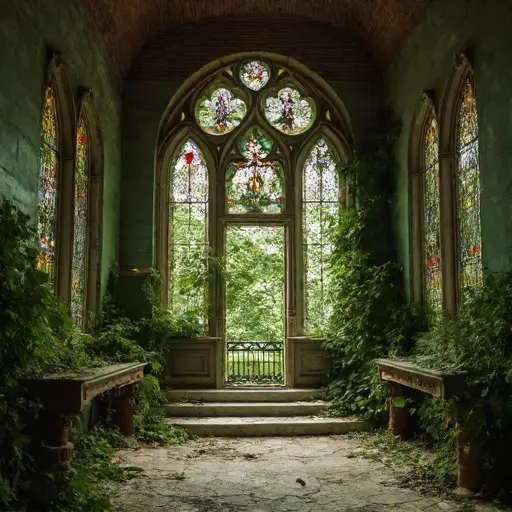
By the early 1940s, following prolonged financial hardship and unresolved inheritance complications, the Ravenshollow Victorian Gothic Villa was fully abandoned. No restoration efforts were undertaken, and the property remained legally unresolved, preventing any sale or redevelopment. Vegetation from the surrounding suburban forest gradually enveloped the garden and façade, while seasonal weather accelerated the deterioration of brick, stone, glass, and metalwork. Interior furnishings and documents were left in place, preserving the final years of decline in quiet detail. No occupants returned, and the villa continues to stand empty at the forest edge, its richly colored Gothic silhouette fading beneath ivy and encroaching wilderness.