The Ravenshollow Ravine House Left Vacant After Waterfall Erosion Drift
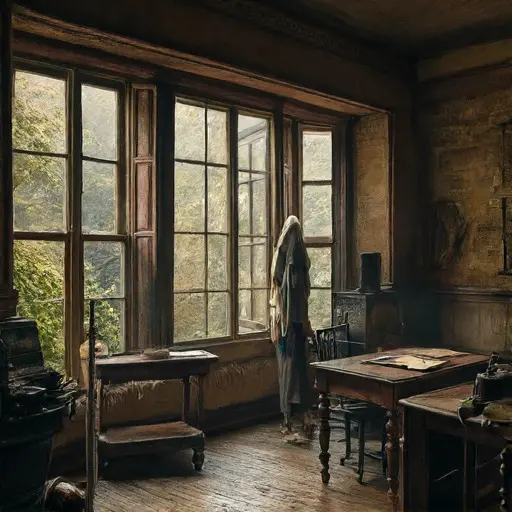
The Ravenshollow Ravine House was constructed in 1891 by the Calder family within a wide moss-covered ravine where multiple small waterfalls descended over dark stone shelves into a shallow pool below. The site was selected for its natural water access, secluded geography, and steady microclimate created by continuous moisture and forest cover. Built in a compact but vertically stretched composition, the house followed the slope of the ravine rather than opposing it, embedding itself into the terrain.
The structure featured a clear two-story core with a partially raised lower level exposed toward the water, producing a subtle tiered foundation effect. This vertical articulation allowed the building to interact directly with the waterfall system while maintaining stable living space above flood influence. Over time, the structure became visually integrated with the ravine’s layered geology, its materials absorbing both moisture and mineral staining.
Constructed from alternating horizontal bands of pale sandstone and deep red brick, the exterior reflected both geological stratification and Victorian structural logic. The sandstone softened into creamy beige and cool gray tones, while the brick matured into rich burgundy, rust, and muted crimson. Constant exposure to waterfall mist created faint vertical streaking patterns across the façade, reinforcing the sense of long-term environmental interaction.
Inside, the Calder household maintained a quiet, self-contained life focused on forestry documentation, water monitoring, and minor regional mapping of the ravine system. Arthur Calder managed environmental records tied to water flow and stone stability, while his wife Margaret oversaw household administration and correspondence. The exposed lower level near the water served as a practical observational zone for studying seasonal changes in waterfall intensity and pool depth.
Early financial strain
By the late 1920s, local forestry and water management networks became increasingly centralized, reducing the need for independent ravine-based monitoring households. As institutional oversight expanded, the Calder family experienced diminishing relevance in official water documentation and reduced financial support for maintenance work tied to the ravine system.
Material aging became more pronounced under constant humidity. Slate roofing developed uneven lichen patterns in dark graphite and weathered blue-black tones, while the broken ridge structure softened visually under moss accumulation. The dark green timber framing of the water-facing veranda weathered unevenly, and glass panes began to distort reflections of falling water more heavily.
Gradual decline in the household
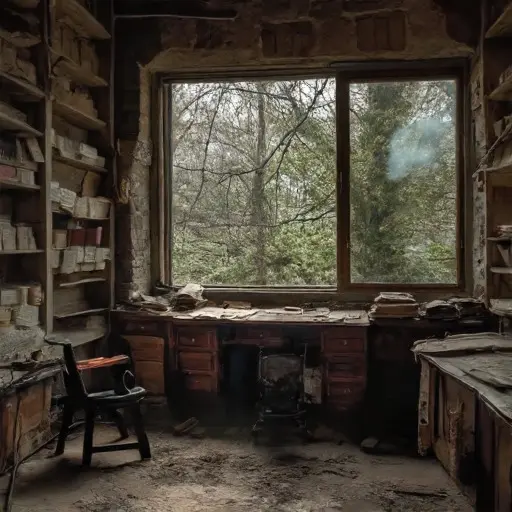
As economic pressure increased, maintenance of the ravine pathways and stone reinforcement edges was gradually reduced. Moss and trailing plants began overtaking lower foundation zones, while ferns spread across the tiered stone surfaces near the exposed level. The waterfalls continued to shape the environment, but human intervention in stabilizing the terrain steadily declined.
Family members eventually relocated to nearby settlements where administrative and forestry roles were more centralized. Their departure marked a significant reduction in occupancy, leaving only minimal oversight of the structure. Upper rooms were closed sequentially, and daily life contracted into a small portion of the upper core.
Final abandonment phase
By the early 1940s, the Ravenshollow Ravine House was no longer fully inhabited. Utility connections were discontinued following prolonged financial arrears, and routine maintenance ceased entirely. Constant moisture from waterfalls and rising humidity from the ravine entered freely through aging seals, gradually altering wood, brick, and stone surfaces.
Final deterioration
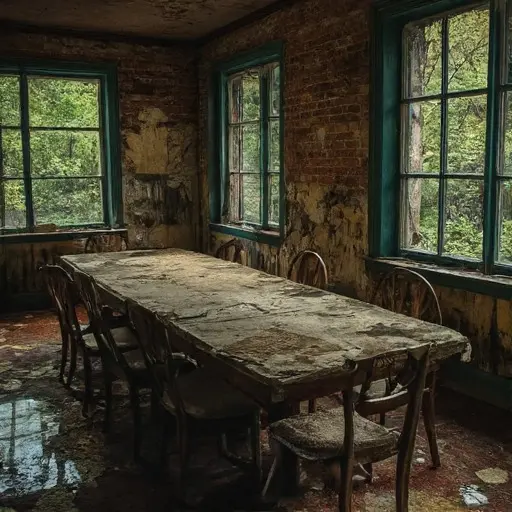
By the mid-1940s, no formal ownership or active maintenance of the Ravenshollow Ravine House remained. Legal correspondence was repeatedly returned undelivered, and no heirs reestablished residence. The structure persisted within the moss-covered ravine in a state of quiet abandonment, slowly weathering under constant water movement, humidity, and geological shift. No restoration or reoccupation followed. The house remains empty above the cascading water system, its tiered form gradually merging with the ravine’s living stone landscape.