The Ravenshollow Manor Left Vacant After Timber Estate Collapse
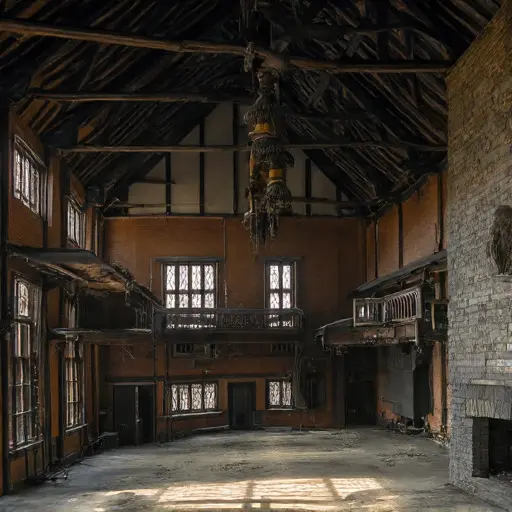
The Ravenshollow Manor was completed in 1896 for the Alderidge family, timber estate managers responsible for overseeing woodland harvesting rights and forest boundary administration across the surrounding region. Designed in a fully framed Tudor Revival style, the manor emphasized vertical complexity and structural clarity, with dark oak timber framing, aged red brick infill, and a reinforced limestone foundation. Its steep gables, clustered chimneys, and layered rooflines created a visually dense yet cohesive silhouette that stood as a focal point within the forest clearing.
Inside, the household functioned as both residence and estate administration center. William Alderidge managed timber contracts and forestry logistics, while his wife Eleanor oversaw correspondence and estate accounting. The manor supported a steady flow of documentation related to logging rights, land usage, and seasonal labor coordination. For decades, it remained active, sustained by timber demand and regulated woodland commerce.
Early signs of decline
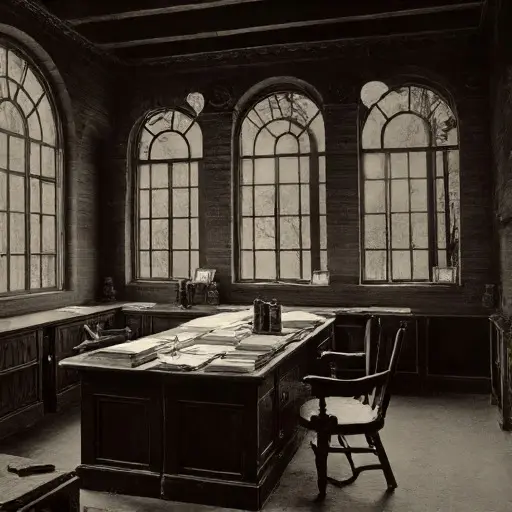
By the early 1930s, regional forestry consolidation and industrial expansion reduced the autonomy of private timber estates like Ravenshollow. Larger commercial operations absorbed much of the logging trade, leaving the manor with diminished administrative relevance. As contracts declined, maintenance of both structure and surrounding grounds began to lapse. Repairs to timber framing, roofing, and stone foundations were delayed indefinitely.
Within the manor, daily operations contracted significantly. Entire wings were closed off to conserve heating, and administrative activity was centralized into a small portion of the building. Correspondence became sporadic, and documentation piles remained unresolved for extended periods. Outside, the surrounding forest remained calm and evenly spaced, but signs of natural encroachment began to appear along the edges of the estate grounds.
Final abandonment phase
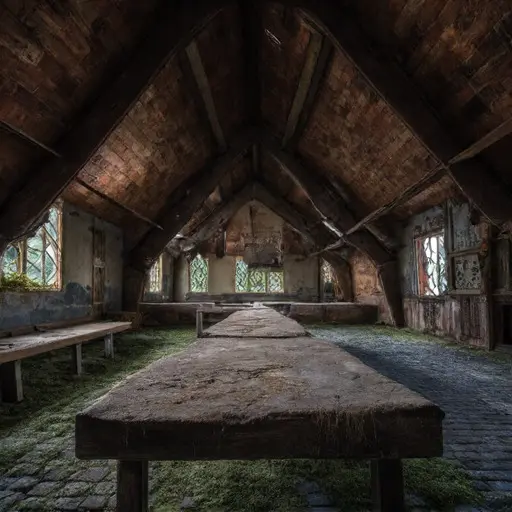
By the late 1940s, Ravenshollow Manor was no longer actively inhabited. The Alderidge descendants had relocated to urban administrative centers, and no return to the estate was recorded. Utility services were discontinued after prolonged arrears, and the property was left without maintenance or oversight. Moist forest air and seasonal weathering accelerated aging across timber and brick surfaces, gradually softening the manor’s once sharply defined architectural edges.
No formal transfer of ownership was ever completed, and estate records became fragmented over time. The manor remains standing within the forest clearing, visually dominant yet fully abandoned. It persists as a quiet Tudor Revival relic, slowly being reclaimed by time and woodland growth, its vertical grandeur fading into stillness.