The Ravenshollow Manor Left to Forest Decay
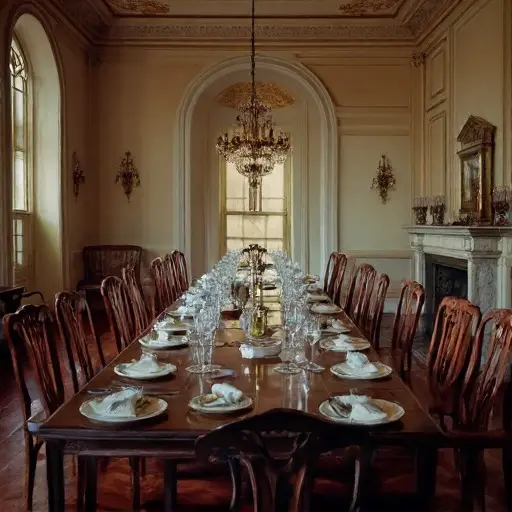
The Ravenshollow Manor was established at the edge of a dense northern forest in the early 1900s by a family who had gained wealth through railway investments. The household consisted of a husband, wife, and their two children, who moved into the estate seeking permanence away from growing urban instability. In its early years, the manor functioned as both a residence and a symbol of controlled prosperity, with staff maintaining strict routines and every room carefully preserved.
The dining room, where formal meals were held nightly, reflected this stability through its symmetry, polished surfaces, and carefully maintained furnishings, all of which reinforced the impression of lasting wealth anchored in tradition.
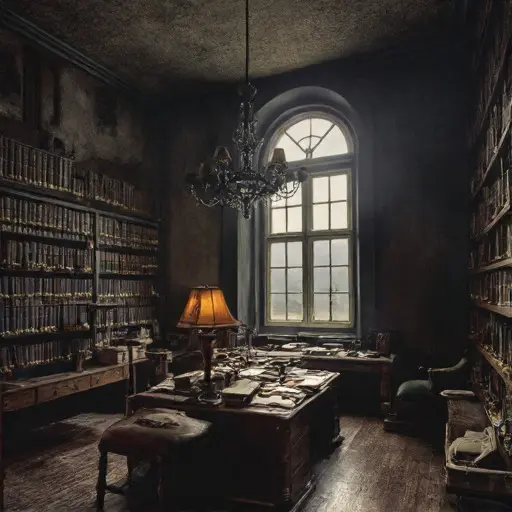
By the late 1920s, the Ravenshollow estate began to experience financial strain as investments tied to industrial expansion collapsed during broader economic instability. Maintenance of non-essential rooms was gradually reduced, with attention focused only on core living spaces. Letters from creditors and estate managers accumulated on desks, often left unopened for weeks at a time. Portions of the manor were closed off to reduce heating and upkeep costs, creating uneven patterns of use throughout the structure. The family’s presence became less consistent, with long periods of absence that allowed dust to settle across furniture and architectural details. The library, once a center of intellectual and administrative activity, became a storage space for unresolved financial correspondence and neglected obligations.
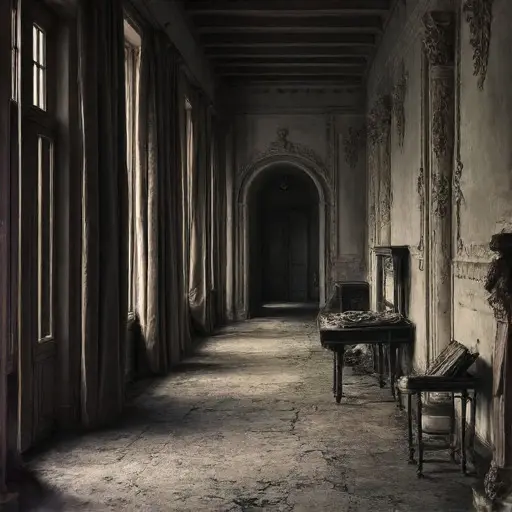
By the early 1940s, following legal disputes over remaining assets and the dispersal of the family, Ravenshollow Manor was fully abandoned. No members returned to inhabit or restore the estate, and official records indicate prolonged ownership uncertainty that prevented redevelopment. The structure remained standing at the forest edge, slowly deteriorating as weather and time eroded its materials. Interior spaces were left untouched, preserving the final state of occupancy as dust and moisture gradually reshaped their surfaces. The manor continues to exist in unresolved abandonment, neither reclaimed nor demolished, with its silent corridors reflecting a permanent withdrawal from use and care.