The Ravaged House Beneath the Bamboo Ridge Where Mei’s Last Window Stayed Open
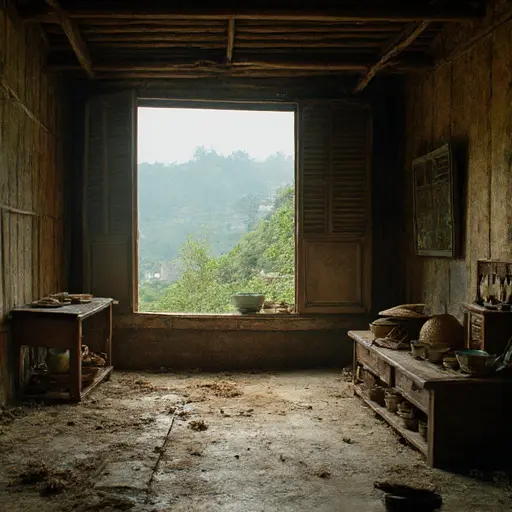
The open window puzzled everyone.
The house had been sealed.
The doors locked.
Yet the upper workshop window remained tilted outward long after Mei was gone, letting weather and mountain air pass through the same narrow opening she once preferred while working.
The house stood beneath a bamboo ridge and belonged to Mei Lan.
She lived there alone and practiced a profession almost entirely forgotten beyond older villages.
Mei was a rain shadow puppet repairer.
Her work focused on restoring weather-damaged paper and hide puppets used during traveling monsoon performances and seasonal storytelling rituals. She repaired tears, repainted faded figures, and rebuilt damaged joints so puppet troupes could continue using characters passed between generations.
The workshop still carries that world inside it.
Painted faces lean against shelves. Fine brushes remain inside cracked porcelain jars. Puppet rods rest beneath folded cloth beside bundles of repaired parchment.
The room feels paused rather than abandoned.
The Willow Screen Bay
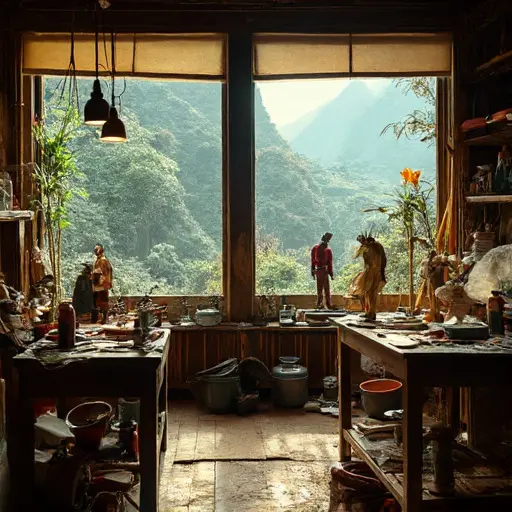
Mei repaired most pieces near the Willow Screen Bay.
A narrow section beside the open window where filtered daylight helped reveal damage hidden inside thin material.
One unfinished puppet still rests there.
Its painted sleeves repaired.
Its face unfinished.
Mei inherited the craft from an uncle who traveled with performance caravans long before roads modernized.
She never married and spent most of her life surrounded by stories she never performed herself.
For years the work survived.
Troupes returned season after season carrying damaged characters wrapped carefully in cloth.
Then entertainment changed.
Streaming media, disappearing traveling performances, and shrinking support for seasonal folk theater gradually erased the circuit her profession depended upon. Many puppet companies dissolved or sold collections to private buyers.
Mei repaired fewer pieces every year.
But she continued.
Not because it remained profitable.
Because she believed stories deserved maintenance.
Then the forests changed.
Commercial bamboo harvesting intensified throughout nearby hills, stripping slopes and altering water retention across the region. Landslides and unstable runoff became increasingly common after heavy rain.
During one storm season, Mei traveled to recover damaged puppets from an abandoned performance hall uphill from the village.
A sudden slope collapse struck the path during her return.
She never reached the house again.
Her funeral gathered former performers and elderly storytellers who still remembered the voices behind the puppets.
The house remained afterward.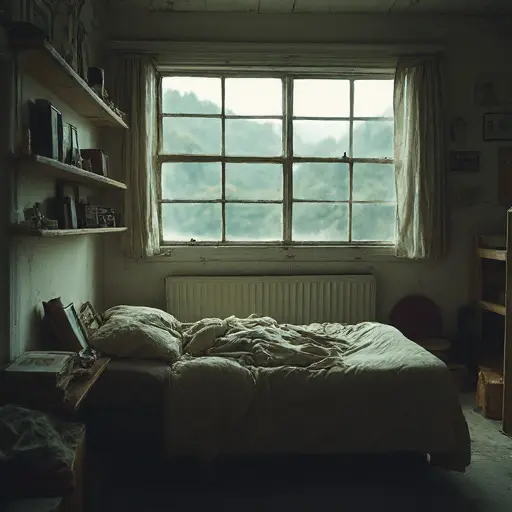
The shutters still move with mountain wind.
The porcelain jars remain beside the brushes.
And near the Willow Screen Bay, Mei’s unfinished puppet still waits beneath the same open window she never returned to close.