The Quiet Elegance of the Forgotten Italianate Villa
Standing peacefully in the American Midwest, this abandoned Italianate Victorian house remains a graceful reminder of a more refined architectural era. Once a cherished family residence, the home now rests quietly among budding trees and an early spring garden, its carefully crafted details surviving through decades of changing seasons and slow neglect.
The low hipped roof immediately establishes the home’s Italianate character, while the ornate bracketed eaves create a delicate rhythm along the upper edges of the structure. Tall narrow windows rise across the facade, emphasizing the vertical elegance typical of Victorian design. Their cracked yet intact shutters remain attached, preserving the original personality of the residence despite years of weather exposure.
The curved veranda wraps gently around the front of the house, supported by decorative wooden columns that still display traces of their original craftsmanship. The porch creates a welcoming transition between the garden and interior spaces, suggesting quiet mornings, family conversations, and long afternoons spent beneath its shade.
The exterior combines muted terracotta paint with pale stone-colored trim, creating a warm and nostalgic palette. Weathered clapboard siding shows the texture of age, while the preserved brick foundation provides a strong base beneath the softened upper walls. Every surface reveals a balance between decay and endurance, where imperfections add to the home’s historic beauty.
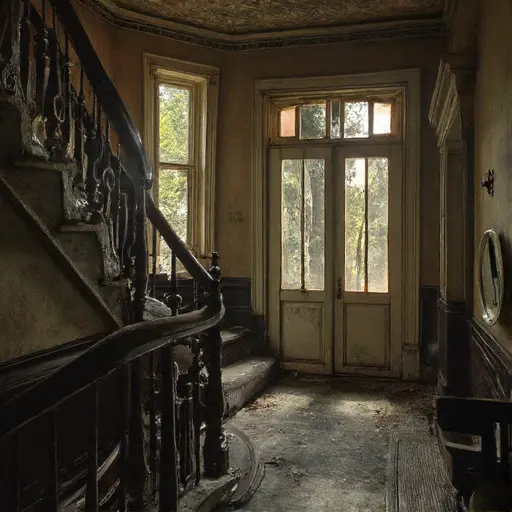
Inside, the forgotten villa reveals the elegant simplicity of nineteenth-century domestic design. The entry hall features graceful proportions, aged wooden floors, and handcrafted details that reflect the skill of the original builders. Morning light enters through the tall windows, illuminating layers of dust and revealing the subtle textures of the old interior.
The main gathering rooms maintain an atmosphere of quiet sophistication. Faded walls, preserved trim, and abandoned furnishings suggest a home that was once filled with music, conversation, and everyday family life. The curved architectural elements of the exterior continue inside through rounded transitions, carefully shaped woodwork, and thoughtful design choices.
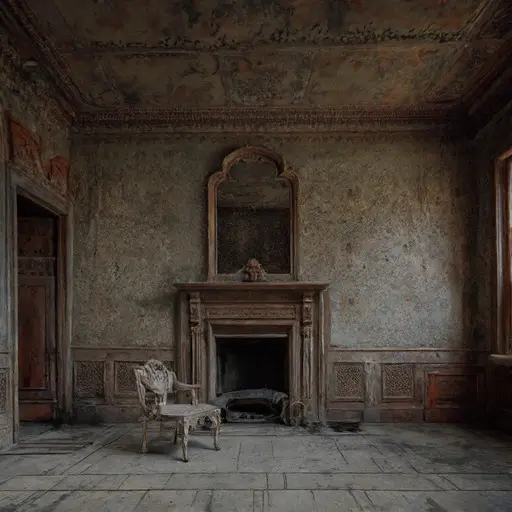
The upper rooms remain peaceful and untouched, carrying the traces of generations who lived beneath the low hipped roof. Old bedrooms and private spaces reveal worn wooden details, faded finishes, and forgotten objects left behind. The quietness of the rooms creates the feeling of a home suspended between memory and time.
Outside, early spring has begun reclaiming the property. Fresh weeds grow through cracks near the foundation, while budding trees surround the house with new life. The garden appears neglected but not lifeless, with small signs of renewal emerging among the forgotten paths.
A vintage rusted mailbox stands near the entrance, marking the boundary between the abandoned residence and the surrounding neighborhood. Its weathered surface reflects the same passage of time visible across the shutters, siding, and porch columns.
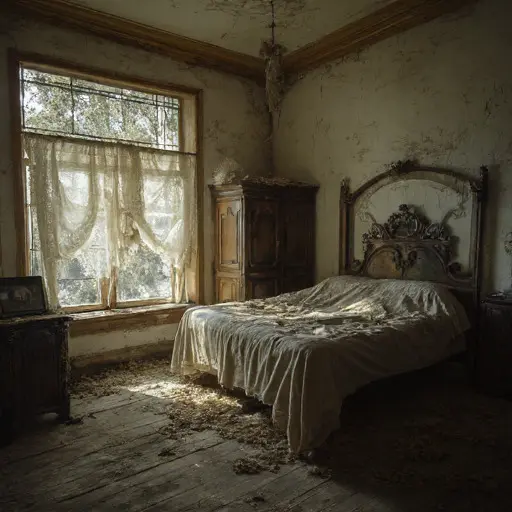
Captured in clear early morning light, the house reveals every architectural detail with remarkable clarity. The shallow depth of field highlights the aged materials, from the worn clapboard siding to the decorative porch woodwork, while the surrounding garden fades softly into the background.
Although abandoned, the Italianate Victorian villa continues to express elegance through its proportions, craftsmanship, and surviving details. Its curved veranda, bracketed roofline, tall windows, and weathered textures tell the story of a home built with care and designed to last.
Quietly resting beneath the spring trees of the Midwest, this forgotten residence remains a beautiful symbol of architectural memory — a place where history, nature, and time have blended together into a peaceful and nostalgic portrait of the past.