The Quiet Catastrophe of Aethelburg House
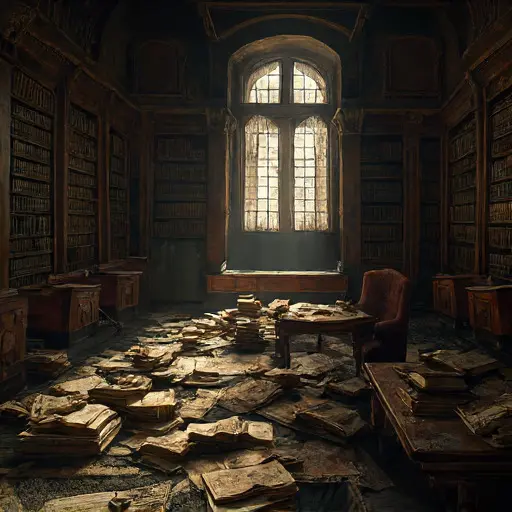
The decay inside Aethelburg House was a slow, deliberate performance, staged only for the woodlice and the relentless damp. It was a structure built not of brick and mortar, but of the forgotten secrets of Silas Ashworth, the family patriarch. Upon entering the Grand Vestibule, the immediate impression was not one of wealth, but of overwhelming stillness.
The polished tessellated floor tiles were obscured by years of dust and plaster flakes, the scent of mildew was sharp, and the pervasive darkness seemed to absorb the weak light. The house was not empty; it was meticulously, crushingly full, every room retaining the heavy inventory of a life arrested mid-sentence.
Silas Ashworth: The Fatal Obsession
The history of Aethelburg House is the story of Silas Ashworth, a successful but fiercely insecure ship chandler and property speculator. His profession—procuring supplies for long voyages—demanded risk, but his private life was defined by control. Silas used the house as an architectural expression of his own suffocating ambition. His first wife, Eliza, a quiet woman who loved gardening, found herself stifled. She was banned from redecorating the Main Sitting Room, which Silas reserved for business meetings, demanding it remain exactly as it was when he purchased the property. Her final, sad attempt at personalization is found tucked into the back of a vast, unread encyclopedia on the lowest shelf of the Library: a single, pressed snowdrop, brittle and colorless. Her death during the difficult birth of their only daughter, Charlotte, was the first turning point—the house swallowed her memory and remained exactly as he wished.
The Daughter’s Hidden Sorrow
Charlotte Ashworth grew up an heiress and a captive. Her father, terrified of her leaving, educated her at home, making her his meticulous, unpaid clerk. Her days were spent in the small, Second-Floor Study adjacent to her old nursery. This room, unlike her father’s severe library, still holds a tender, tragic clutter. Faded floral wallpaper is visible beneath framed, hand-drawn anatomical sketches—Charlotte had secretly nursed a desire to be a physician, an aspiration entirely forgotten and forbidden by her father. On the large, carved writing desk, beneath a stack of dusty property deeds, lies a small, locked mahogany box. When forced open, it yields not jewels, but dozens of letters addressed to a Dr. Andrew Bell—a physician she met only twice when he treated her father—none of them ever mailed. They document her deepening emotional isolation and her final realization that she would never be allowed to live a life outside the house’s cold embrace.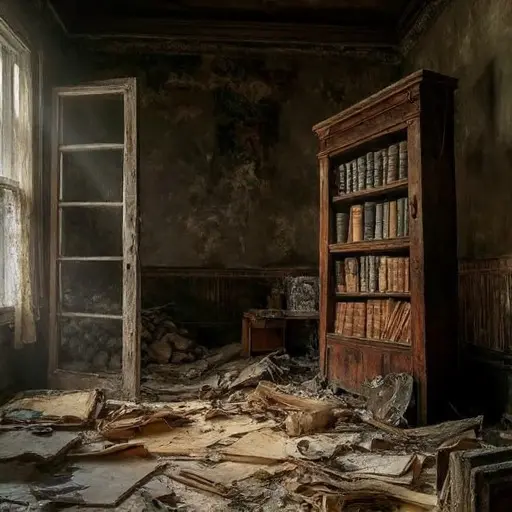
The Ledger of Ruin
Silas Ashworth’s ruin came not from shipping, but from Charlotte. The turning point arrived in 1914. His property speculation collapsed with the onset of the Great War, which froze international finance. He was financially destroyed, but his pride prevented him from seeking aid or revealing the extent of his losses to his daughter. Charlotte, now in her late thirties, was finally able to act. She realized her father’s state while reviewing a Small Study Ledger where he had frantically attempted to rework his accounts. She found the true, disastrous figure scrawled on the last page. In a final, desperate act to secure her own freedom and escape the crushing weight of the house, Charlotte secretly sold the small parcel of shares her mother had left her—the only liquid asset in the family—and used the funds to purchase passage and tuition at a women’s medical college overseas. She did not confront her father. She simply left a terse, short note on the Hall Table announcing her permanent departure and walked out one rain-soaked evening.
Silas Ashworth died alone in the house six months later, amidst the wreckage of his pride and his finances, having been too ashamed and too forgotten by the world to even contact a solicitor. The house, tied up in debts and probate issues, simply stood. No one claimed the contents, and no one came to lock the doors properly. It just faded into the landscape of forgotten human tragedies.
The Dining Room, where so many formal, silent meals were once eaten, now hosts only the slow disintegration of a vast oak table. A scattering of silver cutlery, blackened by sulfide, lies where it was hastily put down on a linen cloth now fused to the wood. The quiet, deep shadows of Aethelburg House have held its inhabitants captive in memory, but they offer no solace, no closure. The silence is permanent, the inventory of sorrow complete.
