The Qasr Al-Nur Moorish Revival Villa Beneath the Quiet Courtyard Waters
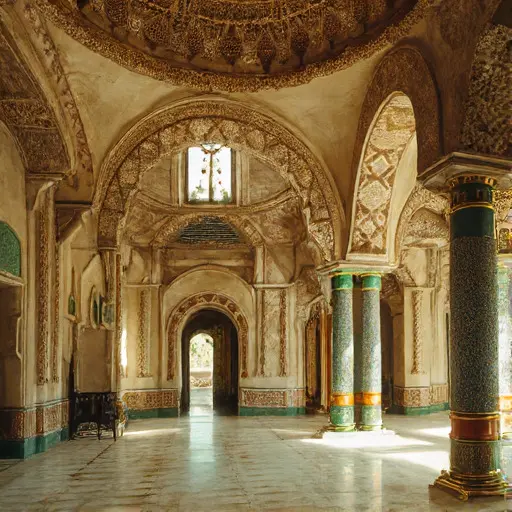
Qasr Al-Nur was completed in 1889 during a period of heightened fascination with Moorish Revival architecture across European colonial and coastal estates. Commissioned by the Alvarin family, the villa was conceived as both a private residence and a cultivated retreat for intellectual and artistic gatherings. Its design emphasized rhythmic symmetry and ornamental density, expressed through layered horseshoe arches, twin minaret-like corner towers, and a central domed pavilion that anchored the entire composition.
The estate’s courtyard was designed as a climatic and social core, where water channels, shaded arcades, and reflective surfaces moderated heat while hosting seasonal gatherings, musical performances, and literary salons. The surrounding gardens were arranged in strict geometric order, intended to evoke both paradise imagery and architectural discipline.
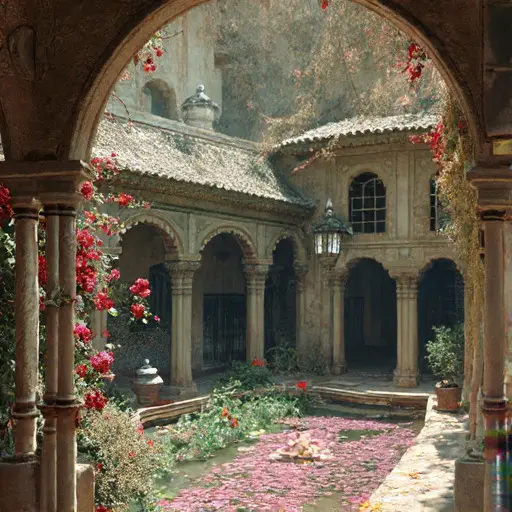
As the twentieth century progressed, the Alvarin family’s holdings diminished due to shifting trade routes and increasing maintenance costs associated with the villa’s highly intricate craftsmanship. The complex stucco work, mosaic inlays, and hydraulic water systems required constant attention, which gradually became unsustainable. Repairs were delayed, allowing moisture to penetrate decorative surfaces and weaken structural joints. The courtyard garden, once precisely maintained, began to transition into a semi-wild state. Geometric water channels overflowed or stagnated, and carved stone benches became partially obscured by creeping vegetation. Bougainvillea vines expanded rapidly across arcades, softening the rigid architectural rhythm with cascading color and organic growth.
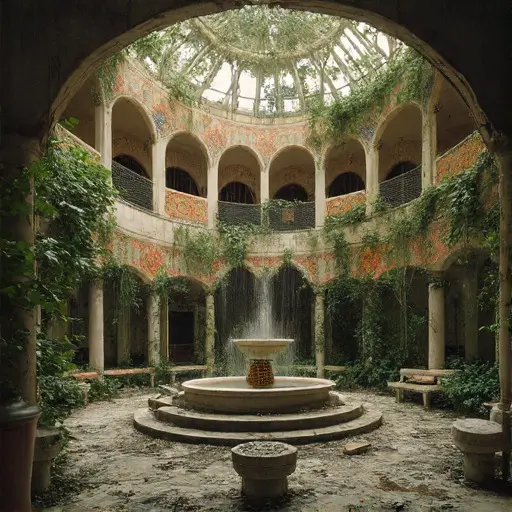
By the mid-1940s, Qasr Al-Nur was fully abandoned following the final departure of its remaining occupants, with no restoration or redevelopment undertaken thereafter. Ownership passed through inheritance disputes that left the estate unmanaged, allowing nature to gradually absorb its structured geometry. The courtyard water systems ceased functioning entirely, transforming into still basins that collected seasonal rainfall and drifting petals. Arcaded walkways became enveloped in bougainvillea and ivy, while twin towers softened in silhouette under layers of weathering stucco and vegetation. Today the Moorish Revival villa still stands beneath a heavy overcast sky, its once-crisp ornamentation now interwoven with living growth, preserving a quiet dialogue between human design and the slow persistence of nature.