The Ochre Manor Above the Forgotten Vineyards
On stepped, abandoned vineyard terraces along a quiet hillside, a Gothic Revival Victorian manor stands in softened ruin. Built from warm ochre-red sandstone and accented with cream limestone tracery, the structure retains its ornate vertical ambition even as time has gently altered its geometry. The tall pointed arched windows and steep cross-gabled roofs remain defining features, but both now show subtle bowing and uneven settling.
The silhouette of the manor has become less rigid over time. Rooflines dip slightly between gables, and the stonework appears to relax into the slope of the hill itself. This gives the building an organic, almost grown quality, as if it has slowly adapted to the terrain beneath it.
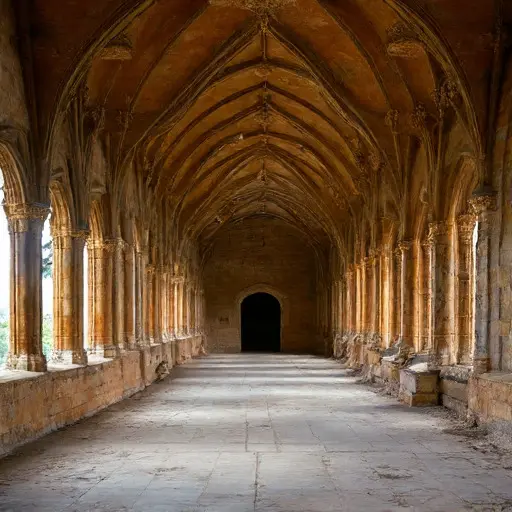
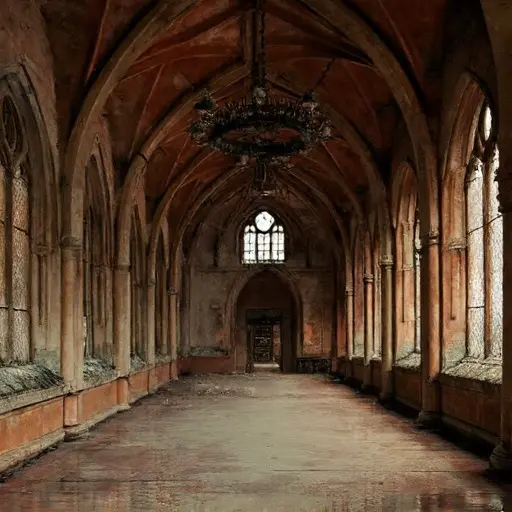
Inside, the manor is entirely unlit. All windows remain dark and void of any interior glow, reinforcing the sense of abandonment. The pointed arches frame only shadow, while faint diffused daylight enters through aged or damaged glass, revealing textures of worn stone and softened carvings.
The surrounding vineyard terraces are long abandoned, their structured geometry now disrupted by wild grasses and dry, curling vines reclaiming the stone steps. The hillside feels both cultivated and forgotten, a place where agriculture once shaped the land but has since receded.
Near the fractured pathway, a leaning wooden garden trellis stands partially collapsed, its structure overtaken by time. A weathered stone bench rests nearby, its surface softened by erosion and exposure, positioned as if for long-absent observers of the valley below.
The entire scene holds a quiet tension between former cultivation and present decay—an architectural relic softened by nature and time, yet still unmistakably grand in its Gothic intent.