The Montferrer Modernisme Château Left in Forest Quiet
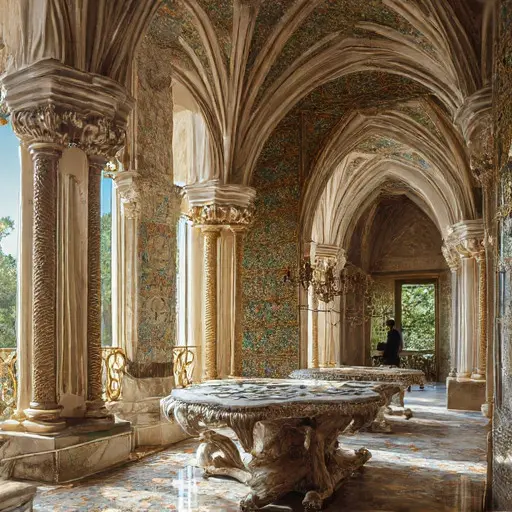
The Montferrer Château was constructed in a secluded forest glade in the early 1900s by a Catalan industrial patron family influenced by the ideals of Modernisme architecture. Designed as an integration of structure and nature, the estate rejected rigid geometry in favor of flowing forms that echoed plant growth and organic movement. The household consisted of two generations supported by architects, clerks, and gardeners who maintained both the residence and its terraced botanical gardens.
Early life within the château was carefully organized despite its artistic freedom, with financial records managed in the main salon and estate correspondence coordinated through a small administrative staff. The property was initially sustained by textile and construction investments, allowing its elaborate craftsmanship to remain fully maintained during its early decades of stability.
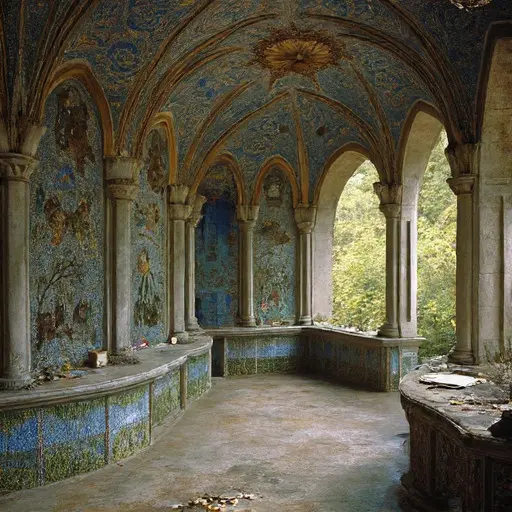
By the late 1920s, the Montferrer estate began to experience financial strain as industrial investments declined and maintenance costs for its highly specialized organic architecture increased significantly. The complexity of preserving curved masonry, mosaic inlays, and wrought-iron botanical structures required constant skilled labor, which became increasingly difficult to sustain. Portions of the château were closed off to reduce heating and maintenance demands, resulting in uneven occupation across its flowing interior spaces. Administrative correspondence accumulated without timely response, particularly regarding property taxation and investment losses. Moisture from the surrounding forest began infiltrating stone joints and mosaic seams, subtly eroding the clarity of color and form that defined the estate’s artistic identity. The household gradually transitioned from active residence to partially maintained structure with fragmented administrative oversight.
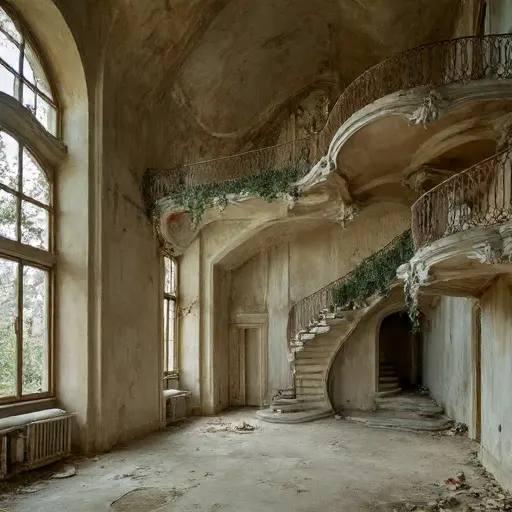
By the early 1940s, following prolonged financial collapse and unresolved inheritance fragmentation, the Montferrer Modernisme Château was fully abandoned. No restoration efforts were undertaken, and legal disputes prevented any unified stewardship or redevelopment of the estate. The structure remained embedded in the forest glade but deteriorated steadily under seasonal weathering, vegetation encroachment, and structural fatigue. Interior spaces were left in their final operational states, preserving furnishings and documents beneath accumulating dust and humidity. Over time, the once fluid Modernisme vision dissolved into silent decay, leaving the château as an uninhabited architectural organism slowly reclaimed by forest growth, time, and erosion.