The Montclair Second Empire Townhouse Left in Winter Silence
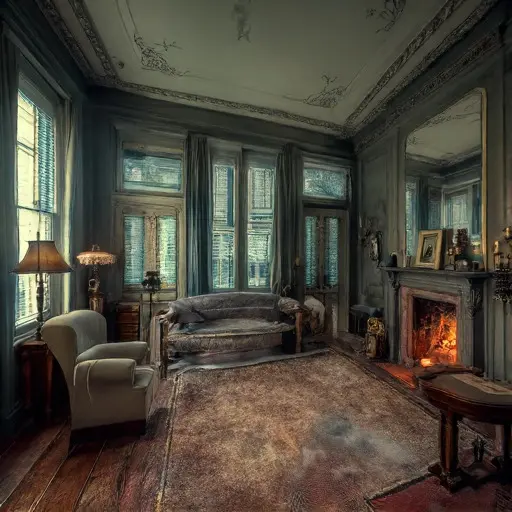
The Montclair Townhouse was built in the late nineteenth century during a period of urban expansion, commissioned by a family involved in municipal administration and small-scale finance. Designed in the Second Empire style, the residence emphasized vertical presence and formal symmetry, with its mansard roof and central pavilion expressing stability and civic ambition. The household consisted of three generations living under one roof, supported by domestic staff who maintained both interior order and the modest front courtyard.
Daily life followed a strict rhythm of meals, correspondence, and social obligations, with the front parlor serving as the primary space for receiving guests and managing family affairs. For many years, the townhouse stood as a structured and well-maintained urban residence integrated into the surrounding city fabric.
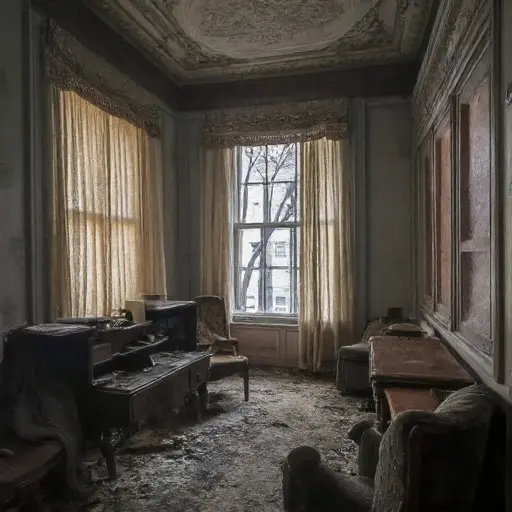
By the late 1920s, the Montclair estate began to experience financial strain as municipal restructuring and economic downturn reduced the stability of the family’s income sources. Maintaining the townhouse’s ornate limestone façade, brass detailing, and slate mansard roof became increasingly difficult during harsh winter cycles. Staff were reduced, and parts of the residence were closed to minimize heating costs, leading to uneven occupancy throughout the building. The small courtyard garden was no longer regularly tended, allowing frozen planters and dormant rose bushes to remain untouched through successive seasons. Correspondence regarding taxes and property expenses accumulated without timely response, reflecting a gradual withdrawal from active financial and domestic management.
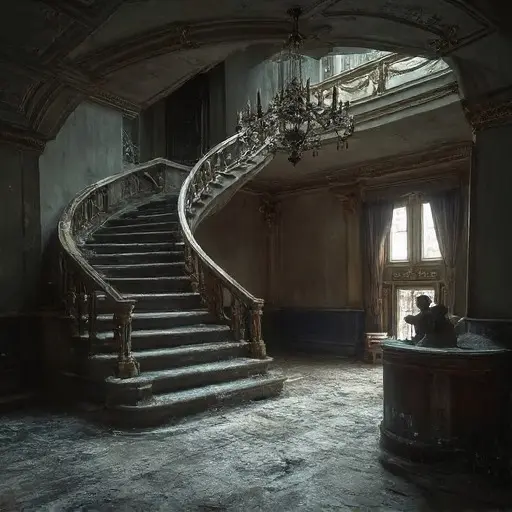
By the early 1940s, following prolonged financial decline and unresolved inheritance disputes, the Montclair Townhouse was fully abandoned. No restoration or redevelopment efforts were undertaken, and ownership complications prevented any coordinated intervention. The structure remained standing within its snowy street context but deteriorated slowly under freeze-thaw cycles and lack of maintenance. Interior spaces were left intact in their final state of use, preserving furniture, documents, and domestic arrangements beneath layers of dust and cold stillness. The townhouse endures as an unoccupied Second Empire residence, suspended in winter silence, gradually weathering without return or renewal.