The Montclair Baroque Château Left in Courtly Silence
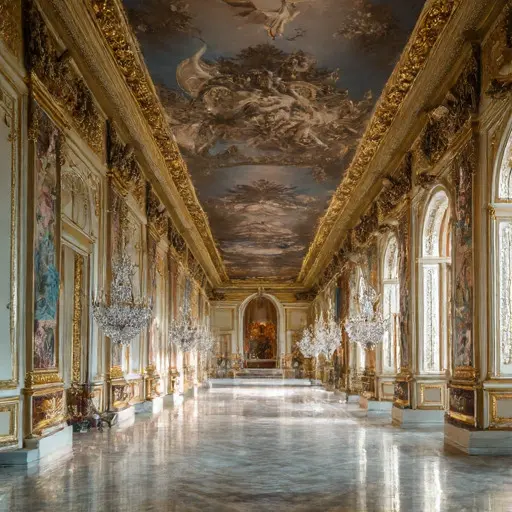
The Montclair Château was constructed at the turn of the twentieth century within a forest clearing by an aristocratic lineage intent on reinforcing its influence through Baroque grandeur and ceremonial architecture. Designed with a strict axial layout, the estate functioned as both a residential complex and a formal administrative court for surrounding landholdings. The household included multiple generations of the family supported by clerical staff who managed taxation records, agricultural yields, and ceremonial obligations.
Early years were defined by rigid structure and financial stability, with all estate activity coordinated through the central pavilion. The ceremonial courtyard served as both symbolic and operational heart of the estate, reinforcing order through architectural precision and controlled social hierarchy.
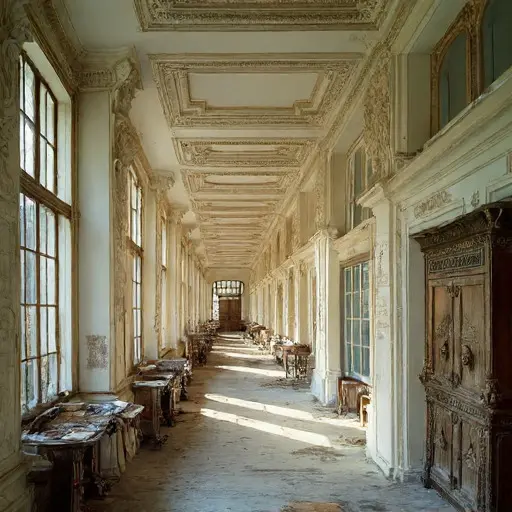
By the late 1920s, the Montclair estate began to experience financial strain as agricultural revenues declined and maintenance costs for its highly ornamental Baroque detailing increased significantly. The complexity of the architecture required continuous specialized upkeep, which became increasingly unsustainable under reduced income streams. Portions of the gallery wings were closed off to conserve heating and limit labor demands, resulting in uneven use of the complex. Administrative correspondence accumulated without consistent review, and estate governance slowed into delayed cycles of decision-making. Moisture from the surrounding forest began affecting interior stonework, subtly eroding surface clarity and weakening decorative cohesion across the château’s vast symmetrical structure.
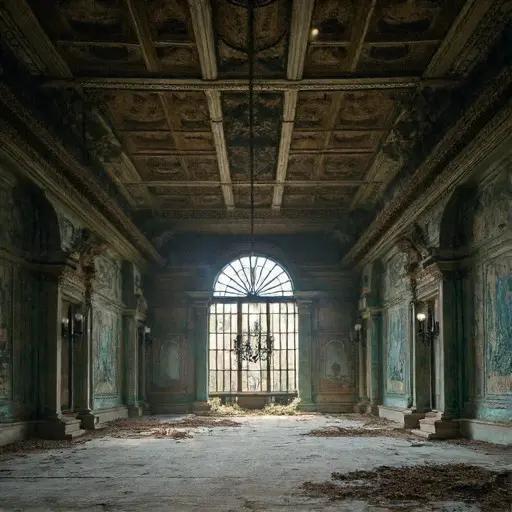
By the early 1940s, following prolonged financial collapse and fragmented inheritance disputes, the Montclair Château was fully abandoned. No restoration or redevelopment efforts were undertaken, and ownership conflicts prevented any unified intervention. The estate remained structurally intact within its forest clearing but gradually deteriorated under environmental exposure and seasonal vegetation encroachment. Interior spaces were left in their final state of use, preserving documents and furnishings beneath accumulating dust and moisture. Over time, the once rigid Baroque order dissolved into a silent architectural ruin, with the château persisting as an unresolved relic of ceremonial authority slowly reclaimed by time and forest growth.