The Millstone Queen Anne Townhouse Beneath Rain and Memory
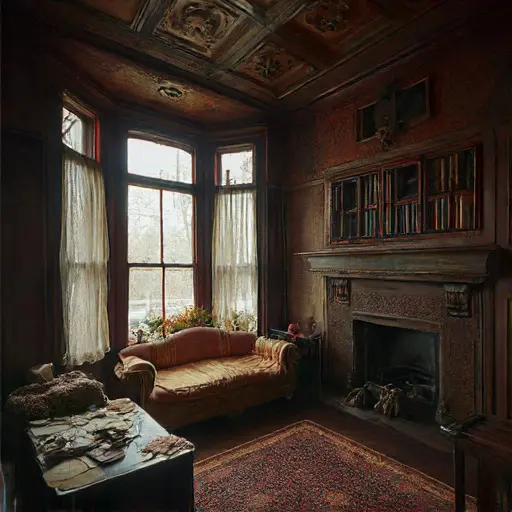
The Millstone Townhouse was constructed in 1892 for the Caldwell family, who moved into the growing residential district during a period of rapid urban expansion along the river corridor. Designed in the Queen Anne style, the house emphasized asymmetry, vertical drama, and ornamental layering, expressed through its offset bay windows, hexagonal turret, and intersecting gables. The household consisted of a married couple, their young daughter, and a live-in seamstress who assisted with both domestic work and clothing production.
Life in the home centered on structured routines: meals in the rear dining room, afternoon reading in the parlor, and evenings spent writing correspondence or maintaining household accounts. The small front yard served as a symbolic threshold between domestic life and the street, carefully tended with seasonal flowers and decorative statuary.
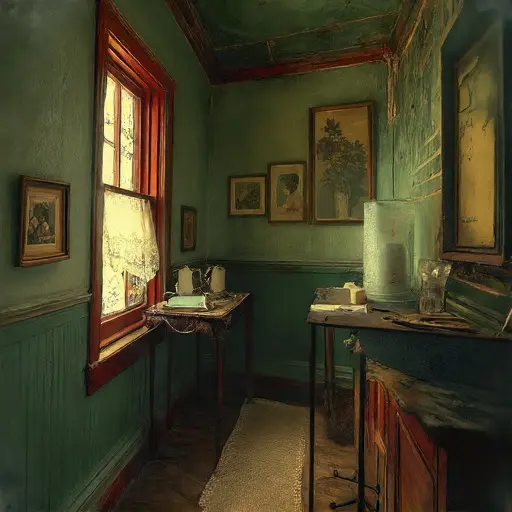
By the early 1930s, the Caldwell family began to experience sustained financial pressure as local economic shifts reduced income stability and increased maintenance burdens. The townhouse’s complex exterior—particularly its layered rooflines, turret structure, and decorative woodwork—required continuous upkeep that became progressively difficult to afford. Repairs to the roof and drainage systems were delayed, allowing moisture to enter upper floors and accelerate deterioration of interior finishes. Household activity gradually contracted into fewer rooms, with the parlor and kitchen remaining in use while upper levels saw reduced occupancy. The front yard, once carefully maintained, became increasingly overgrown as peonies, forget-me-nots, and wild roses spread beyond their original borders. The swing in the maple tree fell into disuse, marking a subtle shift from active domestic life to quiet neglect.
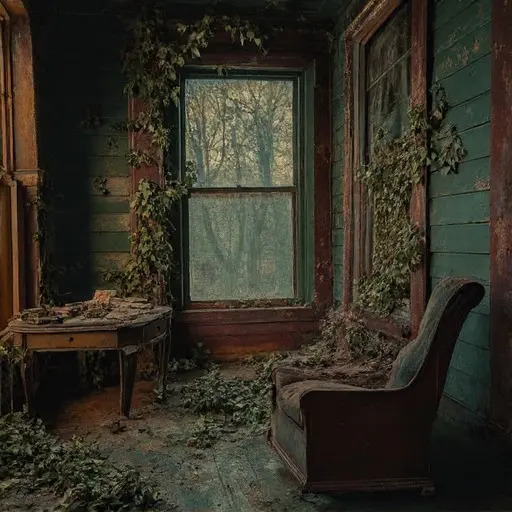
By the mid-1940s, following foreclosure proceedings and the final departure of its remaining occupants, the Millstone Queen Anne Townhouse was permanently abandoned. No restoration was undertaken, and legal complications prevented redevelopment of the property. The front gate remained open with the child’s red ribbon still tied in place, while the marble statue of the seated couple slowly became enveloped in ivy. The swing continued to hang motionless from the maple tree, and the narrow brick path remained lined with overgrown flowers bending toward the street. Inside, furniture, documents, and personal effects were left exactly as they were at the moment of departure. The townhouse still stands today under persistent rain, its Queen Anne silhouette gradually dissolving into weather, vegetation, and memory.