The Mansion That Kept Its Music in the Wood
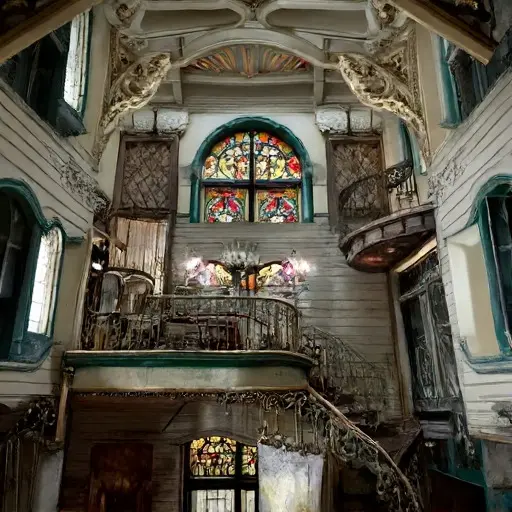
The mansion rose above its garden like a memory still insisting on architectural form. Its asymmetry did not feel accidental—it felt choreographed, as if every turret, gable, and veranda had been placed to hold a different kind of silence. Even under the soft overcast sky, the structure retained a quiet intensity, its colors balanced rather than faded.
It belonged to the Ellery household, remembered in local stories not for grand events but for the small, repeated rituals of living. Music drifting through open windows in the evening. Conversations that stretched across verandas until candlelight blurred faces into warmth. The house was never described as quiet, even when no one could recall the last time it was occupied.
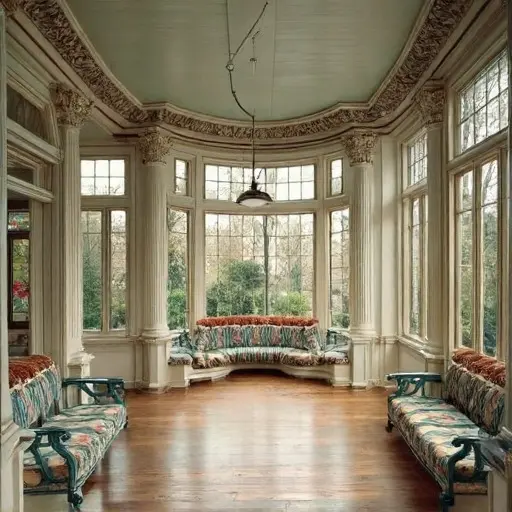
The garden outside behaves like an extension of that remembered rhythm. The curved flagstone path does not cut through the landscape so much as drift with it, guiding movement toward the circular lawn where the marble dancers still hold their slow, unfinished turn.
Around them, camellias, roses, and delphiniums form dense color fields that feel less planted than composed through habit. The grapevine arbor, heavy with fruit, bends gently over the path like a canopy that never stopped growing for returning guests.
Even now, the swing beneath the wisteria moves slightly when the wind shifts, as though it still expects weight. And the stained-glass windows continue to glow faintly at dusk, not with electricity, but with the memory of evenings that once refused to end.