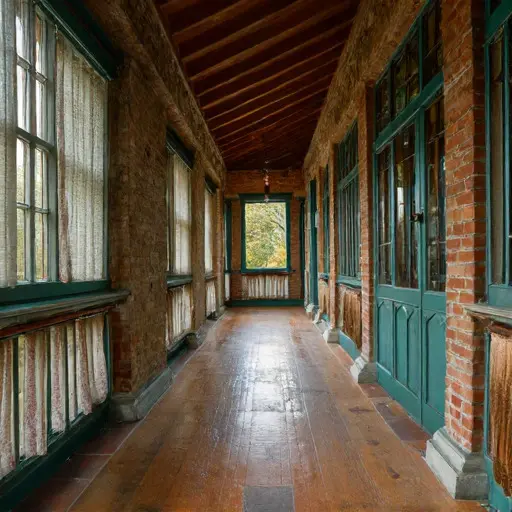
The Manor That Learned the Shape of Daily Light
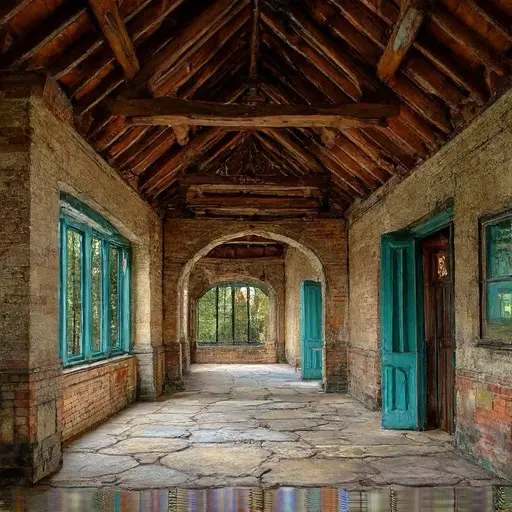
The manor sat low against the landscape, as if it had been built not to dominate but to belong. Its wide roofline spread across the horizon in deliberate balance, and the projecting gabled bays broke the silhouette just enough to keep it from becoming rigid. Even in abandonment, it felt grounded—anchored in the idea that a house should always feel close to the earth.
It had belonged to the Larkspur family, artisans and furniture makers who believed architecture should behave like craft made permanent. The house was designed around their habits: long mornings of work, slow afternoons of repair, evenings spent in quiet conversation under the veranda while tools cooled on wooden tables and light shifted across terracotta walls.
That rhythm still clings to the structure. The timber columns of the veranda feel like pauses between sentences, and the patterned roof tiles seem arranged with the patience of something handmade rather than assembled. Nothing about the house feels rushed—even now, it resists urgency.
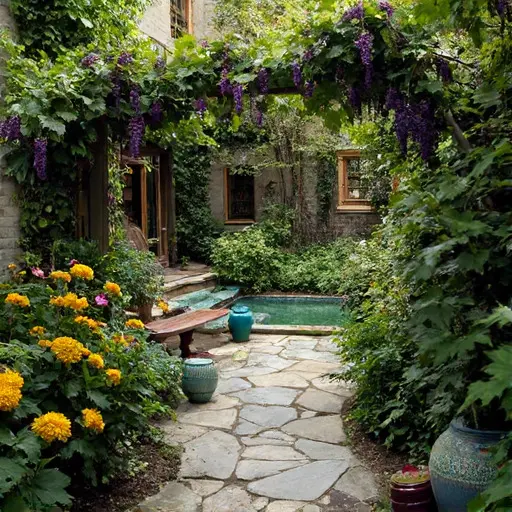
The garden was never meant to be symmetrical in the strict sense, only balanced in feeling. Paths curve rather than insist, and plants overlap in ways that suggest collaboration rather than control. Even the reflecting pool sits slightly off-axis, as if positioned to catch light rather than enforce order.
The Larkspurs were known for their belief that repetition builds memory. Every object in the house—every railing, tile, and joint—was chosen not for spectacle but for use. Guests often described the manor as “quietly attentive,” a place that seemed to adjust itself subtly around whoever occupied it.
When the family stopped returning, there was no moment of rupture. The house simply ceased receiving updates to its rhythm. Doors stayed closed longer. Curtains were left parted but unchanged. The garden continued its slow conversation with the veranda.