The Mallowgate Stair-Tower House Left After Rural Line Abandonment
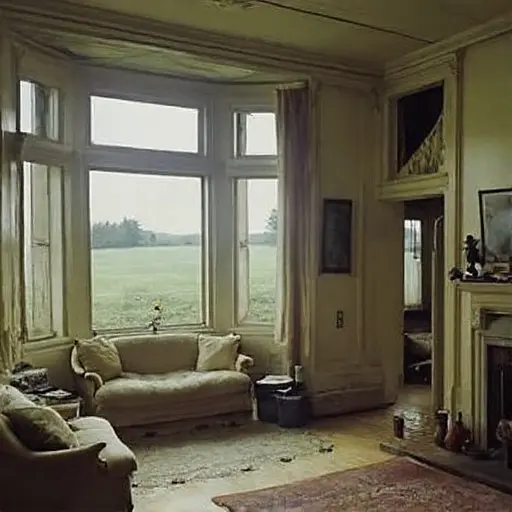
The Mallowgate House was constructed in 1884 on open rural land between scattered farming plots and undeveloped meadowland The design reflected a transitional period in Victorian domestic architecture where functional additions were increasingly integrated into compact family homes rather than separate outbuildings The defining feature of the property was its circular stair tower which served both practical and symbolic purposes within the household layout
The main two-story structure was modest and asymmetrical with a slightly offset bay window and a gently uneven roofline resulting from incremental repairs over decades The stair tower rose slightly above the main roof and provided vertical circulation between floors while also acting as a visual anchor for the entire composition of the house The rear kitchen extension was added later in a simple geometric form that maintained coherence with the original structure while expanding domestic capacity
The interior layout reflected the tower’s influence with rooms organized around access to the spiral staircase rather than a rigid corridor system Light and movement within the house were shaped by the curved geometry of the tower creating shifting patterns of shadow and illumination across the adjoining spaces
Gradual Decline of Rural Occupation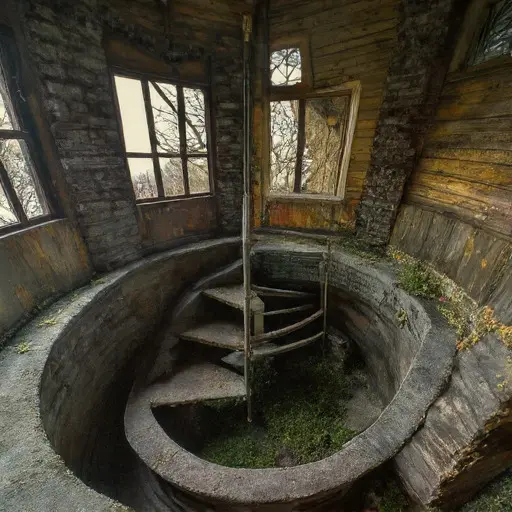
By the early 1930s the Mallowgate family reduced their permanent residence at the property as agricultural consolidation and rural migration decreased the viability of maintaining isolated countryside homes The house transitioned from a full-time family residence to a seasonal dwelling used intermittently during agricultural cycles
Maintenance of the structure became increasingly irregular Wooden elements began to show minor warping and paint degradation while stone foundations remained stable under consistent ground conditions The stair tower remained fully functional but its daily use diminished significantly as household activity concentrated into fewer rooms
The surrounding meadowland gradually changed character as farming activity declined and natural vegetation began to reclaim previously maintained boundaries The house became more isolated within its own landscape despite remaining structurally intact
Final Abandonment of the Stair Tower House
<img src=”https://beyondvisit.
com/wp-content/imagecontent/uploads/abandoned victorian house 40324809.webp” alt=”” />
By 1948 the Mallowgate Stair Tower House was fully vacated following the relocation of its remaining occupants to larger agricultural settlements where access to infrastructure and services was more reliable No demolition or redevelopment occurred and the property was left in its existing state
In the following years the structure remained unchanged in form while gradually responding to environmental exposure Moisture and seasonal weathering marked the wooden and stone surfaces but no structural failure developed The stair tower remained upright and stable serving as the most enduring vertical element within the composition of the house
By 1950 the Mallowgate House remained standing in the open countryside fully abandoned and structurally intact No collapse occurred no restoration was attempted and no return was recorded The structure persisted in quiet isolation anchored by its circular stair tower rising above the still meadowland