The Lysandre Villa Left to Forest Quiet
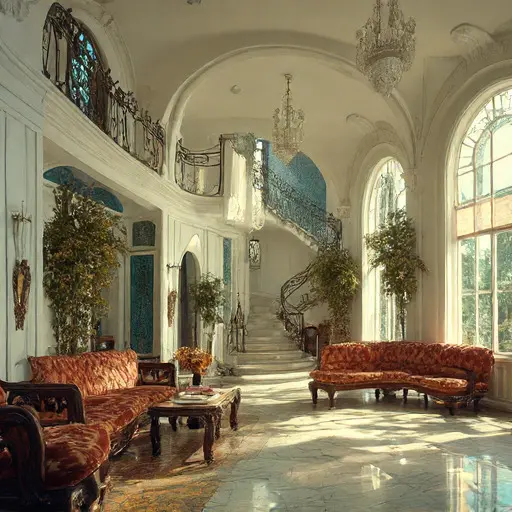
The Lysandre Villa was constructed in the early 1900s on a forested hillside by a family of botanical researchers and decorative artisans who sought to merge architecture with living landscape. The household consisted of parents and a daughter, assisted by a small staff familiar with greenhouse maintenance and ornamental design. The villa was designed as both residence and creative laboratory, with each interior space flowing into the next in continuous organic geometry.
Early years were marked by careful integration with surrounding vegetation, controlled cultivation of rare plants, and steady correspondence with patrons who supported the villa’s experimental architectural vision. The home functioned as a harmonious blend of scientific curiosity and domestic stability, sustained by modest but consistent financial backing.
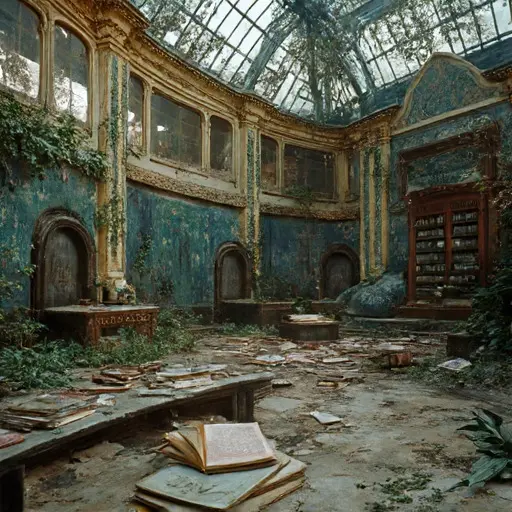
By the late 1920s, the Lysandre Villa began to suffer from financial strain as research funding declined and private patronage weakened. Maintenance of its complex integrated architecture required specialized upkeep that became increasingly expensive. Portions of the villa were closed off to reduce operational costs, and greenhouse systems were left partially unattended, allowing plant growth to become uncontrolled in some interior zones while others were abandoned entirely. Administrative correspondence accumulated in the library without response, and the household’s once precise balance between architecture and horticulture began to deteriorate. Moisture spread through structural joints, and decorative surfaces lost their clarity as maintenance cycles were interrupted, marking the slow breakdown of both function and design harmony.
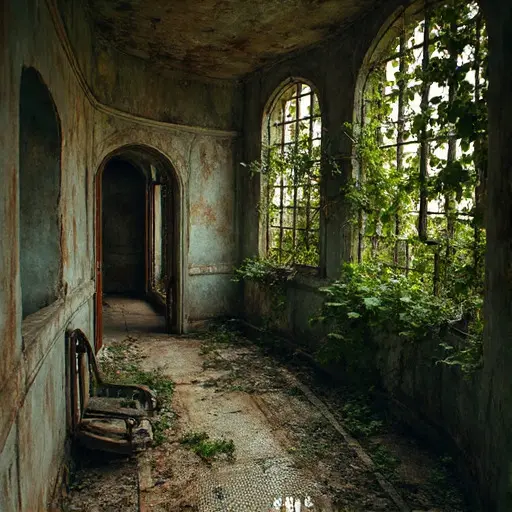
By the early 1940s, following prolonged financial collapse and the dispersal of the original family, the Lysandre Villa was fully abandoned. No restoration efforts were initiated, and ownership disputes prevented any coordinated intervention. The structure remained embedded in the hillside, gradually succumbing to environmental pressure as forest vegetation reclaimed both exterior terraces and interior corridors. Rooms were left in their final state of use, with botanical materials and personal records untouched. Over time, humidity, plant overgrowth, and structural fatigue transformed the villa into a slowly dissolving architectural form. It remains uninhabited and unresolved, with no return or restoration, standing as a fading intersection between design and nature