The Lost Ström Pipe Loft Where the Joint Sank Low
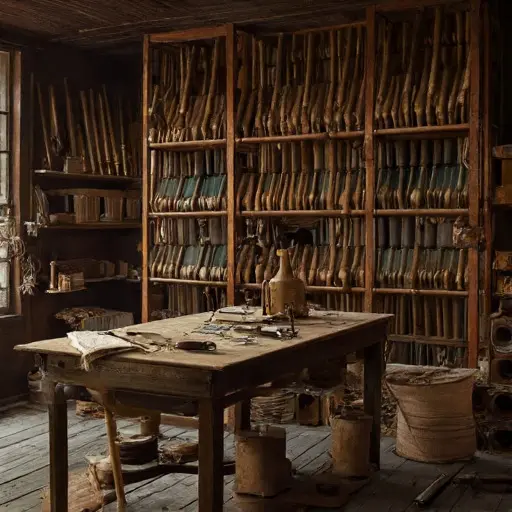
Crossing into the pipe loft, a hush folds around the scent of tin and felting wax. Lantern glow brushes dust motes caught in mid-fall. Everything holds the tremor of a chord interrupted before its rise, an intention stilled by a hand that could not continue.
A Builder of Quiet Instruments
Håkan Leif Ström, born 1873 in Göteborg, crafted modest organ sections for chapels. A woolen scarf from his sister Agnes cushions the tuning knives. Håkan shaped pipes at dawn, soldered seams by midday, and tested voicing under faint lamplight. His simple origins linger in reused felts and recycled tin cuttings stacked beneath the racks.
Work Pressed Among Beams and Dust
A flue pipe lies on its side, mouth slightly dimpled from hesitant pressure. A row of resonators stands aligned but dull, as if under-polished. Swedish-script annotations run along a blueprint, the final measure trailing off. On the worktable, a tuning cone leans against a mandrel, angles mismatched. The felt strips show frayed edges from too-frequent adjustments.
Strain Moving Through Silent Metal
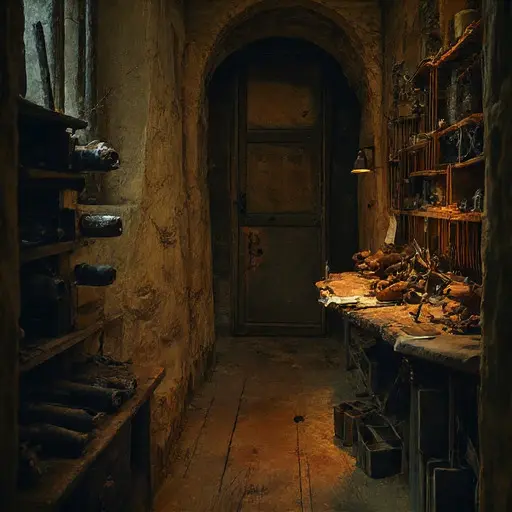
Behind a row of resonators lies a returned notice—“unstable tone.” A pipe foot, crushed ever so slightly, rests near scattered tools. The stool stands skewed, implying pacing that circled the loft’s center beam. A tin sheet trimmed too narrow curls away from its proper form, testament to a late and anxious measurement gone wrong.
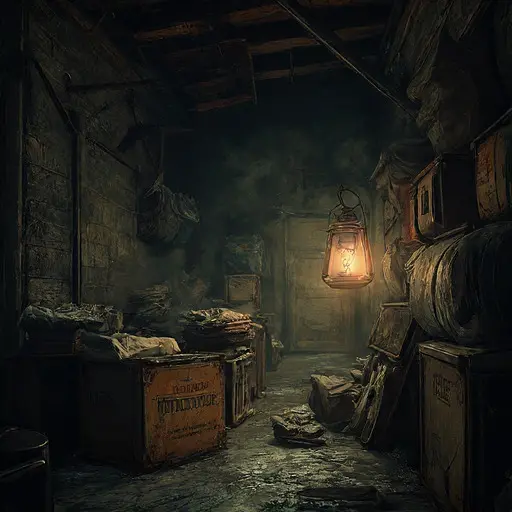
Returning to the pipe loft, one detail waits: a perfectly soldered pipe foot laid beside the unfinished joint—harmony within reach, silence in command.
The house remains abandoned.
