The Lost Loom Patterns of the Nakamura Weaving Alcove
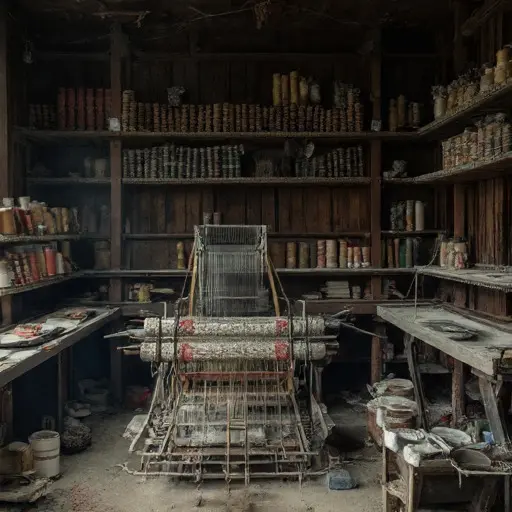
A hushed, fibrous silence fills the Weaving Alcove, where a penciled pattern notation in a notebook stops mid-design, leaving silk panels forever unfinished.
Life in Silk
These tools belonged to Hanae Nakamura, textile weaver (b. 1879, Kyoto), trained in a local artisan guild specializing in ceremonial kimono.
Her Japanese notes—small, precise, and methodical—record warp counts, dye combinations, and weaving sequences. A folded slip referencing her sister, Emi Nakamura, “sort silk threads Monday,” hints at a daily routine: dyeing, threading, and weaving, intertwined with domestic care.
Threads and Equipment
On the main loom, partially woven kimono panels hang, threads taut but awaiting continuation. Silk spools are sorted by shade, some partially unwound. A ledger beneath folded patterns records thread counts, color sequences, and client orders. Several unfinished panels lean against the loom, edges curling slightly, suspended mid-weave as though waiting for Hanae’s hand to return.
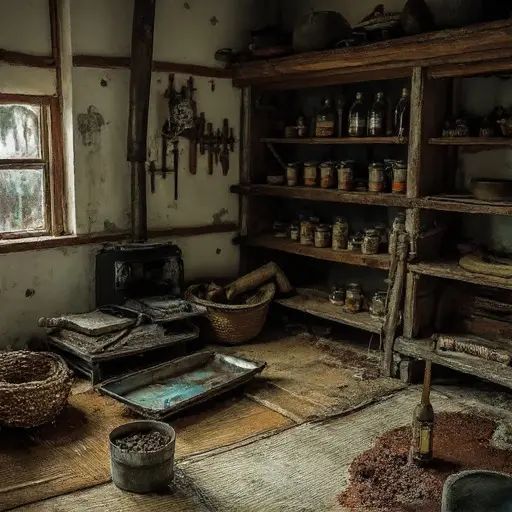
Threads of Decline
Later ledger entries reveal repeated corrections to weave tension and color patterns. Several panels show inconsistent stitching; motifs misalign. A margin note—“client rejects sample”—is smudged. Scissors and shuttle sticks lie scattered, one slightly bent, reflecting fatigue and mounting anxiety that disrupted Hanae’s careful practice. Partially woven silk panels remain on looms, the regular rhythm of weaving broken.

In the Alcove’s final drawer, Hanae’s last pattern entry trails into incomplete designs and penciled color notes. A note—“confirm with Emi”—cuts off abruptly.
No record explains why her weaving ceased, nor why Emi never returned to finish the remaining panels.
The house remains abandoned, its looms, silk, and tools suspended in quiet anticipation, preserving the halted rhythm of weaving that will never resume, a silent testament to careful labor left unfinished.
