The Lost Key of the Hearth-Ember
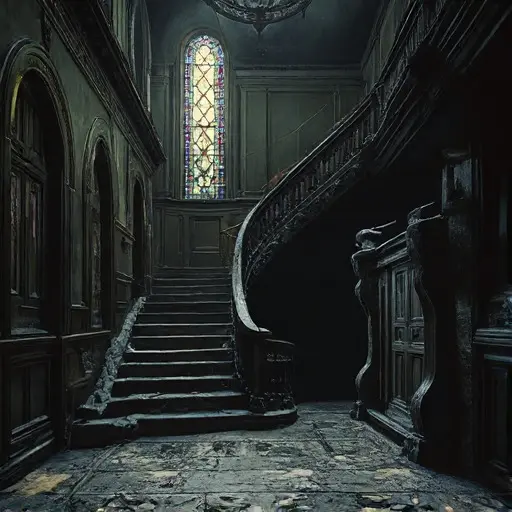
The Hearth-Ember, a rambling, formidable structure of dark brick and heavy, carved timber, was completed in 1892, intended to project an image of familial warmth and enduring wealth. Its complex roofline and deep eaves give it a perpetually shadowed, brooding appearance. To step into the main Reception Hall is to feel an immediate, chilling drop in temperature and an unsettling pressure of silence, a weight that has settled into the very beams of the structure.
The grand staircase, designed to welcome and impress, is now merely a dusty, monumental barrier. The house did not just decay; it was deliberately sealed and left, ensuring that the lost key to its history would remain hidden in the silence.
The Guarded Collector, Julian Thorne
The mansion was built by Julian Thorne (1845–1910), a man whose profession was the acquisition and sale of rare, ancient artifacts and manuscripts. His work required immense secrecy, high-risk negotiations, and a profound distrust of rivals. Socially, he was a cold, conservative man who valued his privacy above all else.
Julian married Eleanor Vance in 1870, a quiet woman from a respectable family who found her husband’s life and secrets deeply unsettling. They had one child, a daughter named Clara. Julian’s personality was defined by his crippling need for control and security; his daily routine revolved around cataloging and obsessively protecting his vast personal collection in his heavily fortified second-floor Vault-Study. His ambition was to amass a collection so unique it would secure his own immortality; his greatest fear was theft and the public exposure of his secretive dealings.
The house was his fortress. He insisted on a single, massive, steel Vault Door on his study, requiring a special, intricately cut, custom-made key for access—a physical symbol of his guarded life.
The Shattering in the Vault-Study
The tragedy that destroyed the Thorne family was a devastating confluence of external aggression and internal collapse. Clara, the daughter, was intensely independent and rejected her father’s isolated life, secretly making plans to leave home and attend university.
In 1910, Julian was targeted by a professional rival. The rival, knowing the key to the main house could be duplicated, focused on the one thing Julian valued: the security of the Vault-Study. The rival successfully bribed a footman to gain access to Julian’s private papers, exposing a history of illegal artifact sales and tax evasion.
The revelation of the betrayal and the subsequent public scandal triggered an immediate financial and emotional collapse for Julian. He returned home to find his Vault-Study compromised. The shock of being outmaneuvered, of having his fortress breached, was absolute. He suffered a massive, debilitating stroke inside the Vault-Study, just feet from his Vault Door.
He was found hours later, paralyzed and unable to speak, his obsession with security having failed him entirely. Before he died a week later, he managed a single, final, intentional act: he gripped the heavy, intricately cut, steel Vault Key in his hand and, with a last surge of strength, threw it across the room into the large, empty hearth.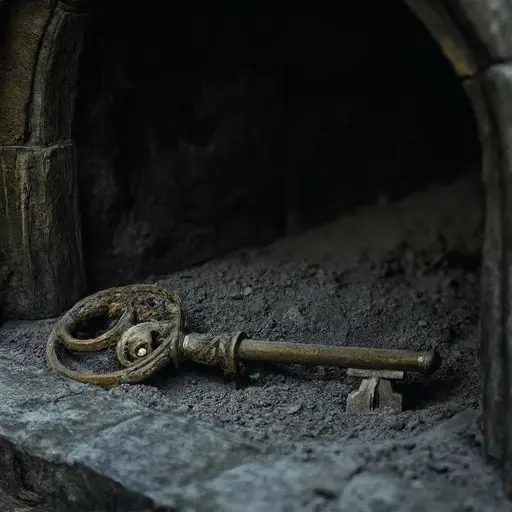
The Unmoved Dust in the Linen Closet
Eleanor Thorne, the widow, was left with a deceased husband, a massive house saturated with scandal, and crippling debts from the subsequent legal fallout. Her daughter, Clara, consumed by guilt and horror over her father’s secret life, immediately severed all ties with the estate and left the city.
Eleanor’s final act was one of passive, profound rejection. She refused to liquidate or sell any of the heavy, immovable objects, including the immense collection inside the sealed Vault-Study. She took only her most personal belongings and a small amount of cash, walking out of the Hearth-Ember in 1911 and allowing the tax payments to lapse immediately. She wanted the house to stand as a monument to her husband’s destructive paranoia, permanently sealed by his final, petty act.
In the second-floor Linen Closet, a small, utilitarian space, a single piece of evidence remains of Eleanor’s final decision to abandon all domesticity. On the highest shelf, which was used to store the finest, most delicate lace tablecloths, the contents were partially removed, but a distinct, thick, and perfectly uniform layer of undisturbed dust covers the remaining linen.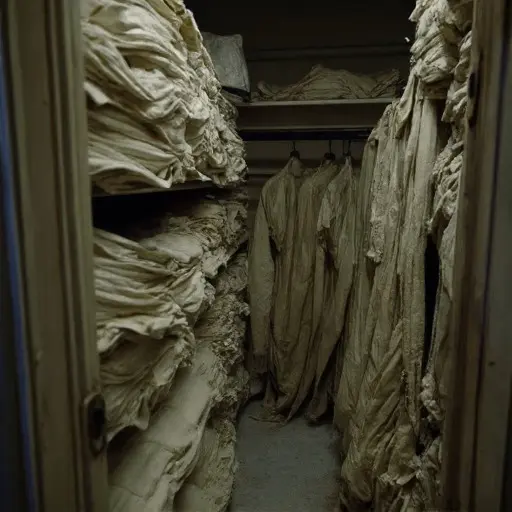
The Hearth-Ember was seized by the state but remained perpetually vacant, its huge vault filled with invaluable but unsaleable artifacts, the lost key to the vault forever buried in the ashes of the empty hearth. The house’s silence is a cold, permanent watch over its master’s final act of self-destruction.
