The Lost Frames of the O’Connell Taxidermy Workshop
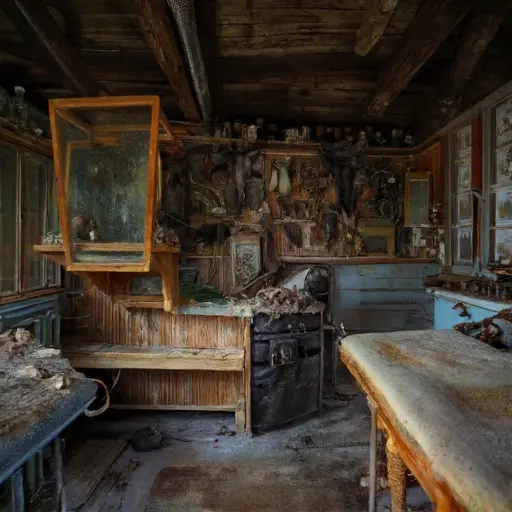
The Taxidermy Workshop holds a hushed, clinical stillness. On a workbench, a penciled note marks mount positions for a commissioned bird, unfinished. Each specimen and tool implies a routine abruptly halted, leaving the craft frozen in patient, eerie anticipation.
Craft in Preservation
These implements belonged to Declan O’Connell, taxidermist (b. 1868, Cork), trained in Victorian preservation methods with some exposure to English museums. His careful notes record orders for private collectors and natural history enthusiasts. A folded slip references his apprentice, Fiona O’Connell, “deliver mounted fox Monday,” indicating a precise daily pattern of skinning, stretching, and shaping.
Tools of the Trade
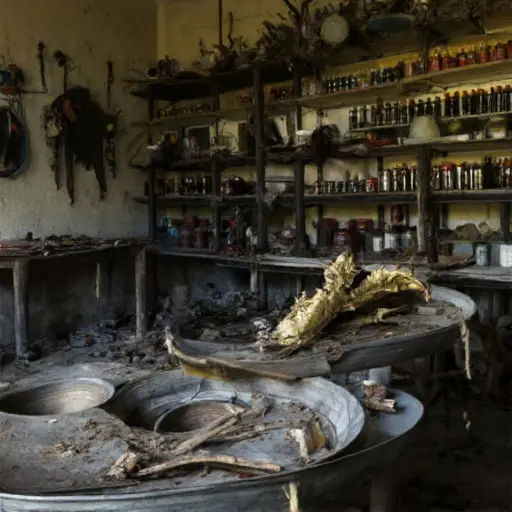
Workbenches are lined with jars of needles, pins, and small bottles of preservative liquids. Padded frames hold half-stretched skins. Glass cases show partially mounted specimens, some incomplete. Scalpels and tweezers rest atop blotting paper. Ledger pages, tucked under a piece of stiff linen, detail customer names, animal types, and mounting dates. The dust over tools and mounts emphasizes the sudden cessation of practice.
Signs of Diminishing Skill
Later ledger entries show misaligned mount points and notes overwritten multiple times. Several specimens display subtle asymmetry. Margin notes—“Fiona questions alignment”—are blurred and smudged. Scalpels show signs of repeated sharpening, some edges chipped. Frames hold skins strained unnaturally, indicating Declan’s weakening strength and increasing fatigue affecting precision.
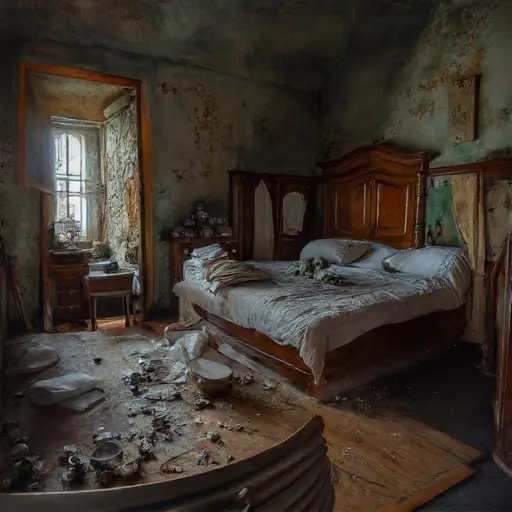
In the Workshop’s final drawer, Declan’s last mount sketch stops mid-line. A penciled note—“confirm with Fiona”—ends abruptly.
No record explains why he abandoned his work, nor why Fiona never returned.
The house remains abandoned, mounts and tools awaiting hands that will not return, the silence heavy with unfinished art and the scent of preserved life.
