The Lost Fabric of the Rossi Dressmaker’s Salon
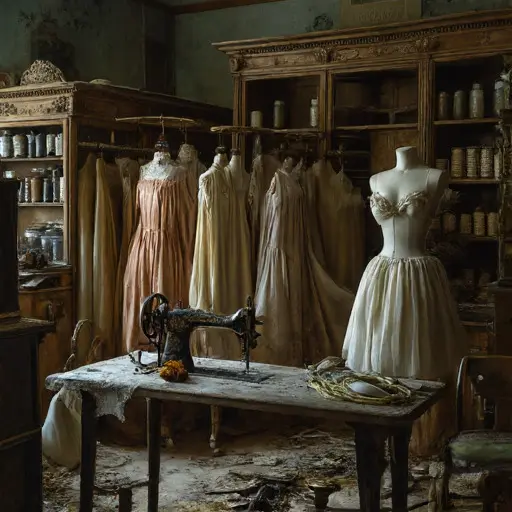
A heavy quiet permeates the Dressmaker’s Salon, where penciled pattern notes on a half-folded design stop abruptly, implying an abandoned creative process.
Craft and Order
These implements belonged to Bianca Rossi, dressmaker (b. 1882, Milan), trained in a regional couture atelier.
Her Italian notes record stitch sequences, fabric layering, and bodice measurements. A folded slip references her niece, Lucia Rossi, “finish lace overlay Wednesday,” revealing a disciplined rhythm of sewing, pinning, and embroidery. Bianca’s temperate, patient nature is evident in the careful folding of fabrics, organized tools, and precise notation, a reflection of her rigorous daily routine.
Tools and Textiles
On the main table, pins, scissors, and tracing wheels lie in neat alignment. Half-cut patterns rest atop swatches of silk. A ledger beneath folded cloth details fabric types, thread colors, and pattern alterations, each carefully dated. A partially sewn gown drapes a dress form, the stitching incomplete, an emblem of interrupted attention and suspended labor.
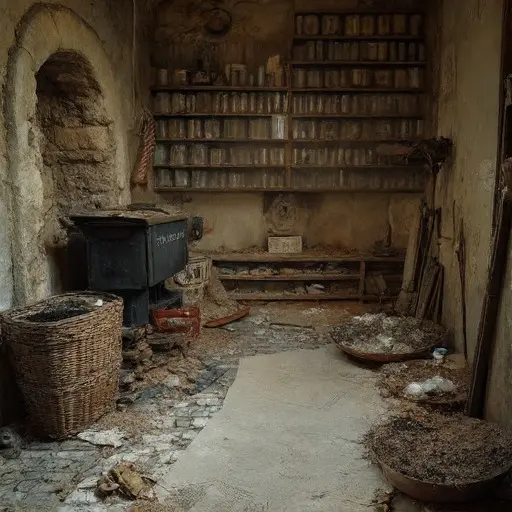
Unraveling Precision
Later ledger entries reveal repeated corrections to bodice measurements and hem lengths. Several gowns show uneven stitching or misaligned pleats. A margin note—“client rejects color”—is smudged, indicating rising pressure. Tools lie scattered across the worktables. Fatigue and failing eyesight forced Bianca’s careful hand to falter, leaving her creative processes incomplete and routines permanently interrupted.
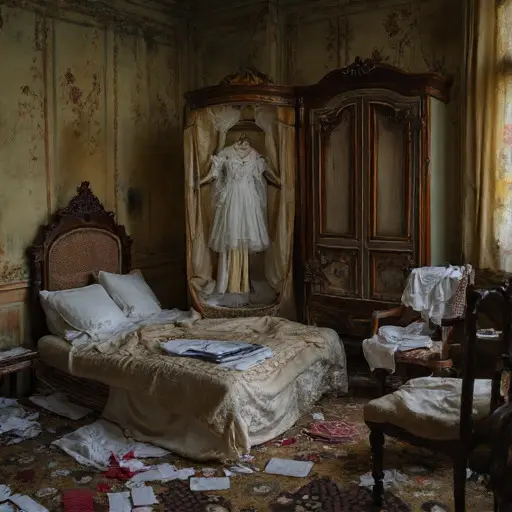
In the Salon’s final drawer, Bianca’s last pattern sheet ends mid-sketch, design lines incomplete. A penciled note—“verify with Lucia”—stops suddenly.
No record explains why she abandoned her work, nor why Lucia never returned to finish the gowns.
The house remains abandoned, fabrics and pins frozen mid-creation, preserving the quiet persistence of dressmaking interrupted, unresolved, and suspended in hushed, meticulous neglect.