The Lost Calibration Notes of the Hansen Clockmaker’s Atelier
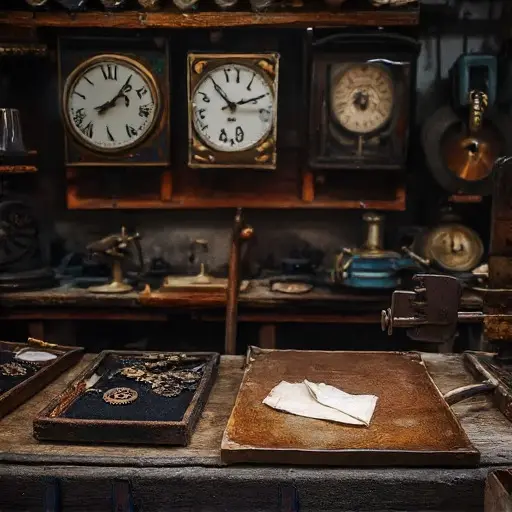
A solemn hush inhabits the Atelier, where a half-wound mantel clock sits paused. A penciled ledger notes escapement adjustments, ending mid-line.
Precision in a Maker’s Hands
These instruments belonged to Lars Hansen, horologist (b.
1876, Copenhagen), trained under a provincial master yet serving local townspeople. His meticulous notes—Danish script neat and concise—recorded repairs and custom commissions. A short remark about his brother, Jens Hansen, “bring pendulum Thursday,” hints at daily routines punctuated by careful adjustments and quiet observation.
Tools Arranged for Accuracy
On the primary bench, screwdrivers and tweezers are aligned by size. Tiny gears and mainsprings rest in labeled compartments. A tray of partially assembled dials shows meticulous numbering. A ledger tucked beneath a brass weight records service dates and fees, each column precisely measured. A set of unfinished escapements leans against a corner, patiently awaiting completion.

Signs of Diminishing Precision
Later ledger entries grow irregular: time intervals misnoted, parts misnumbered. Several pendulum rods are bent slightly, showing careless handling. A note—“client refuses repair”—is tucked under a broken clock frame. Escapement wheels are misaligned; dials bear smudged ink, indicating a decline in focus, attributed to worsening eyesight and fatigue.
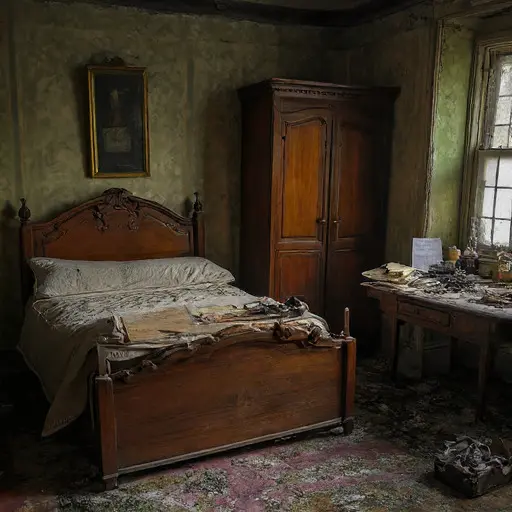
In the Atelier’s final drawer, Hansen’s last calibration sheet ends abruptly, escapement notes incomplete, tick counts left unresolved. A penciled reminder—“finish for Jens”—breaks off mid-word.
No record explains why he abandoned the clocks, nor why Jens never collected them.
The house remains abandoned, gears, springs, and dials frozen in quiet stillness, time itself halted in the atelier’s empty rooms.