The Lindenford House Left Waiting in Terraced Garden Light
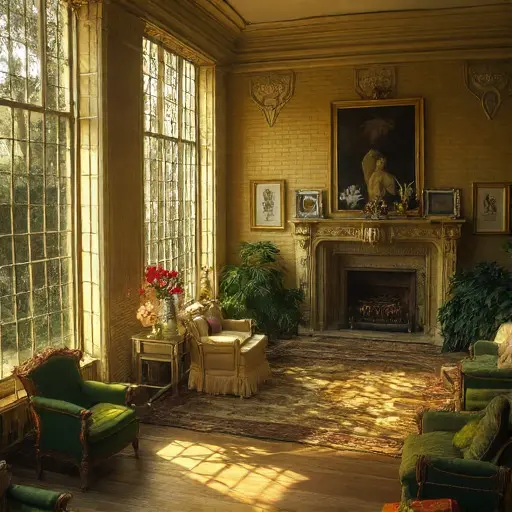
Lindenford House stood within a carefully terraced hillside garden where stone retaining walls descended in gentle, structured layers. Built in 1892 for the Halstead family, the residence was conceived as a modest but refined Victorian home, intended to harmonize with its cultivated slope rather than dominate it. The architecture reflected balance and restraint: warm honey-colored brick formed the core structure, while creamy limestone detailing added subtle ornamentation in the form of carved leaf motifs, small floral medallions, and understated geometric bands softened by decades of weathering.
The house was designed around a near-perfect symmetry, though time introduced slight irregularities that gave it character. One wing extended subtly farther than the other due to a later expansion added for a library and study, and the front porch leaned almost imperceptibly toward the garden, as though the building itself had grown more attentive to its surroundings. Tall sash windows lined the façade in steady rhythm, their glass reflecting shifting compositions of sky, foliage, and moving branches like layered watercolor impressions.
The roof was composed of slate shingles in blended tones of charcoal, deep green, and muted plum, forming a calm, grounded silhouette. Two chimneys rose cleanly from either end, their brickwork intact and gently weathered, with faint traces of ivy that had long since dried into delicate vine-like impressions across the mortar. A wrought-iron balcony wrapped partially around the upper floor, its filigree once ornate but now softened into a dark bronze patina by oxidation and time.
Inside, the Halstead household maintained a quiet domestic rhythm centered on correspondence, garden planning, and local civic involvement. Margaret Halstead oversaw the organization of the terraced gardens, while her husband Edward managed estate records and local trade correspondence. The house functioned as both residence and small administrative hub, with rooms arranged for comfort, continuity, and seasonal observation of the surrounding landscape.
Early financial strain
By the late 1920s, economic changes in regional agriculture reduced the profitability of local estates and associated landholdings. While Lindenford House was not in decline, its supporting income sources diminished, requiring gradual reductions in hired maintenance staff. Garden upkeep shifted increasingly toward family-managed labor rather than external gardeners. Despite these pressures, the terraced structure of the landscape allowed it to remain visually stable longer than many contemporary estates.
Gradual decline within the terraced estate
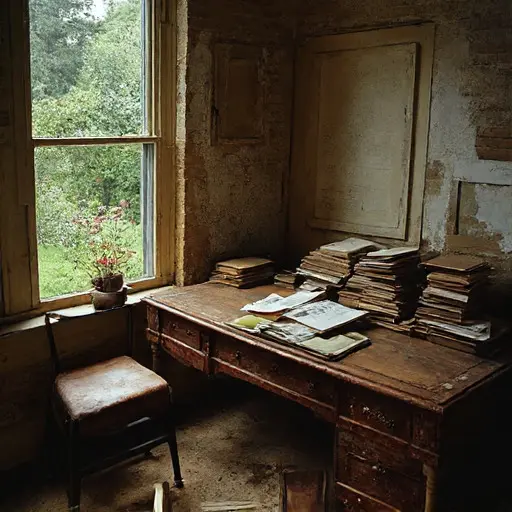
As financial strain increased, the maintenance structure of Lindenford House gradually shifted. Portions of the upper garden terraces were allowed to naturalize slightly, with selective pruning replacing full seasonal replanting. Interior rooms remained largely unchanged, but reduced staffing meant slower response to repairs and minor structural wear. The house itself remained stable, yet the garden began to operate more independently, sustained by its own ecological rhythm rather than deliberate cultivation.
Over time, family presence diminished as younger members moved toward urban centers for education and professional opportunities. The estate transitioned into intermittent occupancy, with extended periods of quiet between visits. By the early 1940s, only occasional seasonal returns occurred, primarily for administrative review and limited maintenance oversight.
Final abandonment phase
By 1947, Lindenford House was no longer permanently inhabited. Utility services were gradually reduced and eventually discontinued after extended periods of nonpayment. Despite this, the structure itself remained sound, supported by its well-built masonry and stable hillside placement. The terraced garden, however, began to drift further from structured care, blending maintenance patterns with natural growth cycles.
The house left in quiet continuity
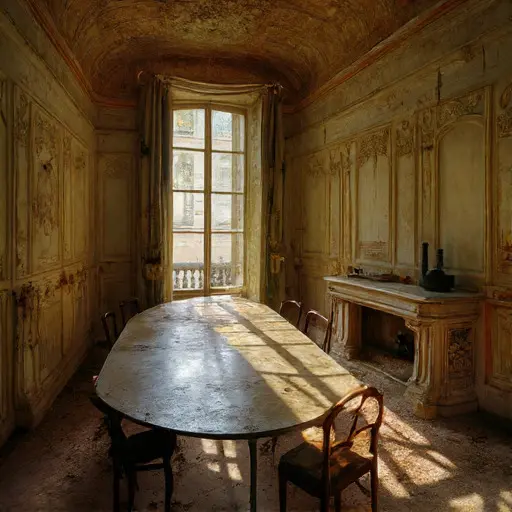
By the late 1940s, no formal ownership disputes or restoration efforts altered Lindenford House. The property remained legally intact but functionally quiet, with no permanent occupants returning. The terraced garden continued to evolve slowly under seasonal cycles, while the house itself persisted unchanged. It stands today as a structurally stable Victorian residence surrounded by a living garden that continues to maintain itself in the absence of its original caretakers, waiting in calm continuity along the hillside.