The Leaning Turrets Manor in the Highland Heather Valley
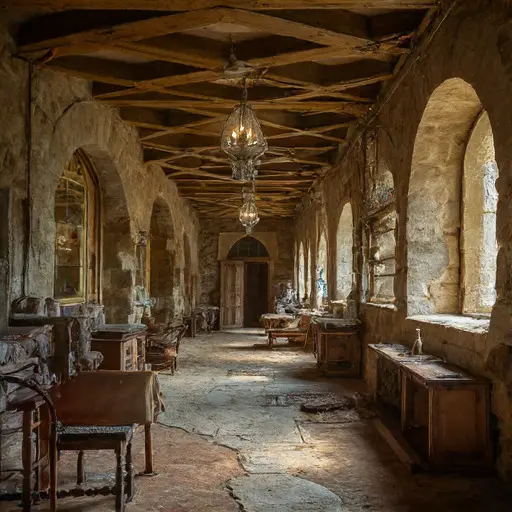
The manor was constructed in the late 19th century as a seasonal residence for a family tied to highland land management and mineral surveying operations. Built from locally quarried pale honey sandstone reinforced with dark basalt structural elements, it was designed to withstand severe alpine weather while projecting the symbolic authority of Scottish Baronial architecture. Its asymmetrical turrets and crow-stepped gables were intended to mirror the rugged skyline of the surrounding valley.
From the beginning, however, the structure exhibited a slight central bow along its axis, attributed to uneven bedrock settlement beneath the foundation. This imperfection was accepted rather than corrected, becoming a subtle defining feature of the estate. For several decades the manor functioned as both administrative lodge and seasonal home, hosting survey teams and family gatherings during the brief warmer months.
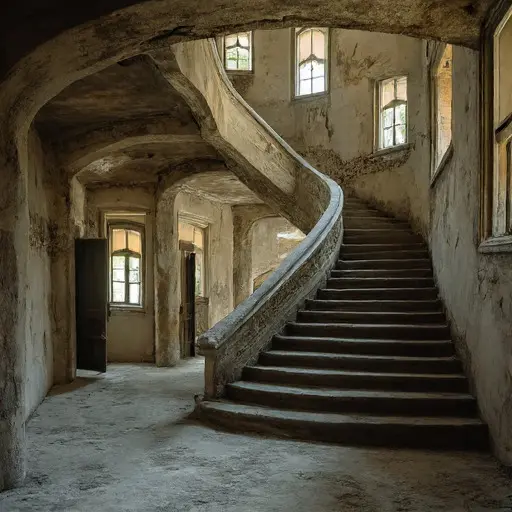
The decline began slowly as surveying operations in the region diminished and the family’s involvement in highland management was reduced. Without regular occupation, maintenance of the weathered turquoise-copper roof was deferred, allowing moisture to seep into upper structural layers. Freeze-thaw cycles intensified minor cracks in the sandstone, especially around window frames where carved detailing had already softened with age. The manor’s subtle axial bow increased visible stress across interior corridors, making some doors difficult to close and floors slightly uneven underfoot. As transportation routes shifted toward lower valleys, the estate became increasingly isolated. Eventually, the family relocated permanently, leaving only occasional caretakers who visited infrequently before abandoning the property entirely.
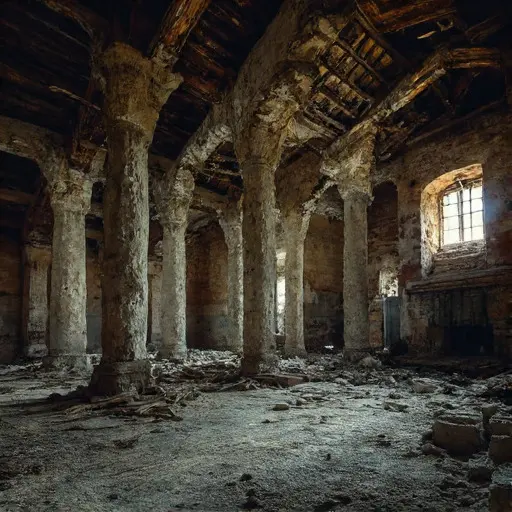
By the mid-20th century, the Scottish Baronial manor was fully abandoned. No restoration was undertaken due to its remote alpine location and the extensive structural deformation caused by prolonged settlement and weather exposure. The rusted iron gate posts remain half-buried in the valley soil, and the cracked stone sundial lies toppled in tall heather grass as if marking a time that has already ended. Today the manor still stands beneath the mountain air, its leaning turrets and softened stonework continuing to erode slowly in silence, with no confirmed plans for repair or return.