The Larkspur Divide House and the Registry of Separated Wings
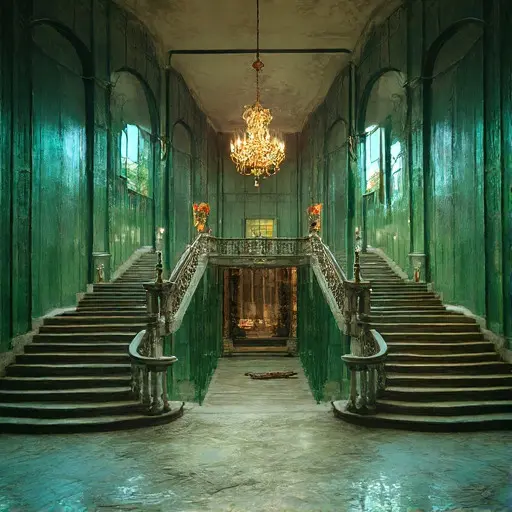
Larkspur Divide House was first commissioned in 1894 by Henrietta Calhoun Voss, born 1857 in Edinburgh, a private land registry specialist contracted to map disputed rural estate boundaries across shifting agricultural land. Her work focused on reconciling overlapping property claims in regions where meadow parcels had been repeatedly subdivided, merged, and reassigned over generations.
She selected the meadow site for the estate after noting repeated inconsistencies in boundary surveys conducted by independent agents.
Construction began as a single unified structure but was reportedly revised multiple times during early building phases, with sections “re-sited” rather than rebuilt.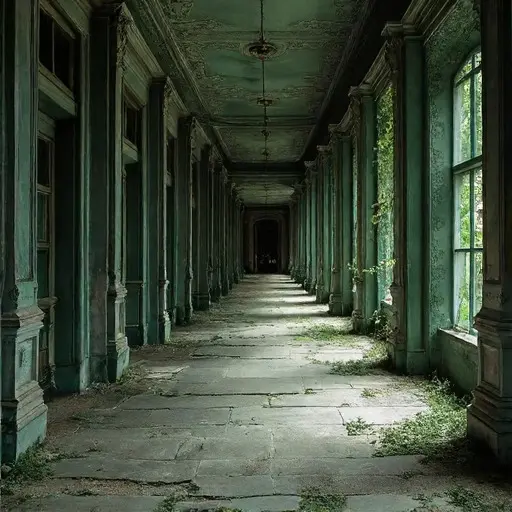
By 1901, correspondence between Voss and her contractors references persistent “positional disagreement between completed sections,” noting that newly finished wings of the house did not maintain fixed alignment with previously completed portions. These discrepancies were initially treated as surveying tolerance errors, though internal measurements confirmed consistent drift patterns between structural segments.
Household records list intermittent occupancy by Voss and her assistants until 1907, after which entries become fragmented and duplicated across separate ledgers, often describing the same rooms as existing in slightly different configurations.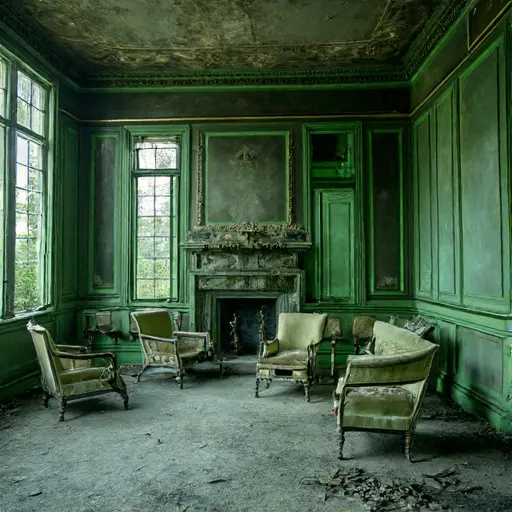
By 1910, the estate was deemed structurally “non-convergent” in municipal inspection notes, indicating that its wings no longer maintained a single stable architectural reference point. No collapse was recorded; instead, the structure was described as remaining intact but distributed.
The Larkspur Divide House was officially vacated in 1911. It still stands in the meadow, its separated wings continuing to drift in subtle, uncoordinated alignment, as if the building has not stopped existing—only stopped agreeing with itself.