The Kiyomura Imperial Estate Left in Forest Silence
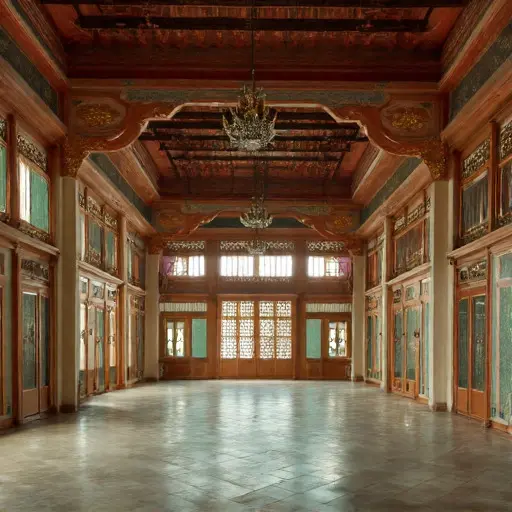
Completed in 1896, the Kiyomura Estate was commissioned by the Sutherland-Kiyomura family, a lineage formed through diplomatic marriage between British industrial aristocracy and Japanese nobility during a period of intense cultural exchange. The mansion was conceived as a private residence and ceremonial diplomatic retreat, intended to embody harmony between two architectural traditions. Architects from both Europe and Japan collaborated on its design, merging pagoda-inspired roof systems with Victorian spatial hierarchy to create a residence that felt both ceremonial and domestic.
In its early years, the estate functioned as a venue for diplomatic gatherings, cultural exhibitions, and private scholarly exchange. The long veranda corridors hosted seasonal receptions overlooking the carefully designed gardens, while the central halls were used for music performances blending Eastern and Western traditions. The household maintained strict routines, supported by a large staff trained in both European estate management and Japanese ceremonial upkeep.
Early Decline
Following the First World War and the gradual dissolution of international trade networks, the family’s financial and diplomatic influence began to diminish. Maintenance of the estate’s complex hybrid materials—lacquered wood, celadon tile, bronze fittings, and layered roofing systems—became increasingly expensive. Sections of the veranda were closed due to structural wear, and ornamental garden maintenance was reduced as staff numbers declined.
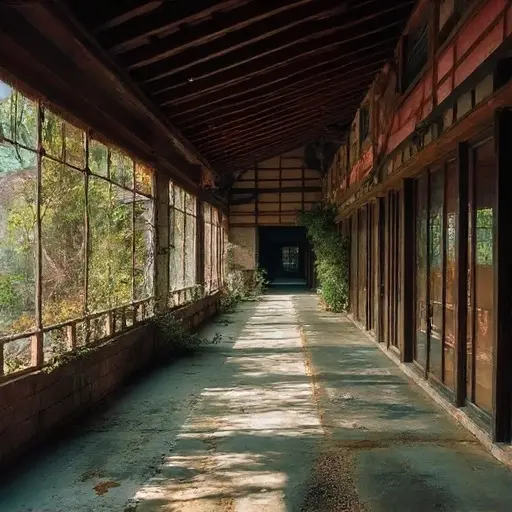
By the late 1930s, inheritance complications and geopolitical instability disrupted all remaining financial support for the estate. The family relocated abroad, leaving only a caretaker responsible for essential oversight. Without proper restoration, minor roof leaks began affecting wooden structural elements, and several decorative towers were sealed due to safety concerns. The once-active diplomatic residence gradually fell silent as its purpose faded from use.
Final Abandonment
After the Second World War, ownership disputes and financial insolvency resulted in the complete abandonment of the estate. The caretaker departed after securing the main entrances, leaving furnishings, correspondence, ceremonial objects, and architectural records in place. No sale or transfer was ever completed, as restoration costs were deemed too extensive for any potential buyer.
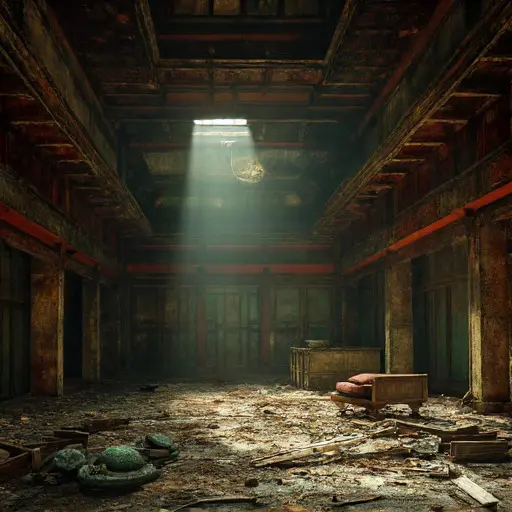
The Kiyomura Estate remains abandoned to this day, its ownership unresolved in historical archives. Deep within the forest clearing, the once-diplomatic palace stands intact but silent, its refined cultural fusion preserved only as a fading monument to a family and era that dissolved into history.