The Jade Roof Pavilion Left to the Desert Winds
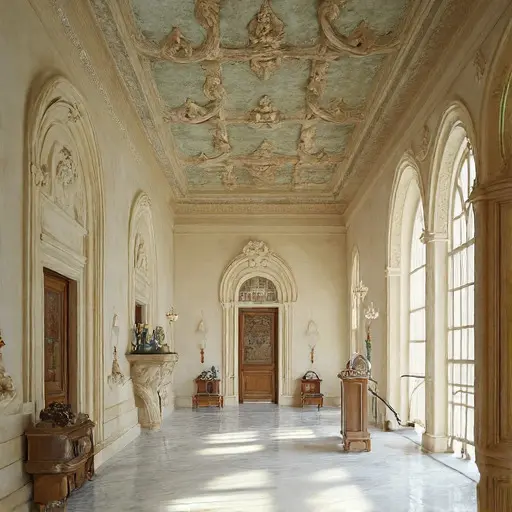
The residence was commissioned in the late 19th century by a wealthy architectural patron seeking a desert retreat that would combine European Beaux-Arts grandeur with adaptation to harsh plateau conditions. Constructed from pale ivory limestone, the structure was designed to reflect sunlight while resisting thermal stress from extreme temperature shifts. Its jade-green glazed ceramic roof tiles were arranged in flowing, wave-like patterns intended to diffuse heat and visually echo distant mineral deposits found in the surrounding mesas.
Though formally symmetrical in its decorative language, the building incorporated deliberate asymmetry in its massing, including a domed corner pavilion that subtly leaned off-center and a recessed colonnaded porch that curved gently toward prevailing winds. For a time, the estate served as both seasonal residence and private gathering site for scientific and artistic visitors drawn to the stark desert environment.
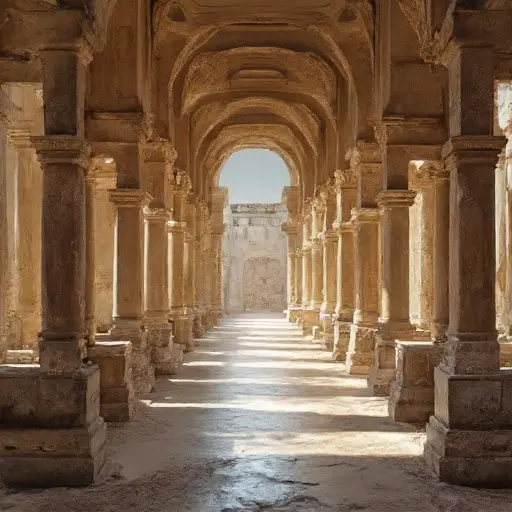
Decline began as the costs of maintaining a remote desert estate increased beyond the patron’s remaining resources. The harsh climate accelerated wear on both stone and ceramic surfaces, with fine sand infiltration gradually eroding carved details in the ornamental garlands. Water access became increasingly unreliable, forcing reduced occupancy during peak summer seasons. Maintenance of the jade ceramic roof proved particularly difficult, as thermal cycling loosened sections of the glazed tiles and created subtle but expanding structural stress across the roofline. After the patron’s death, inheritance disputes delayed any coordinated preservation effort. Without regular occupation, the residence slowly transitioned from seasonal retreat to intermittent storage site, and eventually to complete abandonment.
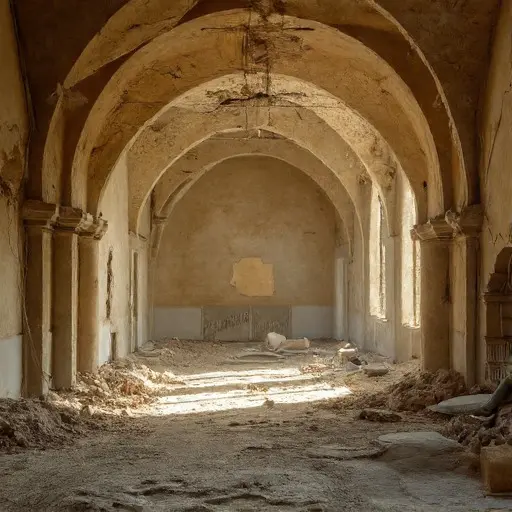
By the mid-20th century, the Beaux-Arts residence stood fully abandoned on the desert plateau. No restoration was undertaken due to the extreme environmental exposure and the high cost of transporting materials across vast arid terrain. Windblown sand steadily accumulated within the colonnaded porch, while the domed corner pavilion continued its slow, subtle lean under decades of thermal stress. The weathered wooden cart remains partially buried in red sand beside a rusted ornamental lamppost, both marking what was once a formal entrance axis. Today the residence endures in silence, gradually softened by wind and time, with no confirmed plans for repair, reuse, or return.