The Inland Shipping Port Buried by the Desert
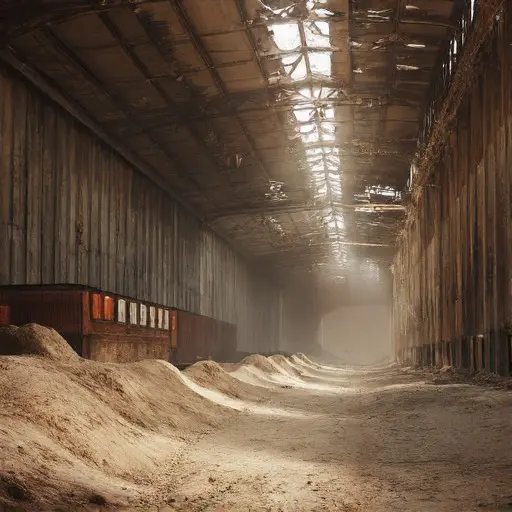
The inland shipping port was constructed in the late 1950s as part of an ambitious hydrological and commercial development scheme designed to capitalize on a seasonal river system that once flowed through the basin. At its peak, the port functioned as a major inland distribution hub, receiving cargo barges that traveled through engineered canal networks connecting distant coastal trade routes to inland agricultural regions.
The design followed a strict radial harbor plan, with central docking basins branching outward into elongated storage and processing corridors.
Massive cranes and conveyor systems coordinated the movement of goods between waterborne vessels and rail freight systems that extended deep into the surrounding desert hinterland. For several decades, the port operated at near-constant capacity, sustained by predictable seasonal water flow.
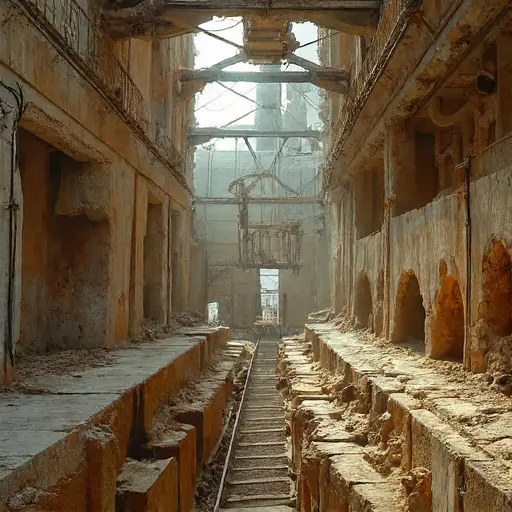
The decline began gradually as upstream water sources diminished due to shifting climate patterns and increased regional extraction. Within a few decades, the once-reliable river feeding the port reduced to intermittent flow, eventually disappearing entirely beneath the desert surface. Without waterborne access, the canal basins became obsolete, and shipping operations transitioned briefly to rail-only logistics.
However, the environmental conditions of the basin proved increasingly unsustainable for large-scale industrial activity. Sand intrusion into mechanical systems accelerated maintenance costs, while extreme heat caused structural fatigue in exposed steel components. By the late 1980s, major sections of the port had already ceased operations.
Abandonment followed in stages rather than a single closure event. Warehouses closest to the former water channels were first decommissioned, then progressively outward through the radial layout until the entire port ceased functioning. No comprehensive demolition was undertaken due to the sheer scale of the infrastructure and the remoteness of the location.
Over time, the desert reclaimed the complex with slow but persistent force. Wind-driven sand filled canal trenches, softened the edges of concrete seawalls, and buried rail systems beneath shifting dunes. Vegetation remained sparse, limited to hardy desert shrubs and salt-resistant grasses that emerged sporadically through cracks in the infrastructure.
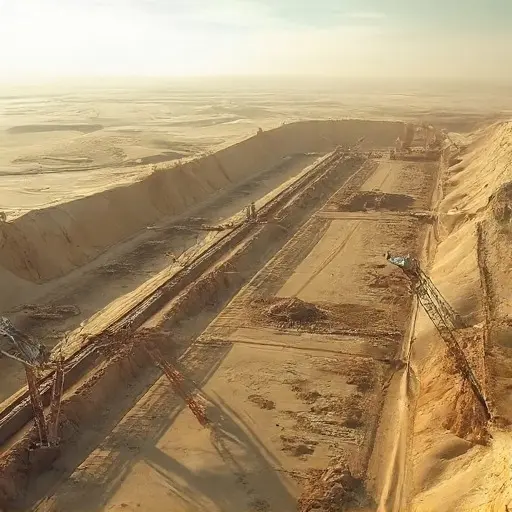
Today, the inland shipping port exists as a hybrid landscape of industrial archaeology and natural desert formation. Its original function has been entirely erased by environmental transformation, yet its structure remains legible as a monumental trace of former commerce. The radial geometry of the harbor still defines the terrain, even as sand continues to obscure its purpose.
No active restoration or redevelopment efforts have been recorded. The site remains uninhabited and unmaintained, exposed to extreme temperature shifts and constant wind erosion. Over time, the distinction between constructed harbor and natural basin has begun to blur, as desert processes integrate the remaining architecture into the surrounding landscape.
The inland shipping port endures as a silent industrial ruin—stranded far from any sea, preserved only by the arid stillness of the basin and the slow, relentless accumulation of sand.