The House That Reflected Itself in the Quiet Lake
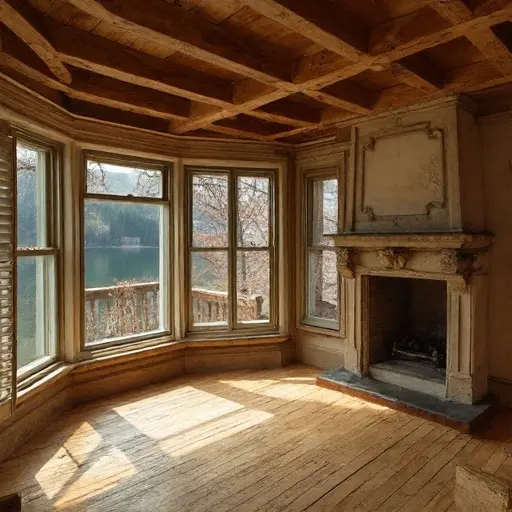
The house rests above a still lake where the shoreline bends gently, creating a natural amphitheater of water and forest. Built in the late 1880s by a family of alpine traders who moved between inland timber routes and lakeside commerce, the Swiss Chalet Revival design was chosen for its familiarity rather than ambition. Its layered balconies and exposed rafters were intended to echo mountain lodges, even here where the terrain softened into water and reeds.
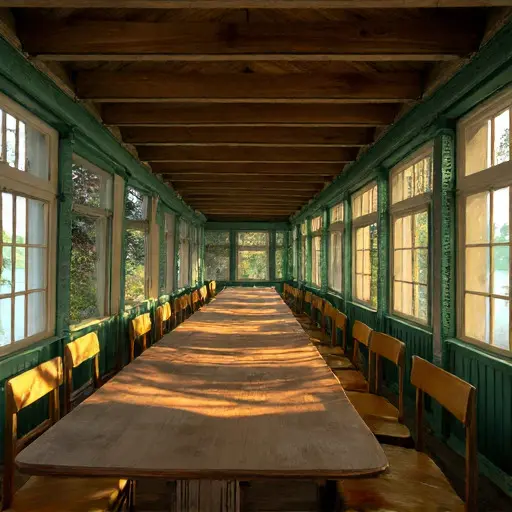
The decline came slowly, carried by changes in trade routes and the gradual relocation of the family’s business interests. The lakeside property, once central to seasonal operations, became peripheral. Maintenance of the timber joints and balcony railings was delayed, then simplified, then abandoned altogether. Reeds along the shore began to grow higher, subtly altering the visual boundary between architecture and water.
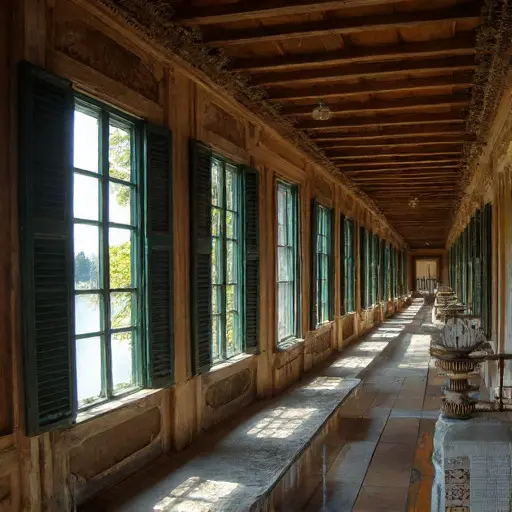
When the final occupants left, they did so without ceremony or record. Furniture was removed in stages, leaving only the fixed structure behind. No renovation followed, and no alternative use was assigned to the building.
Today, the chalet still stands above the lake, its timber weathering slowly, its balconies intact, reflecting both sky and water without interruption, as if still waiting for a return that never arrives.