The House That Kept Its Light in the Stone
The mansion rises from its street edge like a vertical memory that refused to collapse into time. Every gable and arch feels deliberately stacked, as if the building was composed not just for shelter, but for the choreography of movement between light, shadow, and silence. Even under a soft overcast sky, its colors remain distinct, almost musical in their separation.
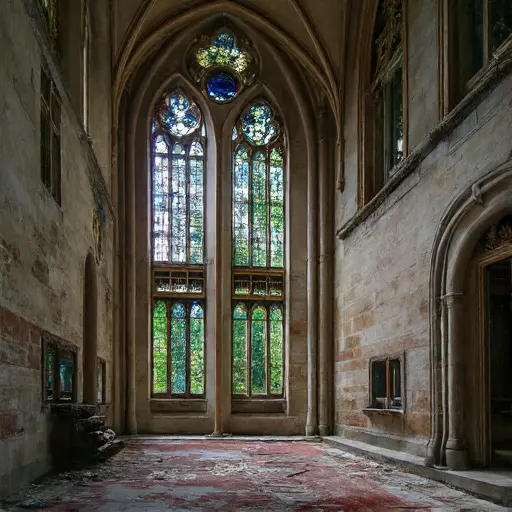
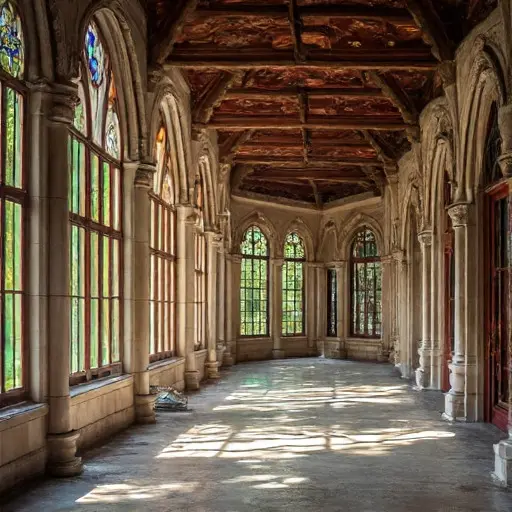
It belonged to the Lascelles family, whose presence was never described in singular moments but in patterns of repetition—morning walks through the garden, reading by tall windows, and long conversations that drifted from room to room as light shifted across stone. The house was less a container of events than a system for slowing them down.
The garden unfolds as a continuation of that vertical order, but softened by growth. A winding stone path curves through beds of orange lilies, violet foxgloves, and white hydrangeas, each cluster placed as if echoing the rhythm of the windows above. The circular courtyard fountain holds still water in cobalt and turquoise, reflecting not the sky but the structure’s own color memory.
The burgundy wrought-iron gazebo sits half-consumed by climbing roses, its geometry still legible beneath the bloom. Nearby, the marble figures reading together remain in their shared quiet, untouched by time’s interruption. Even the grapevines along the side façade feel intentional, threading themselves through arches and terraces like a continuation of the building’s original design.
And though no one moves through it now, the mansion continues to behave as if every path is still in use—waiting not for abandonment to be noticed, but for life to resume its slow, familiar pace.