The House Beyond the Iron Fence
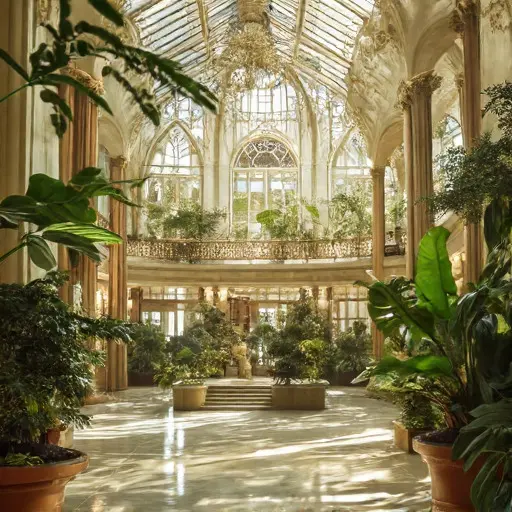
The Valemont estate was completed in 1910 for industrial designer and inventor Julian Valemont, a man whose creations in manufacturing and decorative arts brought him considerable wealth during the early twentieth century. Unlike traditional mansions built around strict symmetry, Julian wanted a residence that reflected movement, imagination, and artistic expression. He commissioned architects to combine Beaux-Arts formality, Art Nouveau curves, and Gothic Revival drama into a single family home unlike anything else on the surrounding residential street.
Julian lived at the estate with his wife Celeste, their two children, and his younger brother Adrian, who managed the family’s manufacturing interests. The enormous residence became known for its unusual interiors, especially the central glass atriums where tropical plants grew beneath crystal cupolas and family gatherings continued throughout the year. The stained-glass halls, marble balconies, and flowing architectural details made the home a local curiosity, but to the Valemonts it remained a place filled with ordinary family memories.
The family’s wealth came from innovative industrial designs, decorative metalwork production, and partnerships with several architectural firms. Julian’s company supplied custom bronze fixtures, artistic glasswork, and handcrafted materials for luxury buildings across the region. This success allowed the estate to be maintained by skilled craftsmen who regularly cared for the marble walls, bronze ornamentation, glass structures, and intricate interior details.
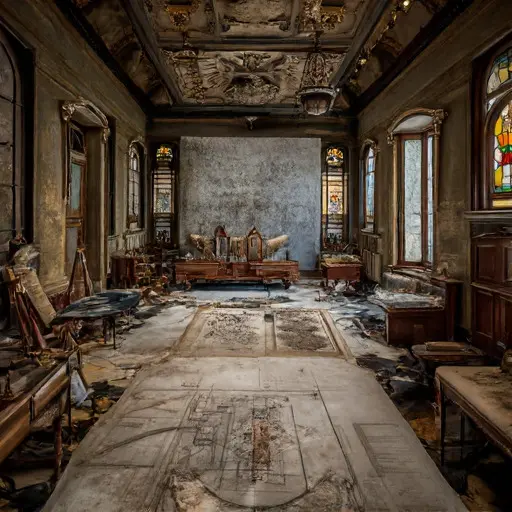
The first signs of trouble appeared during the economic downturn of the early 1930s when luxury construction projects declined sharply. Julian’s company lost several major contracts, and expensive custom production became increasingly difficult to sustain. The estate, which required constant specialized maintenance, became a financial burden. Several staff members were dismissed, unused sections of the mansion were closed, and repairs to the glass tower, roof structures, and exterior stonework were postponed.
Julian attempted to keep the business alive, but years of financial pressure damaged both his company and his health. After his death in 1937, responsibility for the estate passed to his family members, who lacked the resources and experience needed to manage such an unusual property. Celeste wanted the house preserved, but the costs of heating, repairing, and protecting the massive glass atriums quickly became overwhelming.
By 1942, the family had permanently left the estate. Many valuable furnishings were removed during private auctions, while the remaining property entered a long period of uncertainty. Several proposals suggested transforming the mansion into a cultural center or boutique hotel, but every plan failed because restoring the unusual architecture required enormous investment.
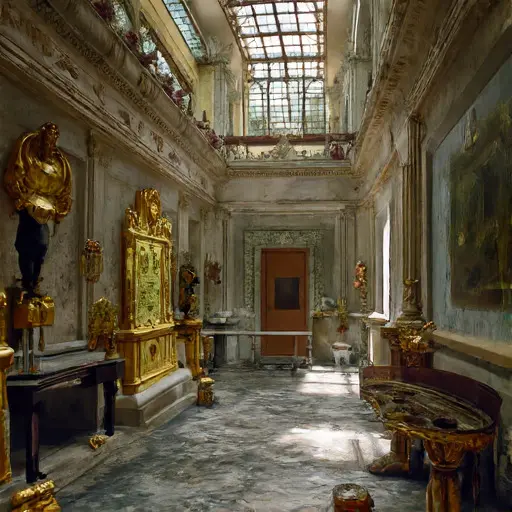
Today, the House Beyond the Iron Fence remains one of the neighborhood’s most mysterious architectural landmarks. The overgrown lawn surrounds the lichen-covered marble fountain, the wicker chair sits untouched near the entrance, and the weathered iron fence separates the abandoned estate from the changing streets around it.
Preservation experts continue to describe the Valemont estate as an extraordinary example of early twentieth-century experimental residential design. Yet its future remains uncertain, with restoration costs preventing any major revival. Behind its faded glass, curved stone wings, and silent halls, the mansion still holds the story of a family who built a home that was too ambitious, too unusual, and too difficult for time to preserve.