The House at Hawthorne Corner
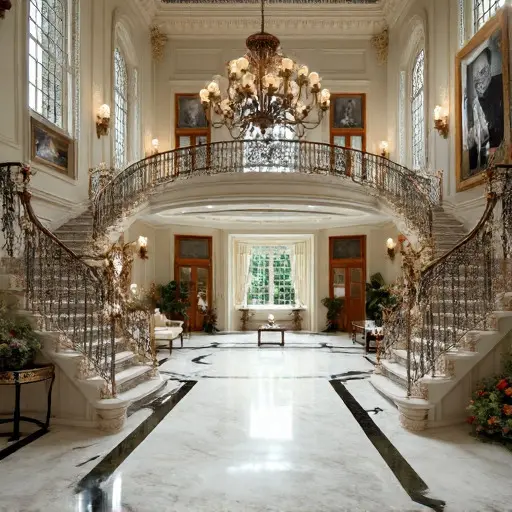
When the Hawthorne family completed the mansion in 1911, it immediately became one of the neighborhood’s most admired residences despite occupying an ordinary corner lot. Charles Hawthorne had earned his fortune through commercial banking and railway investments, choosing to build an elegant home that balanced French Beaux-Arts grandeur with the disciplined proportions of Georgian architecture. He lived there with his wife Eleanor, their two daughters, and Charles’s widowed mother.
While the surrounding streets were filled with comfortable middle-class homes, the marble mansion stood apart without overwhelming its neighborhood, becoming a familiar local landmark for nearly three decades.
Inside, the residence reflected the family’s appreciation for craftsmanship rather than extravagance alone. Reception rooms displayed imported marble fireplaces, hand-carved walnut furniture, and carefully commissioned paintings collected during European travels. The belvedere above the copper roof served as Charles’s favorite reading room, offering views across the neighborhood rooftops. Family gatherings filled the broad dining room every Sunday, while local charity events frequently occupied the grand salon, reinforcing the Hawthornes’ reputation as generous members of the community rather than distant social elites.
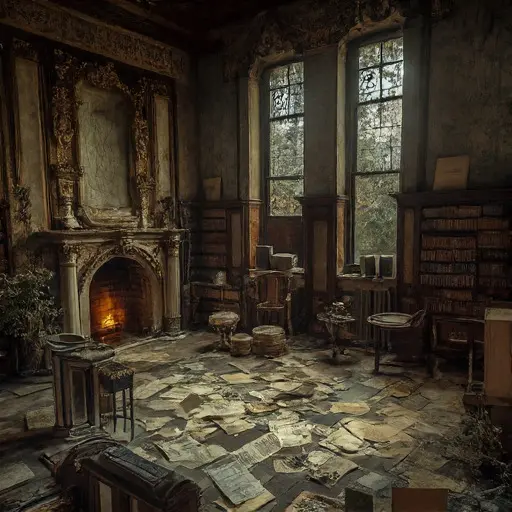
The family’s fortunes changed after Charles suffered major investment losses during the early 1930s banking crisis. Several institutions in which he held controlling interests collapsed, while commercial borrowers defaulted in record numbers. The income that had once maintained the estate disappeared almost overnight. Household staff gradually left, sections of the mansion were closed to reduce expenses, and maintenance on the elaborate copper roof and marble exterior became increasingly difficult to afford. Eleanor attempted to preserve the home by selling valuable artwork and antiques, but the proceeds barely covered taxes, insurance, and mortgage obligations.
Charles passed away unexpectedly in 1936 before negotiations with creditors could be completed. His daughters had already established lives elsewhere and lacked the financial resources to restore the estate. Legal disputes over remaining assets delayed any sale for several years, leaving the mansion vacant while weather slowly found its way inside. Vandals caused surprisingly little damage, but moisture, neglect, and time steadily transformed carefully maintained rooms into silent reminders of another era.
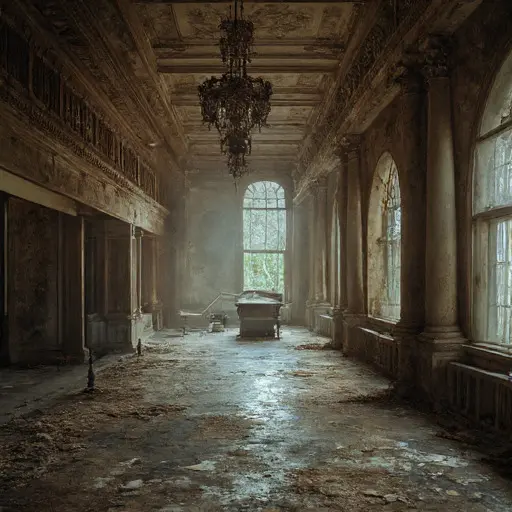
Today, the House at Hawthorne Corner remains one of the neighborhood’s quietest mysteries. The marble swan fountain still stands beneath layers of moss, the faded porch swing continues to face the empty street, and ivy slowly climbs the wrought-iron fence surrounding the overgrown lawn. Although preservation groups have periodically discussed restoring the mansion, the immense cost of stabilizing the marble structure has repeatedly delayed any meaningful work. The Hawthorne residence survives as a rare architectural survivor—its elegant proportions still commanding attention while quietly concealing the family story that once gave the mansion its life.