The House at Ashmore Circle
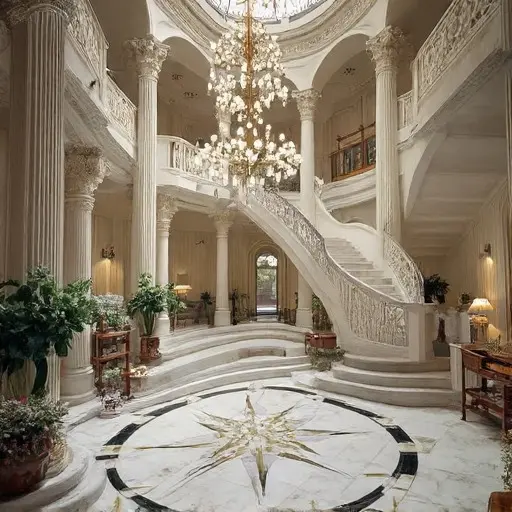
When the Ashmore Mansion was completed in 1915, residents of the surrounding neighborhood struggled to believe that such an extraordinary residence had been built on an otherwise ordinary suburban corner lot. Commissioned by financier Edwin Ashmore after decades of success in insurance, banking, and commercial real estate, the mansion reflected his admiration for both classical American architecture and the graceful decorative forms emerging from Europe at the turn of the century. Rather than isolating himself behind high walls or private estates, Edwin intentionally chose a neighborhood where the mansion would exist alongside everyday homes.
Edwin lived there with his wife Margaret, their only daughter Clara, and Margaret’s elderly parents. Although the mansion projected remarkable elegance from the street, daily life inside remained surprisingly ordinary. Breakfast was served in the eastern sunroom overlooking the reflecting pool, evenings were spent reading beneath the stained-glass lantern tower, and neighborhood children often stopped to admire the marble heron beside the front terraces during their walks home from school. The Ashmores earned quiet respect for supporting local schools, libraries, and community organizations rather than displaying extravagant wealth.
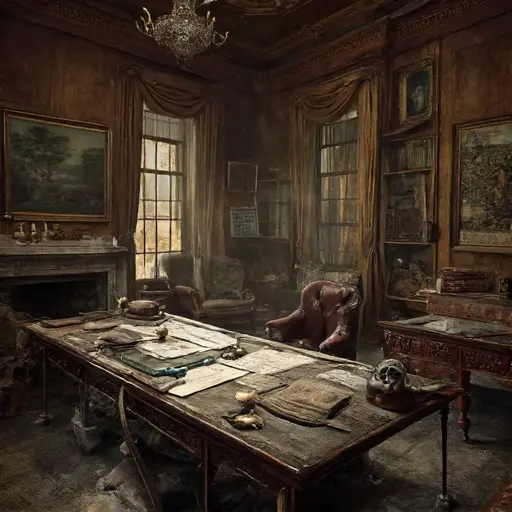
The stability that had supported both the family and their businesses unraveled during the economic collapse of the early 1930s. Falling property values, widespread mortgage defaults, and several unsuccessful investments steadily reduced Edwin’s financial resources. Income that once covered the extensive maintenance of the marble residence disappeared within only a few years. Domestic staff were gradually dismissed, upper-floor guest suites were closed indefinitely, and repairs to the elaborate copper roof and carved terraces were postponed as every available dollar was redirected toward business obligations.
Edwin continued fighting to preserve both his companies and the family home, but mounting legal expenses and declining revenues made recovery impossible. Following his death in 1938, ownership of the estate became entangled in probate proceedings while outstanding debts exceeded the remaining assets. Clara, already married and living in another state, lacked both the financial means and the desire to restore the increasingly expensive residence. By the early 1940s, the mansion stood empty as creditors settled the estate through liquidation.
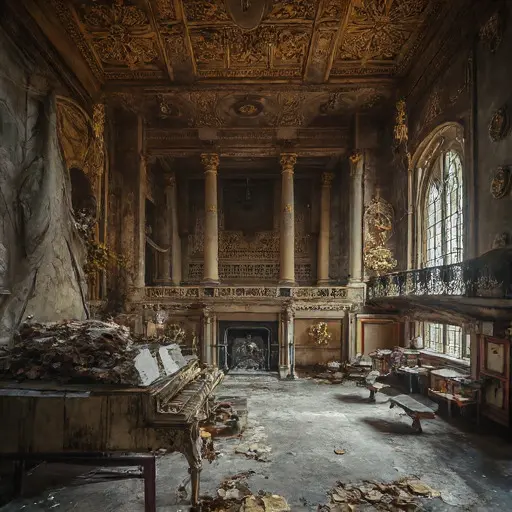
Today, the House at Ashmore Circle remains one of the neighborhood’s most remarkable surviving landmarks. The marble terraces continue descending toward the cracked sidewalk, the cast-iron fence still surrounds the overgrown lawn, and the weathered garden bench quietly overlooks the dry reflecting pool where the stone heron remains covered in decades of lichen. Several preservation groups have evaluated the mansion over the years, recognizing both its architectural significance and the extraordinary expense required to stabilize its marble structure. For now, the Ashmore Mansion endures as a silent monument to a family whose success once shaped an entire community, leaving behind a home whose beauty has outlasted the fortunes that created it.