The Hollowridge Cottage Left Vacant After Mining Debt
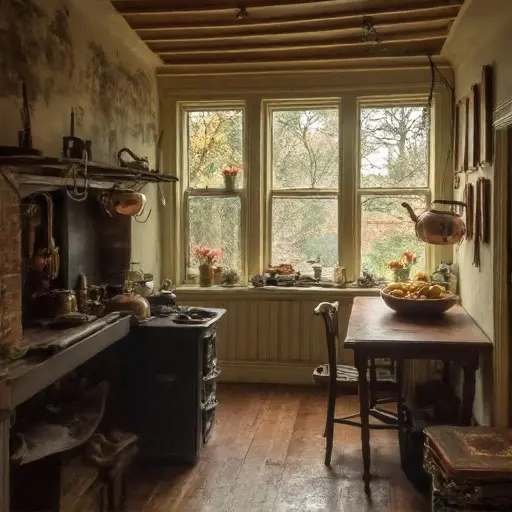
The Hollowridge Cottage was established in 1909 on a steep hillside bordering a small mining settlement in northern England. The structure was built for the Whitaker family—George Whitaker, a quarry engineer, his wife Ellen, and their son Harold. The house’s unusual vertical shape followed the slope of the land rather than resisting it, creating a narrow, tiered interior where each room stacked slightly above the last like steps carved into the hill.
For its early years, the cottage functioned as a practical home tied to local mining employment. George Whitaker’s income depended on the quarry’s output, and the family maintained the house with careful attention, compensating for its awkward geometry with constant small repairs. Its narrowness made heating efficient, but its vertical alignment made movement tiring, especially in winter when the stone steps outside froze.
Despite these challenges, the household remained stable through the 1910s, with the home acting as both shelter and symbol of upward mobility tied to industrial work.
EARLY SIGNS OF STRUCTURAL AND FINANCIAL STRAIN
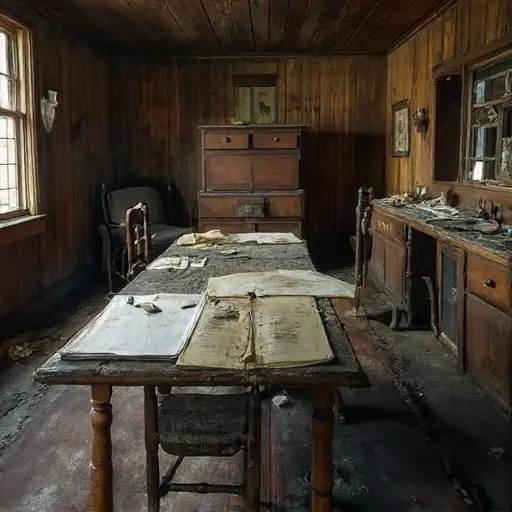
By 1929, the quarry that supported the Whitaker family began to reduce operations due to declining demand and unstable geological conditions in the hillside. George Whitaker’s role became increasingly precarious, and wage reductions followed almost immediately. The financial strain did not collapse the household at once; instead, it accumulated in quiet layers—unpaid accounts, delayed repairs, and deferred maintenance of the already difficult structure.
The cottage itself began to reflect this instability. Sections of the interior stairwell were left unpolished and unrepaired, and entire rooms were used less frequently to conserve coal and oil. Ellen Whitaker attempted to maintain normal household order, but the narrowness of the home made neglect more visible with each passing season.
By 1932, correspondence from creditors increased, and the family began consolidating their living space into the uppermost rooms of the cottage, leaving lower sections dim and underused. Moisture from the hillside began to intrude more aggressively, warping floorboards and weakening internal supports.
FINAL OCCUPATION AND SILENT ABANDONMENT
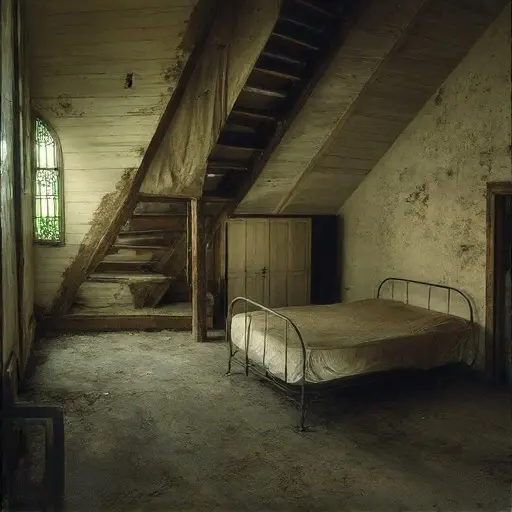
The final years of occupancy came during the early 1940s, when Harold Whitaker briefly returned from wartime service to find the cottage significantly deteriorated. George Whitaker had passed away, and Ellen had relocated to relatives after the quarry ceased operations entirely. Without industrial support, the settlement around Hollowridge declined rapidly, leaving the house increasingly isolated.
Repairs were no longer financially possible. The hillside itself had begun to shift slightly due to prolonged rainfall and the cessation of quarry stabilization work. Small structural cracks appeared along interior walls, and sections of the lower rooms were abandoned entirely due to dampness and instability.
By 1946, the cottage was officially uninhabited. No legal dispute over ownership followed, as the property had lost functional value and access was difficult due to unstable terrain. The building remained in place, slowly adjusting to the slope that had always defined its shape.
The Hollowridge Cottage was never restored or reused. It stands vacant in a state of quiet decline, its narrow interior frozen in progressive decay, its rooms empty, and its future unresolved as it continues to settle imperceptibly into the hillside.