The Hollowmere Gothic Revival Estate Left to Forest Reclamation
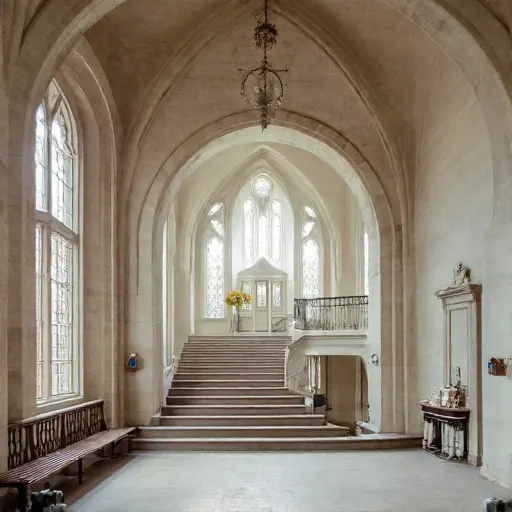
The Hollowmere Estate was constructed in the late nineteenth century as a rural country residence for a landholding family responsible for managing surrounding agricultural and forest parcels. Designed in the Gothic Revival style, the house emphasized verticality, order, and permanence, expressed through clustered chimneys, lancet windows, and finely articulated stonework. The household consisted of three generations living under one roof, supported by estate workers who maintained both the gardens and surrounding woodland boundaries.
Early life in the manor followed strict seasonal rhythms, with administrative duties conducted in the main hall and domestic life distributed across carefully designated wings. The estate functioned as both home and managerial center, projecting stability and continuity within a remote forested region.
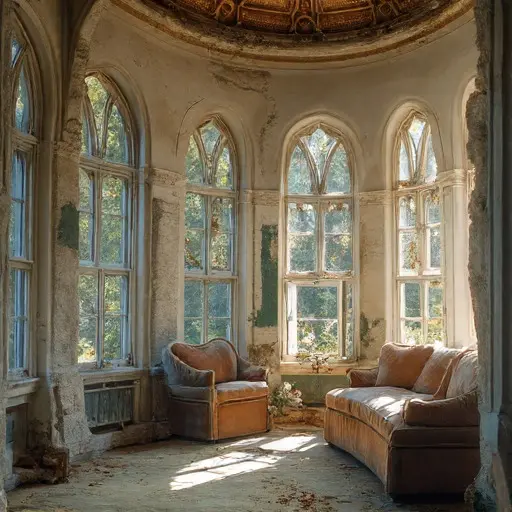
By the late 1920s, the Hollowmere household began to experience financial pressure following declining agricultural yields and increased costs associated with maintaining the extensive Gothic structure. The complexity of the estate’s stonework, roofing, and garden systems required continuous upkeep, which became increasingly difficult to sustain. Portions of the manor were closed off to reduce maintenance demands, leaving entire wings unused during colder seasons. Garden labor was reduced, resulting in the gradual overgrowth of once-formal landscapes. Ivy began to spread along exterior walls, while moss formed along shaded stone terraces. Administrative activity within the estate diminished, and correspondence regarding maintenance and tenancy grew sporadic, marking a slow but steady transition toward partial abandonment.
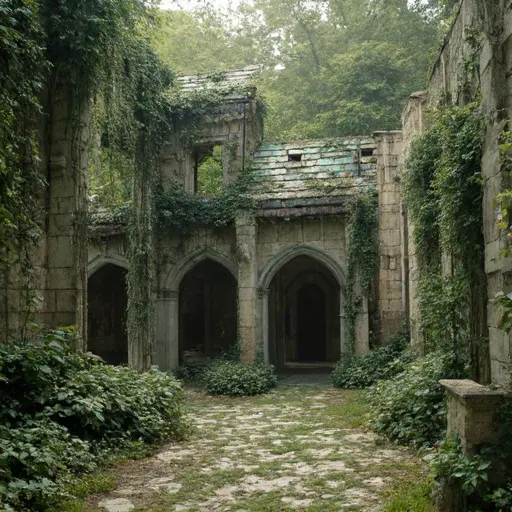
By the early 1940s, after prolonged financial decline and the dispersal of the remaining family members, the Hollowmere Estate was fully abandoned. No restoration or redevelopment efforts were undertaken, as the scale and condition of the property made intervention impractical and economically unviable. Ownership records became fragmented, and the estate gradually fell outside formal management. The structure remained standing within the forest clearing, slowly deteriorating under seasonal weathering, plant overgrowth, and structural fatigue. Interior spaces were left in their final state of occupation, gradually transforming as nature reclaimed the formal architecture. The estate persists as an unresolved Gothic ruin, neither preserved nor repurposed, with its limestone façades and overgrown gardens now existing in quiet, continuous decay.