The Hollowbriar Hall and Its Abandonment
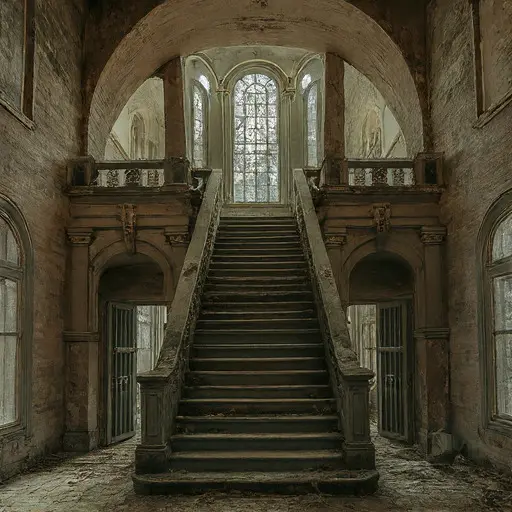
Hollowbriar Hall was completed in 1891 for Edmund Calvert Wren, born 1843 in Kent, a forestry estate auditor responsible for assessing timber yield and land value across managed woodland districts. His work required extended stays within forest properties, documenting both ecological conditions and estate profitability for private landowners and regional trusts.
He commissioned the hall as both residence and administrative base, choosing a remote forest site to remain close to ongoing woodland assessments.
He lived there with his wife Lillian Harrow Wren and their daughter Agnes, who assisted in maintaining correspondence and forestry records stored throughout the building.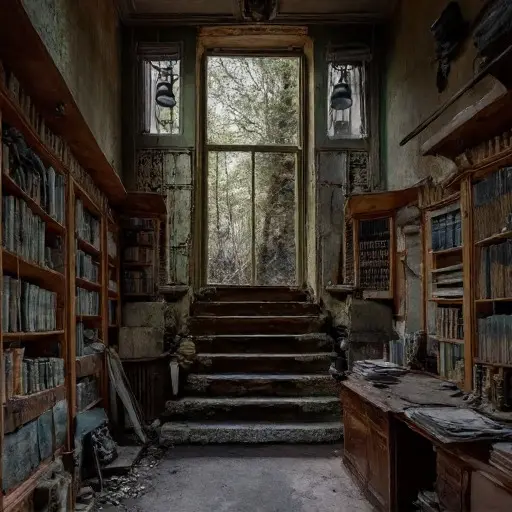
The decline began in 1904 when regional forestry regulation reforms introduced standardized yield calculation systems that replaced localized estate-based auditing methods. Wren’s earlier assessments were gradually superseded by centralized measurement frameworks that reduced the need for on-site estate auditors.
By 1909, he had withdrawn from active field evaluation and remained at Hollowbriar Hall while attempting to reconcile older forestry records with new standardized accounting systems. Financial stability persisted, but professional relevance diminished as centralized forestry governance expanded. Lillian maintained the household during this period, though correspondence suggests increasing isolation as the building itself seemed to settle unevenly under unseen vertical pressure.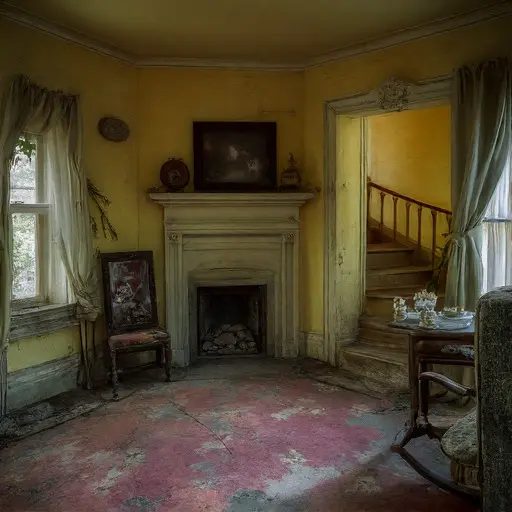
By 1912, Edmund Wren had ceased most forestry auditing work, retaining only occasional correspondence with regional land offices. Agnes’s name appears once more in a final estate documentation file before disappearing from records entirely. Hollowbriar Hall remained fully furnished but abandoned, its rooms preserved in place while the structure continued its quiet downward compression.
The hall still stands in the forest, unchanged and patient, as if the weight above it never stopped increasing.