The Hollow Survey House and the Ledger of Misaligned Rooms
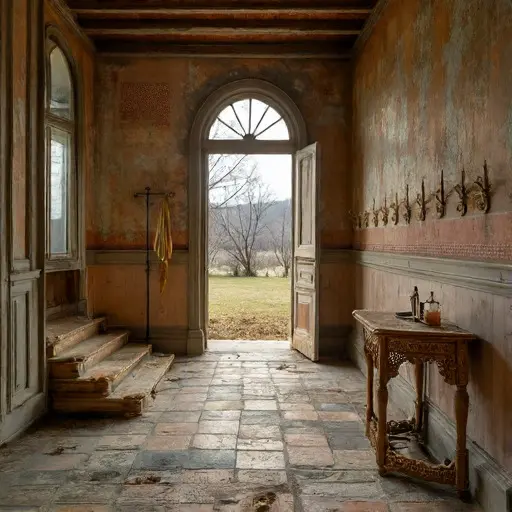
The Hollow Survey House was commissioned in 1896 by Edmund Carlisle Venn, born 1862 in Norwich, a civil survey engineer employed in railway expansion mapping across rural inland districts. His work focused on reconciling land gradients, soil stability, and proposed rail alignments through uneven meadow terrain. He purchased the meadow property after identifying it as a “reference site,” a place where multiple elevation readings could be compared against long-distance mapping records.
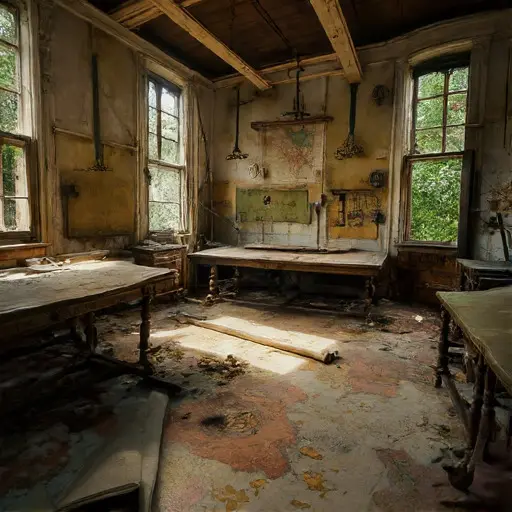
By 1903, Venn’s field reports began noting persistent inconsistencies between measured terrain gradients and observed construction outcomes along nearby rail segments. His personal notes describe “repeating misalignment across stable ground,” initially attributed to instrument error or magnetic deviation. However, repeated calibration sessions within the house produced differing internal reference readings depending on room location.
His wife, Clara Venn, is recorded in household ledgers until 1908, after which domestic entries become fragmented, often duplicated in slightly altered wording across successive pages. The house itself is described in correspondence as “not settling but reassigning its own frame of reference.”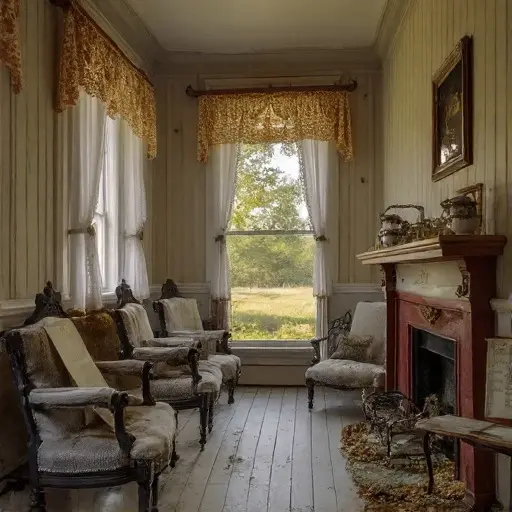
In 1911, the property was declared unfit for continued institutional surveying use after repeated reports showed that measurements taken inside the mansion could not be reconciled with external field data, even when instruments were verified elsewhere. Venn is presumed to have remained on-site through the final months of that year.
The Hollow Survey House was officially abandoned in 1912, though no record confirms a final departure event. The structure remains standing in the meadow, its rooms still internally consistent but no longer agreeing with each other or with the land outside.