The Hollow Secret of Briar Hill Farm
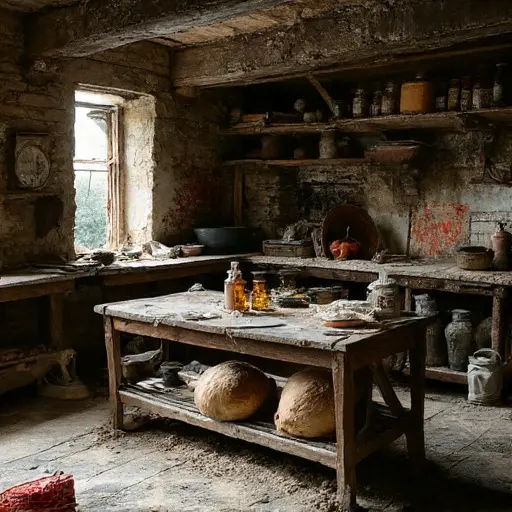
The word harvest appeared repeatedly throughout the journals left behind by Thomas Keating, owner of Briar Hill Farm and father of four children who rarely left the property except for church on Sundays. The farm sat beyond a narrow dirt road surrounded by wheat fields and flooded marshland that often became inaccessible during heavy rain.
Thomas managed the land with his eldest son Michael while his wife Nora handled the household accounts and preserved food through winter.
For years the family was considered dependable.
Until the autumn of 1941.
Michael Keating’s Locked Barn
Seven details remained behind to explain the family after the farm went quiet: Thomas’s pipe resting beside unpaid feed invoices; Nora’s recipe book left open beside the pantry stove; Michael’s work gloves stiff with dried mud near the back door; a cracked lantern abandoned beside the cellar stairs; unopened government notices concerning failed harvest quotas; deep wagon tracks leading toward the flooded fields; and a final sentence written hurriedly in Thomas’s ledger reading, “Do not let Michael go near the south barn again after dark.”
Nobody ever learned why.
Neighbors later claimed strange sounds had begun coming from the barn during the final weeks before the family disappeared—hammering late at night, livestock screaming, and occasionally Michael shouting at someone no one else could see.
Thomas reportedly kept the barn locked during daylight hours.
But each morning it was somehow open again.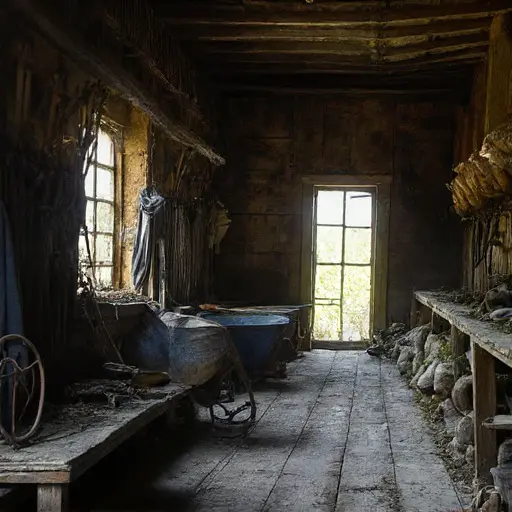
The Flood Season
The Keating family decline accelerated after weeks of relentless rain flooded large sections of the surrounding farmland. Crops failed almost entirely. Several neighboring farms abandoned the valley before winter arrived.
Thomas refused to leave.
Michael became increasingly isolated afterward, spending nearly every night alone near the south barn despite repeated arguments with his father.
Then, during the first floodstorm in November, every lantern on the property went dark at once.
No one from the family was seen again.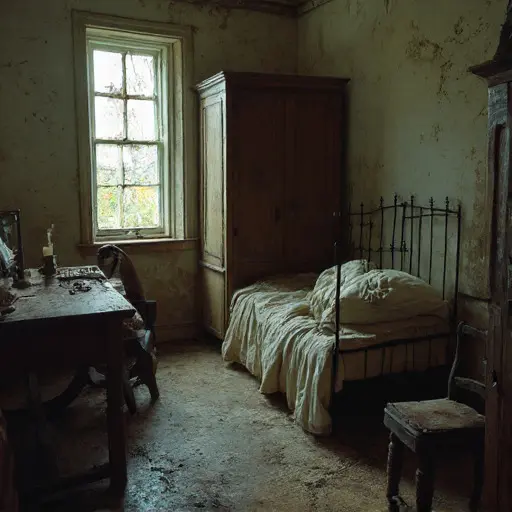
When authorities finally entered the south barn weeks later, they found no animals inside.
No farming equipment either.
Only deep grooves dragged across the floor toward the flooded marsh beyond the fields.
The final page of Thomas Keating’s journal mentioned the failed harvest one last time before ending abruptly with a single unfinished sentence:
“Something keeps moving through the wheat after midnight.”