The Hollow Reed Queen Anne House Left in Quiet Decay
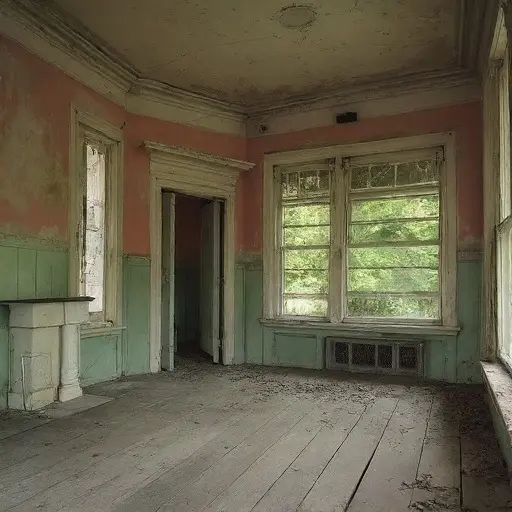
The Hollow Reed Queen Anne house was built in the late nineteenth century on the edge of a forest clearing as a modest family residence for a local mill foreman and his household. Unlike more elaborate Queen Anne estates, this structure reflected a restrained interpretation of the style, maintaining asymmetry and decorative detailing while remaining functional and grounded in everyday domestic life. The family consisted of parents and two children, with the home serving as both residence and occasional lodging for visiting workers tied to the nearby timber operations.
Early life in the house was steady and uneventful, centered around routine labor cycles and seasonal changes in the surrounding forest. The porch functioned as a transitional space between domestic life and the natural environment, lightly decorated and frequently used for rest and observation.
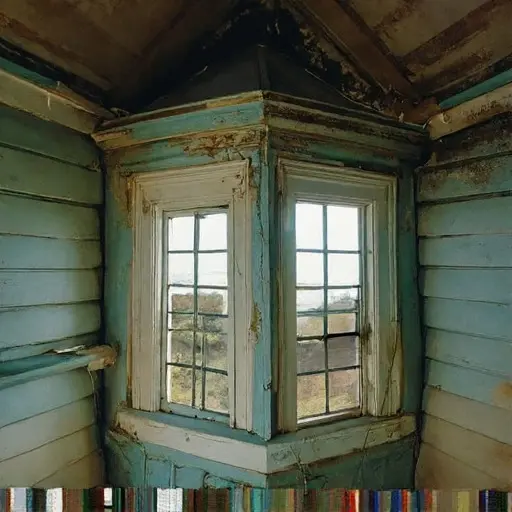
By the late 1920s, the Hollow Reed household began to experience financial instability following a decline in local timber operations and reduced employment opportunities in the surrounding region. Maintenance of the house became increasingly inconsistent, with repairs postponed due to limited resources. The partially collapsed porch was left unrepaired after a seasonal storm caused structural weakening, reducing its usability. Interior heating and upkeep declined during colder months, leading to the gradual abandonment of upper rooms. Vegetation remained limited but persistent, with grasses and ferns spreading near the foundation and ivy beginning to trace weak points in the structure. Despite this, the house remained partially occupied for some years, sustained by diminishing household stability and intermittent work.
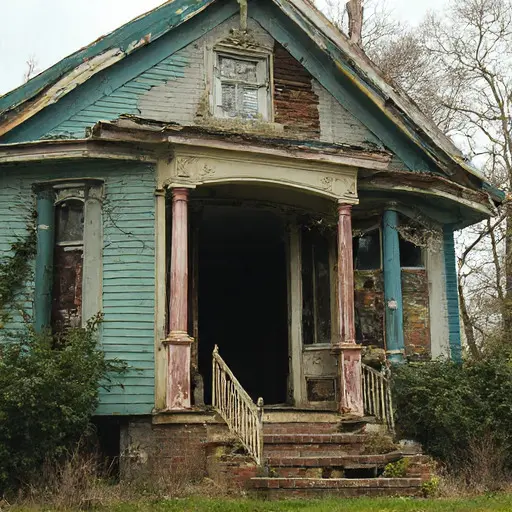
By the early 1940s, after gradual depopulation and the dispersal of the original family members, the Hollow Reed Queen Anne house was fully abandoned. No restoration or preservation efforts were undertaken, as the structure’s modest scale and rural isolation left it outside any formal redevelopment interest. Ownership records eventually lapsed, and the property remained unmanaged within the forest clearing. The house continued to stand in a slow state of decay, with only minor vegetation encroachment and structural weathering marking the passage of time. Interior spaces were left undisturbed in their final condition of use, gradually shifting into a quiet ruin shaped by moisture, wind, and seasonal change. The structure remains unresolved, neither restored nor reclaimed, quietly dissolving into its forest-edge environment.