The Hollow Courtyard Estate of Black Fenrow
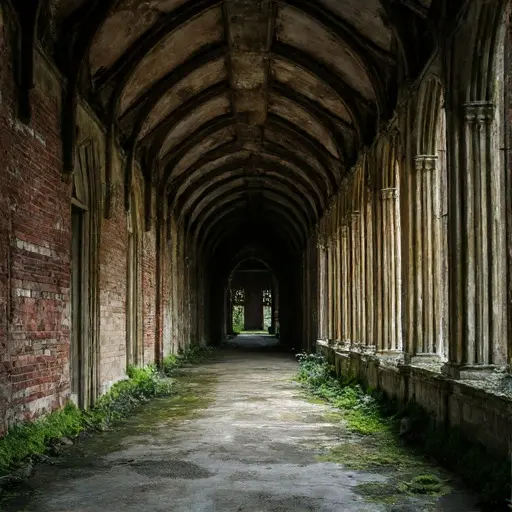
Ultra-detailed cinematic architectural concept art of an abandoned Neo-Gothic countryside estate stretching horizontally through a dense, ancient European forest clearing, designed as a monumental U-shaped manor complex enclosing a forgotten inner courtyard overtaken by nature. The structure is composed of weathered red-brown brickwork combined with pale sandstone structural accents, creating a stark material contrast between warm masonry and pale carved stone detailing. Steep slate roofs run in long interconnected lines rather than towers, punctuated by angular dormer windows, stone chimneys, and copper gutters heavily oxidized into muted orange-green patina.
The central courtyard is open to the sky and partially flooded from decades of disuse, forming reflective pools that mirror the fractured silhouette of the surrounding architecture. A grand arched carriage passageway cuts through the main wing, framed by heavy Gothic stone ribs and layered archivolts, leading into shadowed interior corridors visible but unlit. Long exterior corridors with repetitive lancet openings stretch along both wings, emphasizing scale through rhythm rather than verticality. Iron-and-glass awnings over former entrances hang slightly misaligned, their glass panes dulled and cracked.
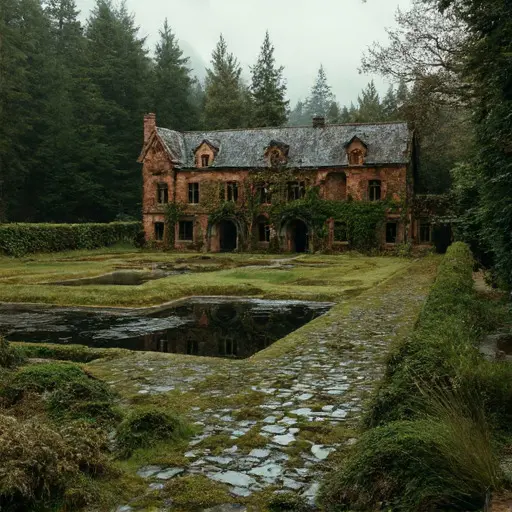
Foreground composition is framed by low-angle perspective through tangled forest roots, wild grasses, and broken cobblestone fragments of an old service road leading into the estate. Midground emphasizes the sweeping horizontal mass of the manor wrapping around the courtyard basin, with vines climbing brick surfaces in dense, uneven patterns. Background shows the forest pressing tightly against the estate edges, with tree trunks growing unusually close to the outer walls, partially obscuring rooflines and chimneys.
Shot on an ultra-wide 24mm cinematic lens from a low ground-level viewpoint, emphasizing horizontal architectural scale and enclosed spatial tension rather than vertical grandeur. Deep parallax between foreground vegetation, midground masonry complexity, and background forest density, with cinematic depth of field keeping the courtyard and façade textures sharply defined while softening distant woodland edges.
Color palette is dominated by weathered red brick, pale sandstone, oxidized copper-orange roofing, muted forest greens, and bone-white stone accents, deliberately avoiding ornamental excess in favor of material realism and structural weight.
Natural soft daylight under a neutral overcast sky evenly illuminates surfaces, revealing texture in masonry and vegetation without dramatic contrast or atmospheric exaggeration. All interior spaces remain dark, silent, and unlit, reinforcing long-term abandonment and architectural stillness.
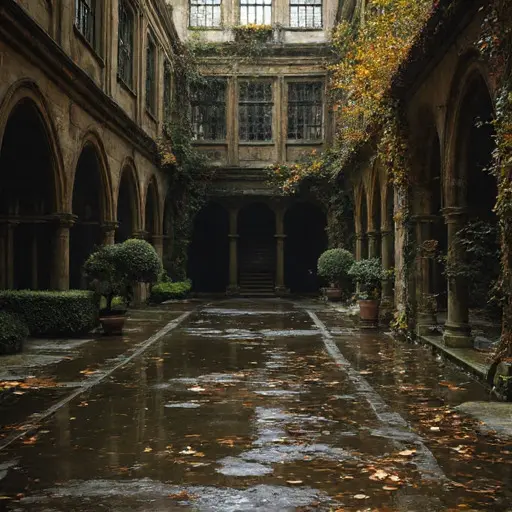
Atmosphere conveys restrained Neo-Gothic solemnity and horizontal monumentality, where human engineering and forest reclamation collide in a balanced, museum-grade cinematic architectural frame emphasizing scale, material authenticity, and environmental integration.