The Hohenwald Fachwerk Manor Left at the Hillside Edge
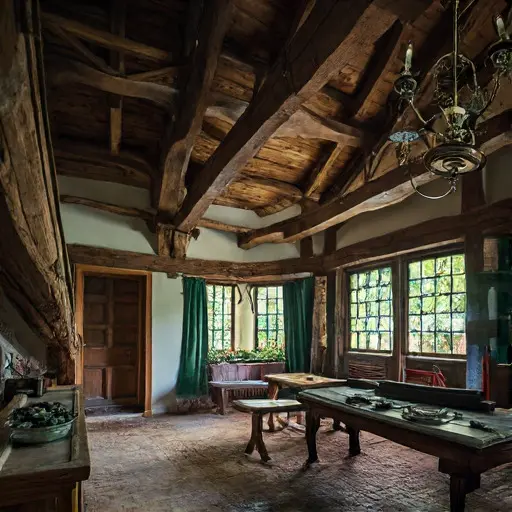
The Hohenwald Manor was constructed in the early twentieth century on a hillside forest edge by a rural German family whose livelihood depended on small-scale forestry work, seasonal agriculture, and local timber trade. Built in the traditional Fachwerk style, the house emphasized structural honesty and efficient use of materials, resulting in a compact L-shaped plan with a steep gabled roof and visible timber framing. The household consisted of an extended family supported by one or two hired workers who assisted with garden maintenance and seasonal labor.
Daily life centered on the main living room and adjoining kitchen, where financial records, forestry accounts, and household planning were managed in a disciplined but modest routine. The surrounding terraced garden provided both sustenance and aesthetic structure, carefully maintained to reflect order within the constraints of rural life.
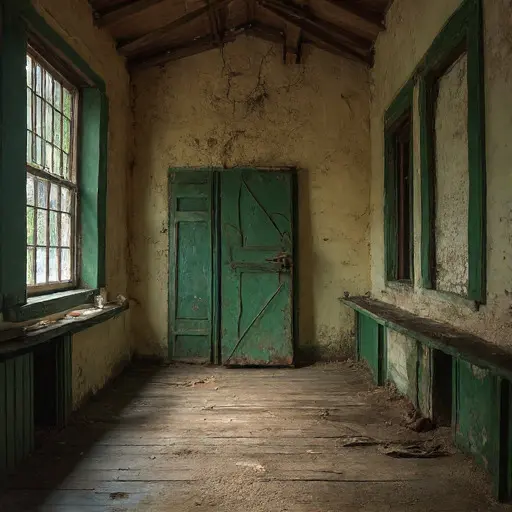
By the late 1920s, the Hohenwald Manor began to experience financial strain as forestry income declined and maintenance costs for its timber frame and roof structure increased. The Fachwerk construction required consistent upkeep to prevent moisture intrusion, but repairs were gradually delayed due to reduced household income. Portions of the upper floor were used less frequently to conserve heating, leading to a gradual consolidation of daily life into the ground-floor rooms. Gardening activity also diminished, allowing roses and heather to grow more freely but less controlled along the stone foundation. Unresolved correspondence accumulated on desks and shelves, while household management shifted from regular maintenance to reactive repairs. Over time, the manor transitioned from a fully active rural home into a partially maintained residence marked by quiet neglect.
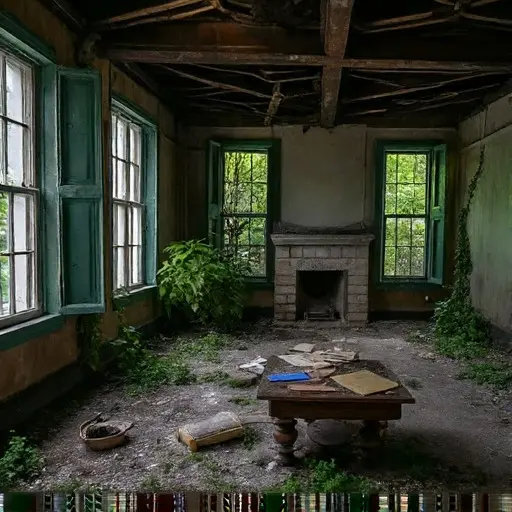
By the early 1940s, following prolonged financial hardship and unresolved inheritance matters, the Hohenwald Fachwerk Manor was fully abandoned. No restoration efforts were undertaken, and legal uncertainty prevented any sale or redevelopment of the property. Vegetation from the surrounding forest gradually encroached upon the terraced garden and foundation walls, while seasonal weather accelerated timber decay and plaster erosion. Interior furnishings and documents were left in place, preserving the final years of decline in quiet detail. No occupants returned, and the manor continues to stand empty at the hillside edge, slowly being reclaimed by time and forest growth while its timber frame remains a fading outline against the trees.