The Hillside Greenhouse Cottage Reclaimed by Terraced Growth
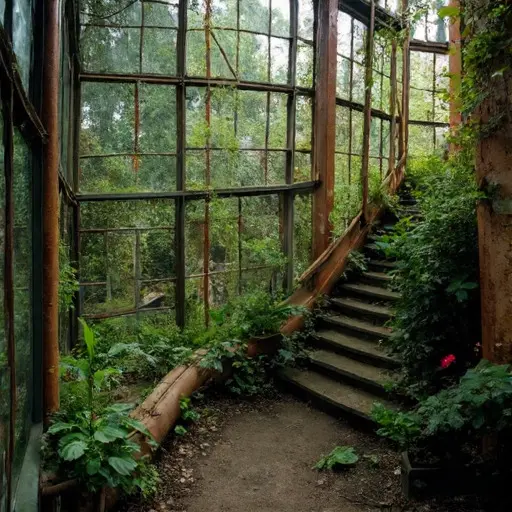
The Hillside Greenhouse Cottage of Bracken Vale was constructed in 1906 as part of a small experimental residential horticulture development, designed to integrate domestic living with stepped cultivation terraces carved into a naturally sloping hillside. Unlike conventional Victorian cottages, the structure was conceived as a hybrid dwelling and greenhouse system, where living spaces and plant-growing environments shared the same architectural framework. The house was built for a botanical illustrator and his family, who required continuous access to light, plant specimens, and controlled growing conditions throughout the year.
The building’s layout followed the natural incline of the terrain. Rather than a single vertical structure, it consisted of offset floor plates aligned along a central stair spine, with each level opening directly into terraced garden rooms. These spaces extended outward into staggered balconies and enclosed glass frames, creating a layered composition of domestic interiors and cultivated exterior pockets. The foundation was anchored into earth-retaining stone walls, while greenhouse glazing systems were integrated into the structure itself rather than added as extensions.
Early Use and Botanical Flourishing
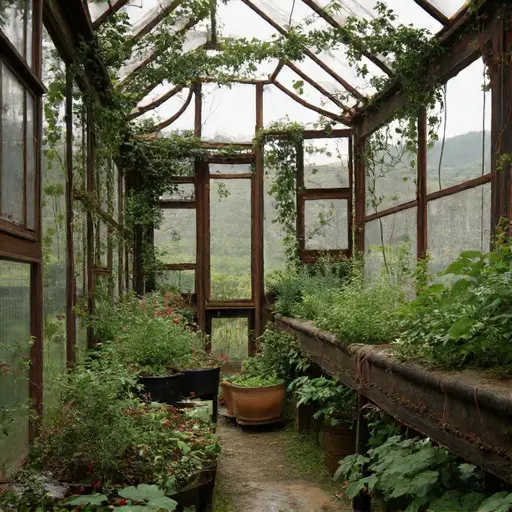
During its early decades, the cottage functioned as both residence and working botanical studio. The owner maintained a detailed system of terraced plant cultivation, using each level of the structure for different environmental conditions. Upper terraces were reserved for sun-loving species such as lavender and flowering herbs, while lower levels supported ferns, mosses, and shade-tolerant specimens. Water was distributed through a stepped irrigation channel system embedded into the architecture, allowing controlled runoff between levels.
The family lived within the structure year-round, with living quarters blending seamlessly into cultivated spaces. Interior rooms opened directly into greenhouse corridors, and daily life was structured around plant maintenance, seasonal observation, and illustration work. For several decades, the cottage was considered an innovative example of integrated botanical architecture in the region.
Gradual Abandonment and Structural Return to Nature
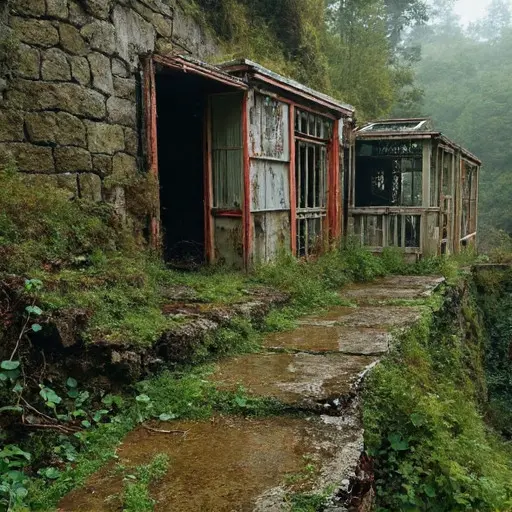
By the late 1930s, the cottage began to decline following the departure of its original occupants, who relocated due to declining health and increasing difficulty maintaining the labor-intensive terraced system. Without regular upkeep, the carefully managed horticultural environment gradually destabilized. Irrigation channels became obstructed, plant systems overgrew their designated boundaries, and structural glazing began to fail under prolonged moisture exposure.
Ownership records indicate intermittent attempts at reoccupation, but none were sustained. The complexity of the terraced design made conventional habitation impractical without significant restoration. Over time, the structure transitioned from a managed botanical residence into a self-sustaining ecological enclosure, where wild vegetation replaced cultivated species and architectural boundaries blurred into hillside growth.
Final Abandonment and Botanical Integration
The Hillside Greenhouse Cottage was formally declared uninhabited in 1946, with no subsequent restoration efforts undertaken. Its terraced structure remains intact, though increasingly integrated with surrounding vegetation. The stepped gardens continue to evolve independently, guided only by natural growth patterns and seasonal water flow.
Today the cottage stands embedded in the hillside, its layered terraces still visible beneath dense plant growth. No occupants have returned, and no preservation work has been initiated. The house persists as a hybrid of architecture and landscape, slowly dissolving into the botanical systems it once controlled, under a soft, unbroken valley overcast.