The Hidden Szabó Marionette Loft Where the Voices Went Flat
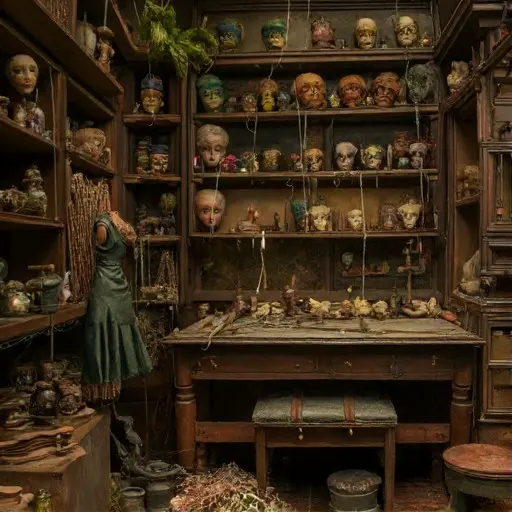
The loft feels thick with quiet expectancy, as if every carved face still listens for a cue it will never receive. Dust settles on painted features once bright with performance. The scent of linseed oil and old cloth rises from the floorboards, mingling with the faint sweetness of pine shavings.
At the room’s center, a marionette stand tilts slightly, as though nudged during a hurried exit. It is here that the story of one craftsman—his ambition, his falter, his disappearance—lingers in the dimness like a breath caught between words.
A Puppeteer’s Work Etched in Wood
This marionette loft preserves the labor of Miklós Andor Szabó, puppet maker and touring performer, born 1875 in a village near Debrecen. Raised among modest storytellers, he learned to carve figures that echoed folk tales carried across Hungary’s plains. His temperament shows in the careful order of his knives, their handles wrapped in embroidered scraps; in brass hinges laid out by size; in a small pouch of beads once threaded by his sister, Ilona Szabó, for a puppet’s ornate vest.
Miklós crafted his puppets by candlelight: shaping heads at dawn, sanding joints at midday, testing articulation as dusk seeped through the loft. He favored soft-spoken humor onstage, letting slight movements convey meaning. His marionettes—foxes, shepherds, moon spirits—earned quiet admiration from traveling fairs and small theatres, each character drawn from stories he cherished.
A Flourishing Craft, Then Uneasy Shadows
During the loft’s best years, Miklós expanded his repertoire. Rows of costumes stitched from Hungarian cotton fill a cedar trunk, their bright embroidery muted by dust now. A leather-bound folio of puppet scripts rests near the window shutter, pages covered in looping Magyar cursive. Delicate wire frameworks for winged characters sit in a basket lined with felt, their shapes bent into elegant arcs.
Yet subtle signs of disquiet appear. A marionette fox lies on the bench with its jaw joint unfiled—an omission he never once allowed. Two control bars lean in the wrong direction, strings tangled in a restless snarl. A jar of pigment is left uncapped, its ochre hardened into a cracked crust. One of his sketches shows a shepherd figure, but the proportions skew abruptly, lines pressed too hard, then erased almost to oblivion. Something disturbed his steady hand.
Rumors suggest a festival troupe accused him of borrowing a character design too closely, sparking a dispute over originality. Others whispered that an important performance collapsed under technical fault—strings knotted during a climactic cue. Nothing here clarifies the moment, but every shelf hints at mounting strain.
The TURNING POINT That Warped the Stage
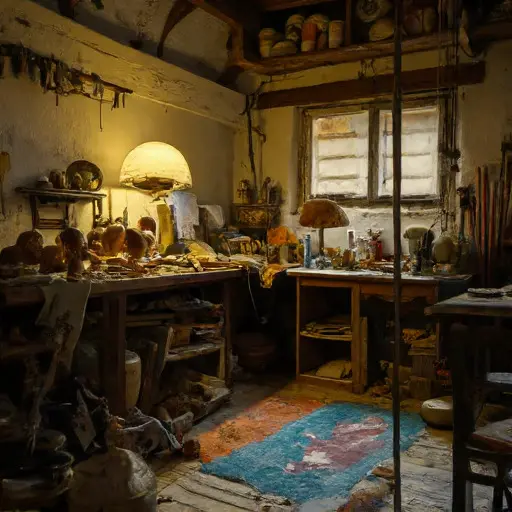
One winter evening left marks sharper than blade or brush. A marionette stand splintered near its base, its screw forced sideways. A carved wolf’s head bears a long gouge across its brow, not from performance wear but frustration. The control strings for a lead character are cut at uneven lengths—as if he severed them mid-rehearsal.
What caused the rupture? Some claimed Miklós received a threatening letter from a rival puppeteer; others that he faced a broken contract, accused of failing to deliver a commissioned troupe of figures on time. Near the tool bench lies a crumpled slip: “Not my imitation—I carved truthfully,” written in hurried Magyar script.
More troubling, a puppet torso—crafted for a festival commission—sits open, its cam mechanism snapped, gears forced as though tested beyond tolerance. A costume of blue silk, meant for a moon-spirit marionette, hangs torn at the shoulder. His folio of scripts is left open to a page where entire passages are slashed through, replaced by cramped marginal notes that end abruptly.
What He Hid Among the Rafters
A loose plank above the loft ladder lifts with a soft groan. Inside the cavity lies a bundle wrapped in coarse linen. Within rests a single unfinished puppet: a figure carved from pale beech, limbs jointed with meticulous care, but the face left blank. No paint, no expression, only the smooth wood awaiting intention. Tied to the figure’s wrist is a note: “Ilona—this one must never perform.”
Beside it sits a chipped wooden bead from one of Ilona’s old costumes, smudged with pigment. Whether he meant to protect her, himself, or their shared stories remains unwritten.
The Last Quiet Gesture
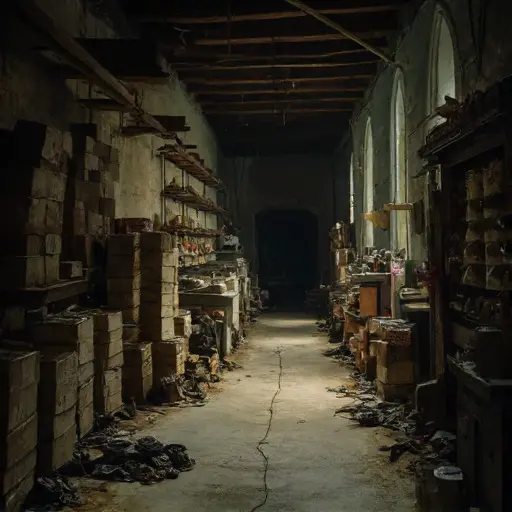
Inside an overturned costume chest in the corridor lies a folded page from Miklós’s folio. Only a fragment of script remains: a shepherd character refusing to speak his final line. Beneath it, in faint pencil: “I could not let the story turn against itself.” No signature. No explanation.
The marionettes keep their silence, faces stilled mid-gesture.
And the house, holding its abandoned puppet loft, remains abandoned.
