The Hidden Sörensen Carving Loft and Its Unsettled Pause
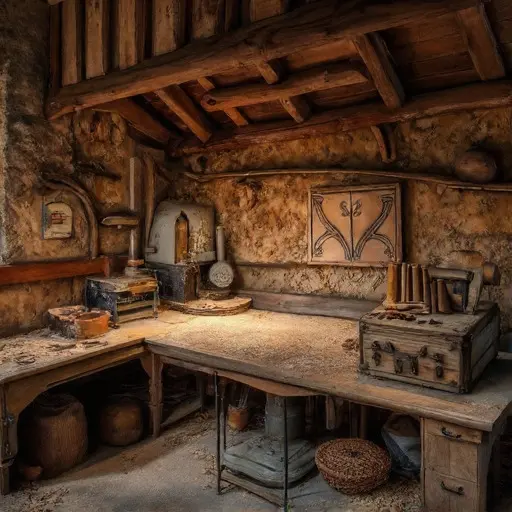
A narrow stair leads into the Carving Loft, where the dry scent of pine lingers above an unfinished panel. Near the vise, a small lantern sits cold, its wick trimmed but never lit again. Nothing here looks abandoned in haste; instead, the careful disorder suggests a craftsman who expected to return after catching his breath.
Yet the deeper one steps into this room, the more each tool seems to brace for an explanation that never arrives.
The Path of Erik Johan Sörensen, Woodcarver
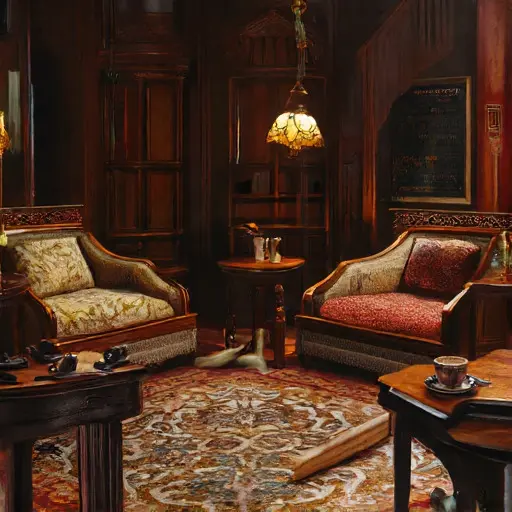
Hints across the interior reveal Erik Johan Sörensen, born 1868 in Bergen, a working-class artisan who carried his regional patterns into this house. His chisels bear stamped Norwegian stars; his mallet head is wrapped in wool, preserving its balance. In the Sitting Room, a walnut cabinet displays small practice rosettes, each shaped with quiet pride. He labored early, shaping chair rails before breakfast, and concluded evenings by refining lacework borders under steady lamplight. Calm, meticulous, and solitary, he lived by the grain’s demands.
A Lantern Traced Through His Working Days
The Hall Chamber contains subtle distress: a collapsed tool roll with two chisels missing, a spool of linen thread snapped sharply, and a folded notice—barely legible—that references overdue rent. In the Second Bedroom, a carved headboard lies propped against a wardrobe, its floral crest halted abruptly, as if his concentration slipped. A faint medicinal jar hints at an illness creeping through his routine, thinning the steadiness that once defined every cut.
Strain Along the Grain
Back in the Carving Loft, the lantern near the vise marks a troubling shift. Wax dripped along its base suggests use during uneasy hours, work pushed too late. A gouge found on the floor bears a chipped edge, its break recent. Sawdust forms a disturbed arc beneath the scroll saw, as though someone steadied themselves hard against the bench.
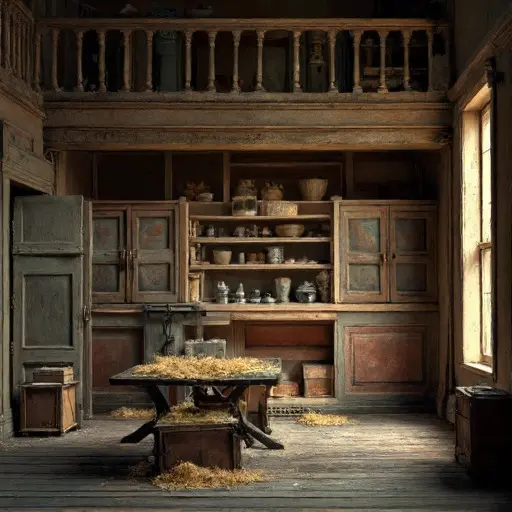
In the lamplight’s memory, one detail remains most fragile: a final panel tucked behind the bench, its outline complete but the carving barely begun. The first scoring cuts tremble slightly, as if guided by an unsteady hand. No clear note accompanies it, no reason for the halted rhythm—only a breath of intent left waiting.
The house offers no verdict, and it remains abandoned still.
